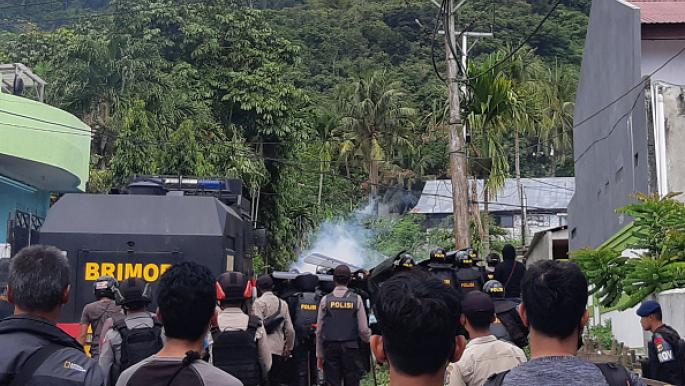
Today, Indonesian Papua witnessed clashes between students, civilians, and security forces during a massive demonstration demanding the withdrawal of military troops from the region. The protests come amid escalating security tensions in the area, where hundreds of demonstrators gathered to express their rejection of military operations.
An Indonesian police official confirmed that the clashes occurred when security forces attempted to disperse the protesters, resulting in injuries on both sides. Security forces used tear gas to disperse the crowds, further intensifying tensions in the region.
Details of the Incident
These protests occur at a sensitive time for Papua, which has seen a rise in conflicts between the Indonesian government and separatist groups in recent years. Reports indicate that protesters are demanding their basic rights, including the right to self-determination and an end to military operations that lead to loss of life.
These events coincide with increasing calls from human rights organizations to halt violence in the region, where numerous violations against civilians have been documented. Papua is a resource-rich area, making it a target for major corporations, but local residents feel marginalized and do not benefit from these resources.
Background & Context
Papua, located in the far east of Indonesia, has a long history of conflict. Since its integration into Indonesia in 1969, the region has experienced ongoing struggles between the government and separatist groups. Government policies have exacerbated negative sentiments among local populations, contributing to the current protests.
The Indonesian government considers military operations essential for maintaining security and stability in the region, while many believe these operations worsen humanitarian conditions. Human rights organizations have called for comprehensive dialogue between the government and local groups to peacefully resolve the conflict.
Impact & Consequences
The repercussions of these clashes extend beyond Papua, potentially affecting political stability in Indonesia as a whole. If protests continue, the government may resort to more stringent measures, which could worsen security conditions.
These events may also impact Indonesia's international relations, as many countries and human rights organizations are monitoring the situation in Papua. Any escalation in violence could lead to international criticism and affect Indonesia's image on the global stage.
Regional Significance
Although events in Papua may seem distant from the Arab region, issues related to human rights and popular protests remain relevant to all peoples. Understanding conflicts in areas like Papua can help raise awareness about the importance of human rights worldwide.
In conclusion, the situation in Papua remains under scrutiny as residents express their legitimate demands under difficult circumstances. The continuation of protests may open the door for further dialogue regarding the rights of peoples and the necessity of achieving justice.