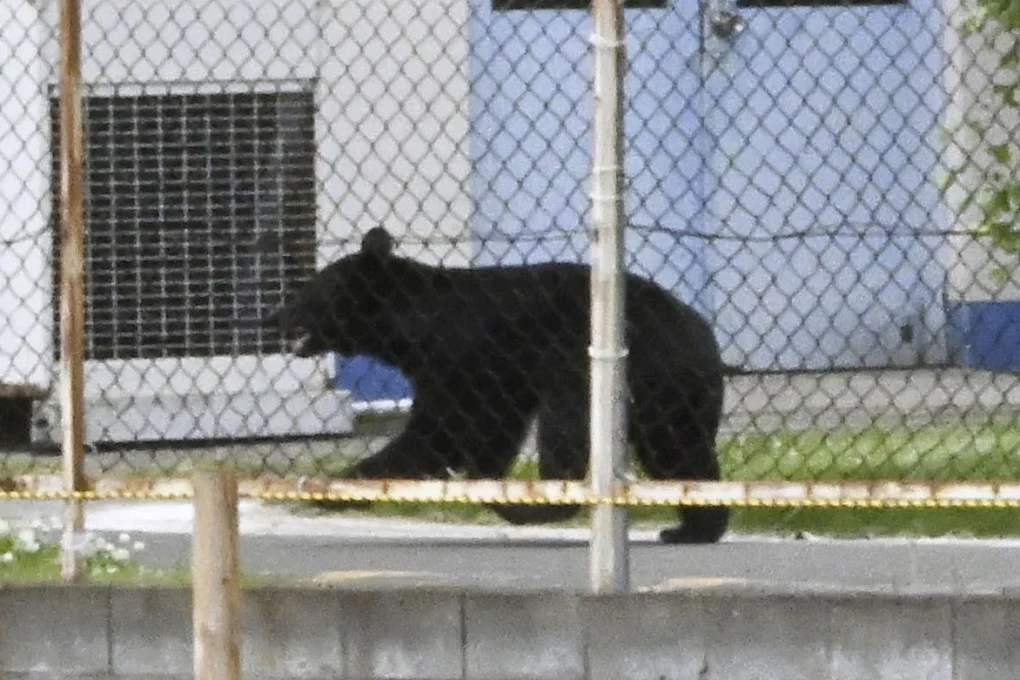
The city of Utsunomiya, situated north of Tokyo, has closed all of its 94 elementary and middle schools following a rampaging bear that caused panic in the streets for three consecutive days. Local authorities received more than 10 reports of bear sightings, including in a busy shopping area, which led them to take precautionary measures to protect students and residents.
In an effort to control the situation, the local government dispatched teams of hunters and officials to the areas where the bear was reported. Vehicles were deployed in the streets to inform residents and warn them against approaching the areas where the bear was sighted.
Details of the Incident
The events began when the bear was first sighted last Saturday, causing widespread panic among residents. As reports increased, authorities decided to close schools as a precautionary measure to safeguard children. Officials indicated that the bear may have strayed from its natural habitat due to a lack of food or environmental changes.
Search operations for the bear are ongoing, with drones being used to monitor rugged areas that are difficult to access. Citizens have also been warned to stay indoors unless necessary, especially during early morning and evening hours when the bear is most active.
Background & Context
Bear sightings in urban areas of Japan are rare, but not unheard of. In recent years, instances of bears appearing in cities have increased due to the decline of their natural habitats as a result of urban expansion and climate change. This phenomenon raises significant concerns among residents, particularly in areas where bears naturally inhabit.
Historically, bears have been part of the Japanese environment, but with increasing human activity, these animals are finding it harder to locate food and suitable habitats. This situation necessitates government action to protect both bears and residents alike.
Impact & Consequences
This incident highlights the urgent need for effective strategies to manage wildlife in urban areas. The closure of schools reflects the extent to which such incidents impact the daily lives of residents and raises questions about how to balance wildlife protection with ensuring citizen safety.
Moreover, this incident could lead to increased awareness regarding the importance of environmental conservation and the provision of natural habitats for wildlife, potentially prompting the government to take more serious steps to protect these animal species.
Regional Significance
Although this incident pertains to a distant country, it raises questions about how Arab nations handle wildlife. Many Arab countries face similar challenges, where wildlife is threatened due to urban expansion and climate change.
This incident could serve as a lesson for Arab nations on the importance of preserving biodiversity and animal habitats, necessitating effective strategies for environmental and wildlife protection.