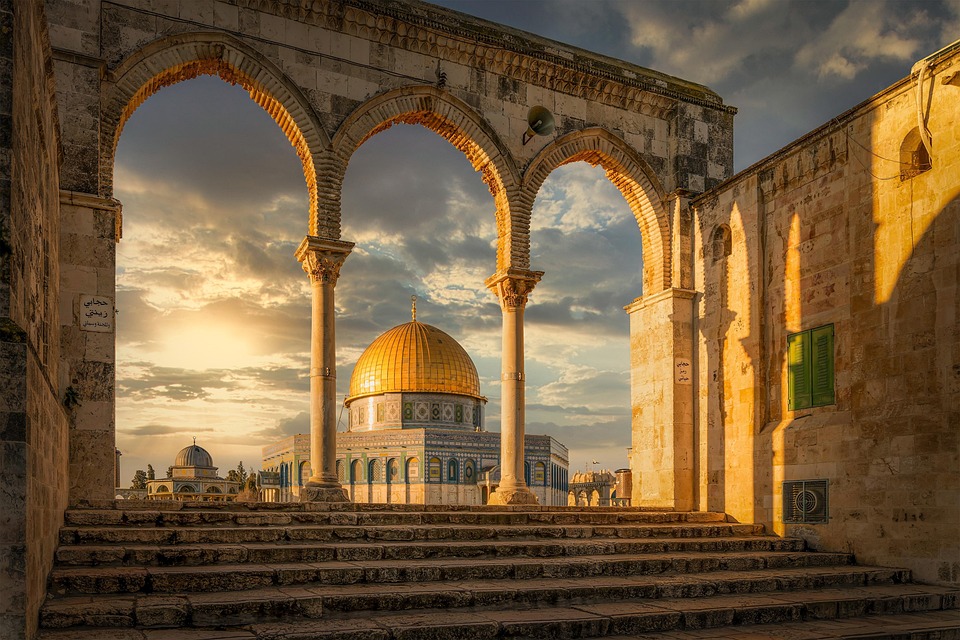
The closure of the Al-Aqsa Mosque has entered its 34th day, as Israeli authorities continue to prevent worshippers from accessing this significant religious site. This action occurs in the context of escalating tensions in the region, with Israel justifying it as a means to maintain security amid the strained relations between the United States and Iran.
The holy city is witnessing intensified military measures, with Israeli forces bolstered around the Al-Aqsa Mosque and at entry points to Palestinian cities in the West Bank. This escalation coincides with calls from extremist Jewish groups to increase the Jewish presence at the Temple Mount, further heightening tensions in the area.
Event Details
Extremist groups are seeking to exploit Jewish holidays, such as Passover, to intensify incursions into the Al-Aqsa Mosque, calling for the revival of religious rituals that include offering sacrifices within the mosque's precincts. These calls raise significant concerns among Palestinians and the international community, as the Al-Aqsa Mosque is a symbol of Palestinian identity.
Simultaneously, echoes of calls from Palestinians to head to the military checkpoints surrounding the Al-Aqsa Mosque have been heard, in an attempt to break the siege imposed on the site. These calls arise amid a general feeling of discontent with Israeli policies targeting sacred places.
Background & Context
Historically, the Al-Aqsa Mosque is one of the holiest sites in Islam and has witnessed numerous historical and political events that have impacted the situation in the region. Since the occupation of Jerusalem in 1967, Israeli policies regarding the Al-Aqsa Mosque have become a subject of ongoing conflict between Palestinians and Israelis.
Israel seeks to reinforce its control over the Al-Aqsa Mosque by imposing restrictions on Palestinian access, which increases tensions in the city. These policies contradict international laws that prohibit altering the status quo in sacred places.
Impact & Consequences
These measures significantly affect the daily lives of Palestinians, as many feel trapped in their cities and unable to access their places of worship. Additionally, these policies may lead to an escalation of violence in the region, as feelings of frustration and anger grow among Palestinian youth.
Internationally, these events raise widespread concern, with many countries and international organizations calling for the necessity of respecting Palestinian rights to access their places of worship. The continued closure of the Al-Aqsa Mosque could exacerbate security conditions in the region, necessitating urgent international intervention.
Regional Significance
The Al-Aqsa Mosque represents a symbol of Arab and Islamic identity, and any aggression against it or its closure affects the sentiments of Arabs and Muslims worldwide. The rising tensions in Jerusalem may reflect on the situations in Arab countries, potentially leading to protests and demonstrations in various cities.
The Palestinian issue is central to the Arab world, and any negative developments in this context could impact relations between Arab states and Israel, further complicating the situation in the region.