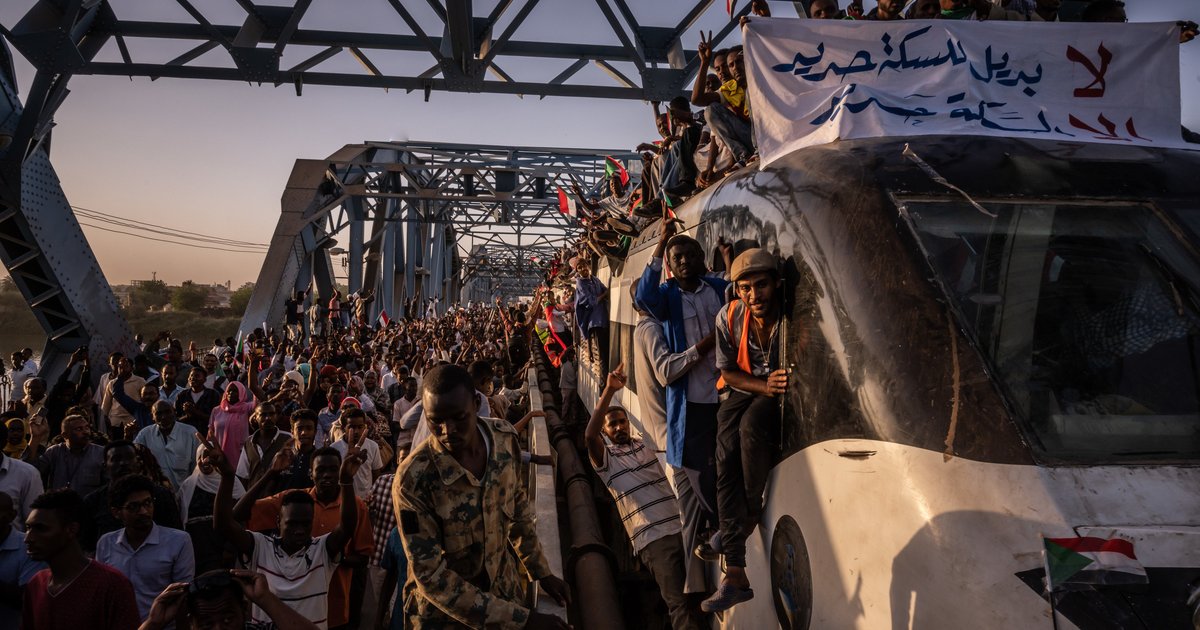
Sudan today remembers the events of the uprisings of 1985 and 2019, marked by overcrowding in Kober Prison with political detainees. Some have spent many years behind bars, while others have been detained for only a few days.
On March 26, 1985, a popular uprising erupted against the ruling regime, leading to the arrest of many activists and politicians. Kober Prison became a detention center, housing detainees from various ages and backgrounds, some of whom experienced arrest for the first time.
Details of the Events
During that period, some spent five years or more in prison, while others had not completed ten days since their arrest. These harsh conditions served as a real test for many young people who engaged in the protest movement.
These scenes repeated in 2019, when a new uprising broke out, leading to the ousting of President Omar al-Bashir. This wave of protests was inspired by the events of 1985, reflecting the collective memory of the Sudanese people in the face of injustice.
Background & Context
The history of Sudan is filled with uprisings and revolutions, witnessing many political transformations since independence. The first uprising in 1964 was followed by the uprising of 1985, which led to the overthrow of the regime of Jaafar Nimeiri. These events shaped the consciousness of the Sudanese people and influenced their aspirations for democracy.
In recent years, the country has faced economic and security deterioration, prompting citizens to once again take to the streets demanding change. The recent uprising in 2019 was a direct result of the growing anger over difficult living conditions.
Impact & Consequences
The political life in Sudan has been significantly affected by these uprisings. After the ousting of al-Bashir, a transitional government was formed, but challenges remain. There is an urgent need to achieve political and economic stability in the country.
These events have also impacted Sudan's international relations, as the new government seeks to improve its image before the international community and attract investments. However, issues of human rights and political detainees remain a barrier to this direction.
Regional Significance
The uprisings of 1985 and 2019 serve as a model in the Arab region, reflecting the ability of peoples to enact change. These events have inspired protest movements in other countries, showcasing the desire of peoples to liberate themselves from authoritarian regimes.
Continuing the struggle for democracy and human rights in Sudan may influence neighboring countries and enhance the spirit of resistance among Arab peoples.
In conclusion, the memory of the uprisings in Sudan remains alive in the collective memory of the people, symbolizing hope and change. Although challenges persist, the will of the people remains strong in the pursuit of a better future.