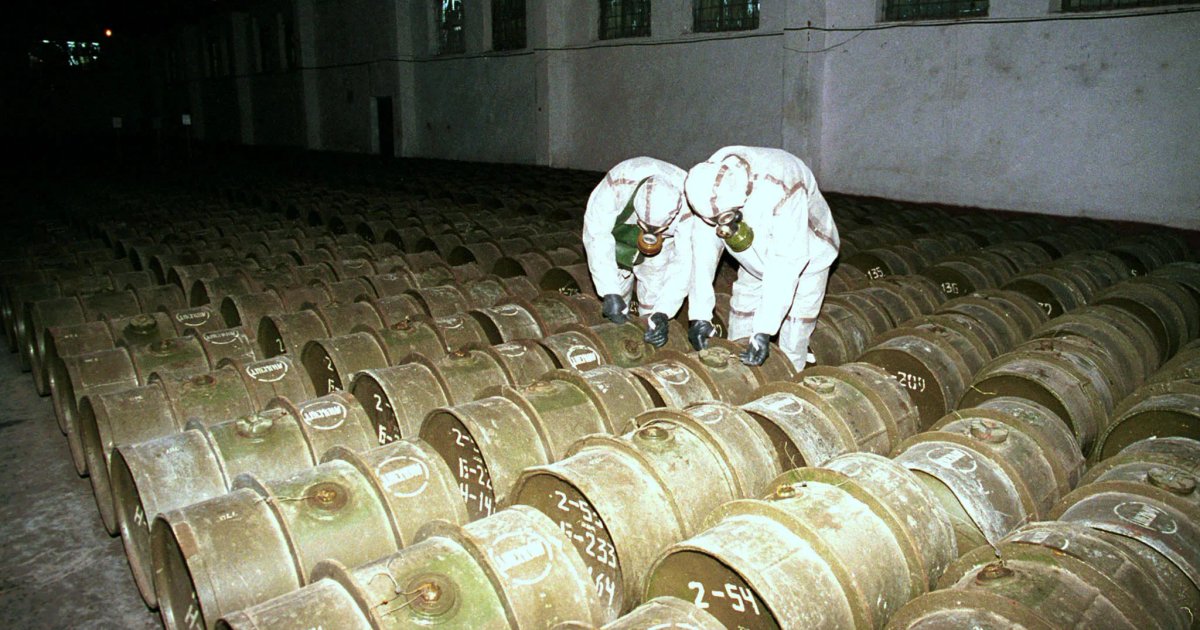
International concerns are growing over the possibility of banned chemical weapons reaching militant groups in Sudan. At the forefront of these groups is the Sudanese Islamic Movement, the local branch of the Muslim Brotherhood, which the United States has recently classified, along with its armed wing, Katibat al-Bara' bin Malik, as a global terrorist organization.
These fears arise at a time when Sudan is experiencing political and security chaos, with several armed factions vying for power and influence. This turmoil could provide extremist groups with the opportunity to access dangerous weapons, increasing security threats not only in Sudan but across the entire region.
Details of the Situation
Security reports indicate that there are signs some militant groups in Sudan have managed to acquire chemical materials that could be used to manufacture chemical weapons. This information comes at a sensitive time as the transitional government in Sudan seeks to regain control over the security situation.
The Sudanese Islamic Movement is considered one of the most prominent militant groups in the country and has played a significant role in Sudanese political life for decades. With its designation as a terrorist organization, questions arise about how to deal with such groups and how to prevent them from accessing dangerous weapons.
Background & Context
Historically, Sudan has witnessed multiple internal conflicts that have led to the fragmentation of the state and the weakening of its institutions. Since the ousting of former president Omar al-Bashir in 2019, the country has entered a transitional phase, yet it continues to suffer from insecurity and instability.
Chemical weapons are among the most dangerous types of arms, capable of causing severe humanitarian and environmental damage. Most countries have banned these weapons under the Chemical Weapons Convention, but it seems some militant groups are still seeking to acquire them.
Impact & Consequences
If militant groups manage to use chemical weapons, it could exacerbate the humanitarian situation in Sudan and increase civilian suffering. The use of such weapons could also provoke strong international reactions, potentially leading to military interventions or economic sanctions against Sudan.
Concerns are rising that these weapons may be used in regional conflicts, further complicating the security situation in the Horn of Africa, which is already suffering from multiple conflicts.
Regional Significance
The spread of chemical weapons in Sudan could have negative implications for regional security. Sudan borders several countries facing conflicts, such as Ethiopia and South Sudan, increasing the likelihood of crises spilling over into other nations.
This situation may also highlight the need for regional and international cooperation to address security threats, especially amid rising militant activity in the region.
In conclusion, this new threat poses a significant challenge to regional and international security. Urgent steps are required to prevent chemical weapons from falling into the hands of militant groups and to work towards restoring stability in Sudan.