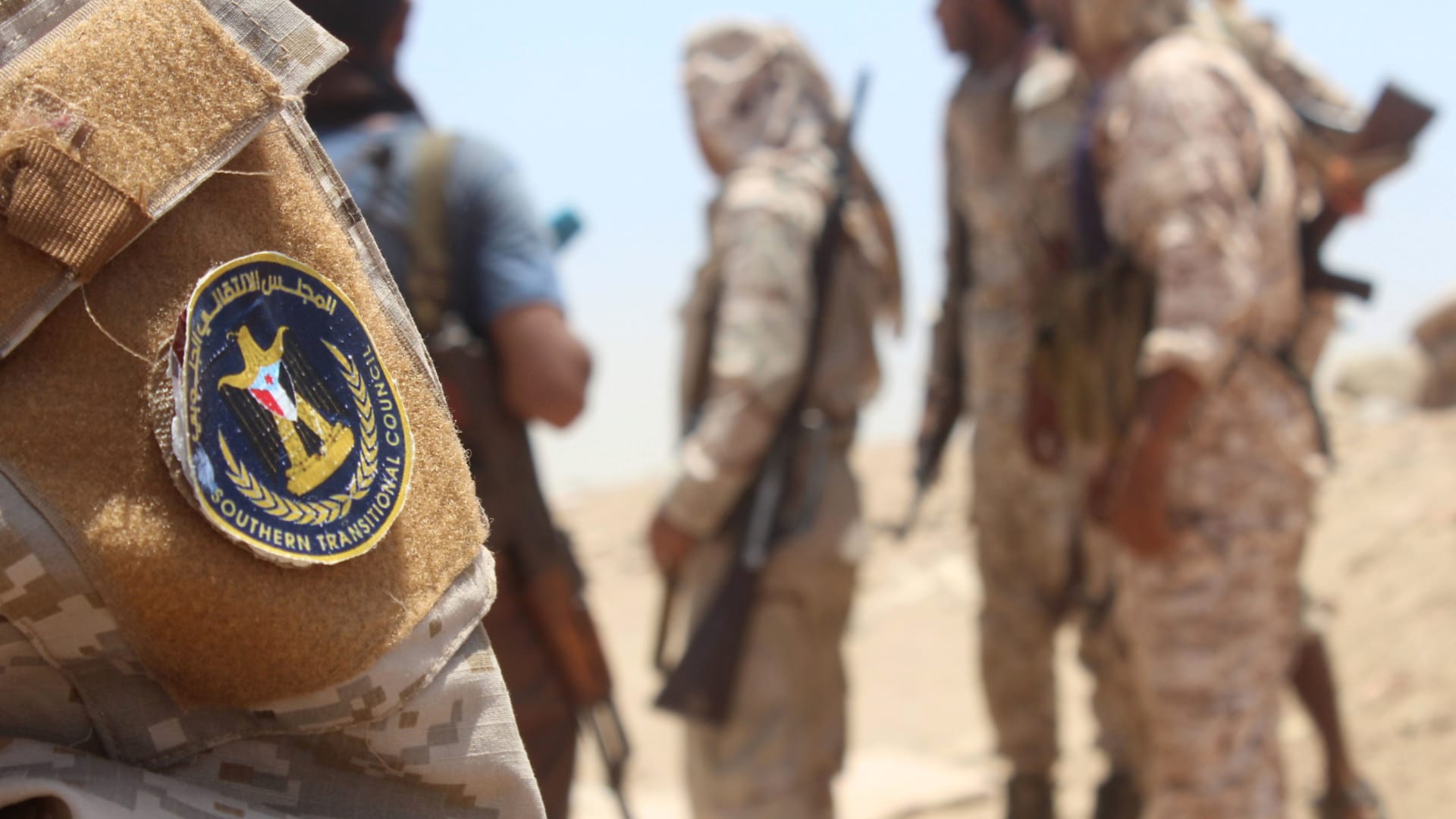
The Southern Transitional Council, which has been dissolved, condemned the storming of its headquarters in Sayoun, Hadhramaut Valley, by security forces and armed groups, occurring just hours after its reopening. The council issued an official statement warning against the continuation of what it described as ongoing repressive practices, emphasizing that if these violations persist, it would be compelled to take escalatory steps, including calling for public mobilization.
This incursion comes at a sensitive time as the Transitional Council seeks to strengthen its presence in the region following a period of political and security tensions. The council considers these practices a threat to stability in the area, warning of their negative repercussions on security and social conditions.
Details of the Incident
In the details of the incident, a group of security forces and armed individuals stormed the Transitional Council's headquarters in Sayoun, provoking angry reactions from the council's supporters. This storming followed the reopening of the headquarters, heightening tensions among the various parties in the region. The council described this act as a blatant assault on its rights and status.
The statement also indicated that the Transitional Council would not remain idle in the face of these violations, affirming the necessity of protecting citizens' rights and freedom of expression. The council called for unity among southern factions to confront these challenges.
Background & Context
Historically, Yemen has witnessed multiple conflicts leading to political and security divisions. The Southern Transitional Council, established in 2017, aims to achieve the independence of southern Yemen and has faced significant challenges from the internationally recognized Yemeni government. These events occur within the ongoing struggle between various forces in the country, as each party seeks to bolster its position amid the ongoing chaos.
In recent years, the intensity of conflicts in Yemen has increased, exacerbating humanitarian conditions. Several international parties have attempted to mediate the conflict, but the situation remains tense, complicating the political landscape further.
Impact & Consequences
This storming could escalate conditions in Hadhramaut Valley, where supporters of the Transitional Council are expected to respond with calls for demonstrations and protests. Such escalation may contribute to increasing divisions among political forces in Yemen, potentially hindering any reconciliation efforts.
Moreover, the continuation of these violations could negatively impact international efforts aimed at achieving peace in Yemen. The more tensions escalate, the more complicated the proposed political solutions become.
Regional Significance
The events in Yemen have significant implications for the entire Arab region, as the ongoing conflict reflects on the security and stability of neighboring countries. Any escalation in the situation could lead to an influx of refugees into neighboring states, increasing the economic and social burdens on those countries.
In a broader context, the situation in Yemen poses a challenge to regional security, as international and regional interests intertwine in the conflict, making it difficult to reach lasting solutions.
In conclusion, the recent events in Sayoun reflect the ongoing tensions in Yemen and highlight the urgent need for achieving peace and stability. The popular escalation threatened by the Transitional Council could have far-reaching implications for the country's future.