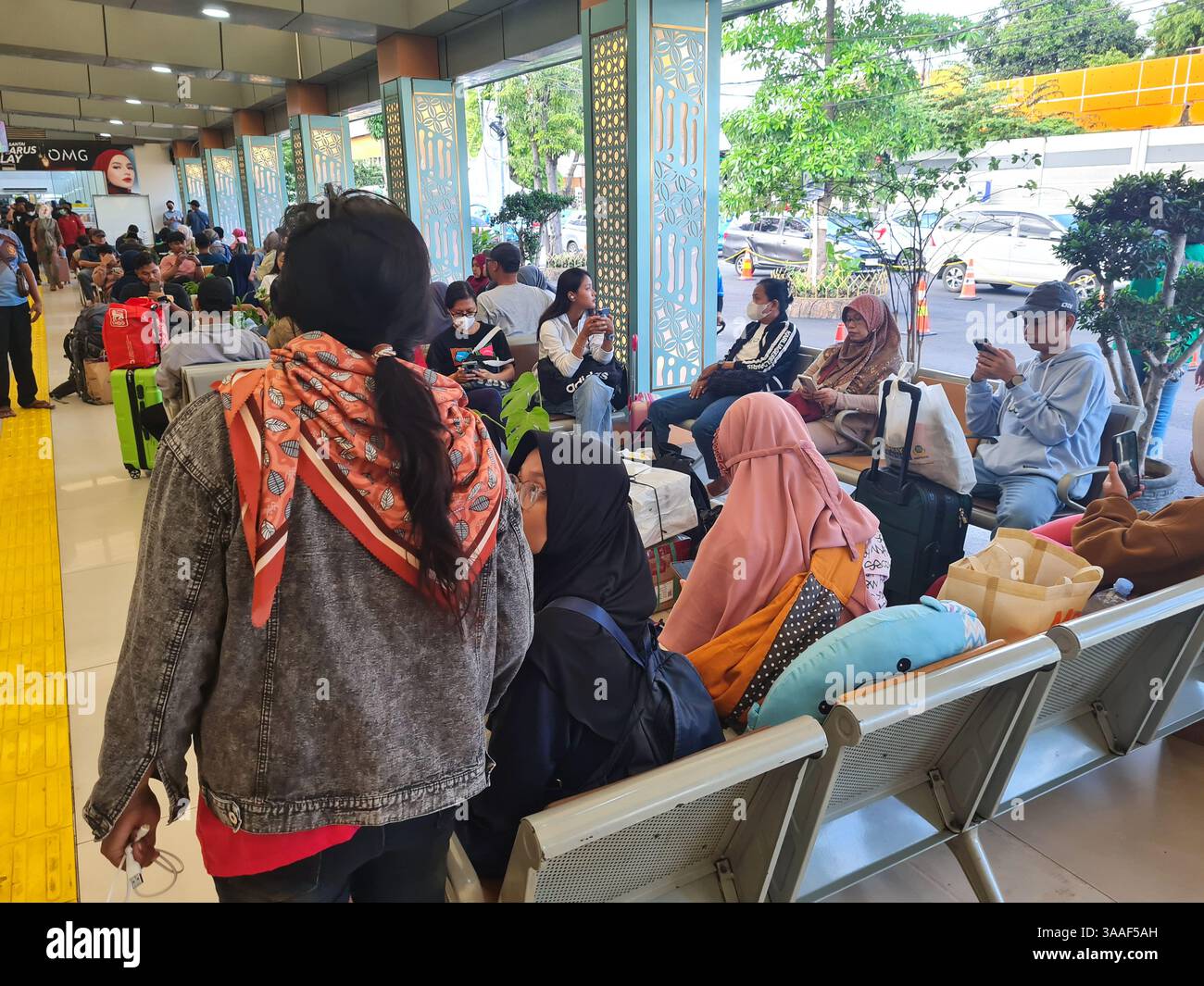
PT Kereta Api Indonesia (Persero) Operations Region 1 in Jakarta confirmed that train services will continue smoothly during the return period of Eid al-Fitr, with passenger traffic expected to remain high until Saturday, March 28, 2026. The company's spokesperson, Franoto Wibowo, noted that operations are currently running smoothly without any significant issues.
According to data, as of the morning of Saturday, March 28, 2026, the number of passengers arriving via long-distance trains in the Jakarta area reached 52,961 passengers, while 28,280 passengers departed. This trend reflects the ongoing return movement from Eid al-Fitr, with the number of travelers to Jakarta and its suburbs remaining high.
Details of the Event
Franoto reported that operational activities are proceeding well and safely, maintaining a high level of punctuality for train schedules. He confirmed that all field staff are ready to provide the best services to passengers. During the Eid al-Fitr period, which spans from March 11 to March 28, 2026, the company served 815,703 departing passengers and 622,517 arriving passengers, with a total of 891,098 tickets sold, reflecting an occupancy rate of 82% of the total 1,083,674 available seats.
During the outbound period from March 11 to March 20, 2026, 483,389 departures were recorded, with March 18 witnessing peak traffic of 53,576 passengers. On the two days of Eid al-Fitr, March 21 and 22, the number of departures reached 97,297 passengers. Since the start of the return period on March 23, the number of arrivals has continued to exceed 50,000 passengers daily, indicating public confidence in train transportation as a primary option for long-distance travel.
Background & Context
Indonesia is one of the largest countries in Southeast Asia, where many residents rely on public transportation, especially trains, during major events like Eid al-Fitr. Historically, the country has seen an increase in travel during these periods, necessitating improvements in services and expansion of transportation infrastructure.
In recent years, the Indonesian government has made significant investments in developing the railway network, contributing to improved service quality and increased passenger numbers. These developments reflect the government's commitment to enhancing public transportation and meeting citizens' needs.
Impact & Consequences
These figures indicate the success of government policies in promoting public transportation, which helps reduce traffic congestion and improve the quality of life in major cities. Additionally, the increase in passenger numbers reflects citizens' confidence in railway services, which may lead to further investments in this sector.
Moreover, improving train services can contribute to boosting the local economy by facilitating the movement of goods and passengers, positively impacting various economic sectors.
Regional Significance
Arab countries can benefit from Indonesia's experience in developing its railway network, especially in light of the challenges they face in transportation. With rising populations and traffic congestion, there may be an urgent need to develop public transportation systems.
Indonesia's experience serves as a model, as Arab countries can learn from improving train services as a means to alleviate congestion and promote economic development.