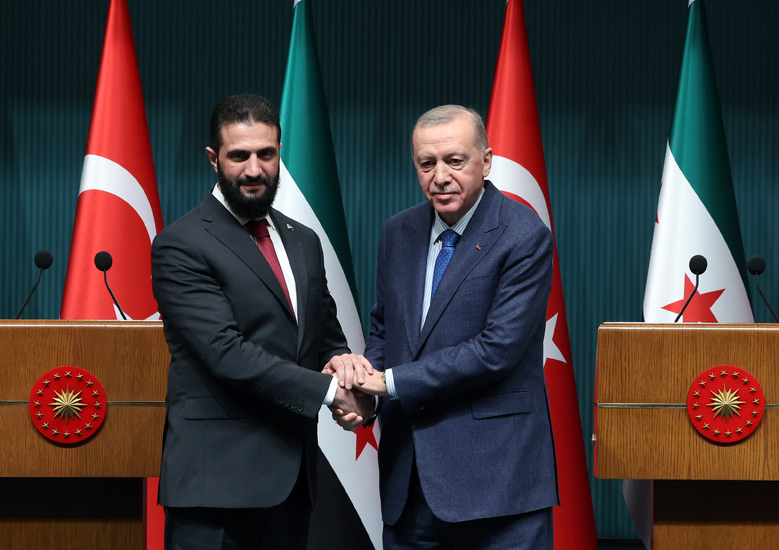
A circulating image on social media platforms depicting an alleged meeting between Syrian President Ahmad Sharaa and former German Chancellor Angela Merkel has ignited widespread controversy, as it was later revealed to be nothing more than an AI-generated image. This image emerged during Sharaa's visit to Germany, where discussions focused on issues related to Syrian refugees in the country.
Germany is one of the most welcoming European countries for Syrian refugees, with estimates of their numbers ranging between 800,000 and 900,000 individuals. During the visit, Sharaa spoke about the role of Syrians in German society, highlighting their contributions to the labor market and education. Merkel has been positively associated in the minds of many Syrians, who regard her as one of the key figures supporting them during the years of the Syrian revolution.
Details of the Event
During the visit, many bloggers and activists on social media anticipated a meeting between Sharaa and Merkel, expecting him to take the opportunity to express gratitude for her support of Syrian refugees. As the alleged image circulated, the public reacted strongly, viewing the meeting as a symbol of gratitude and appreciation for Merkel.
Activists shared comments indicating that Syrians would not forget Merkel's support, expressing their desire to immortalize her name in Syria, as it has been in Idlib through a mural painted in her honor. However, the falsity of the image was quickly uncovered after the open-source unit of Al Jazeera took on the task of verifying its authenticity.
Background & Context
Sharaa's visit to Germany comes at a sensitive time, as Syrians face significant challenges related to asylum and integration into European societies. Merkel was at the forefront of European leaders who welcomed Syrian refugees during the peak of the crisis, earning her considerable respect from many. Nevertheless, the circulating image was merely a manifestation of the hopes and wishes of Syrians, not a reality.
Upon scrutiny, it became clear that the image was not captured by a real camera but was digitally produced using AI technologies. This highlights the importance of verifying information in the age of misinformation, where fake images can lead to misinterpretations and mislead public opinion.
Impact & Consequences
This incident underscores the need to enhance awareness regarding misinformation, especially on sensitive issues such as asylum and immigration. The fake image that sparked the controversy reflects how inaccurate information can affect relations between nations and peoples.
It also emphasizes the vital role of media in verifying information and presenting facts to the public. In an era of rampant fake news, it becomes essential to have effective mechanisms in place to ensure the accuracy of information before it is disseminated.
Regional Significance
This incident highlights the challenges faced by Arab communities amid ongoing crises, where issues of asylum and migration remain at the forefront of concerns. It also reflects the need for enhanced cooperation among countries to host refugees and provide them with support.
In conclusion, the fake image serves as a testament to the importance of media literacy and the pursuit of truth, especially in a time when misinformation is on the rise.