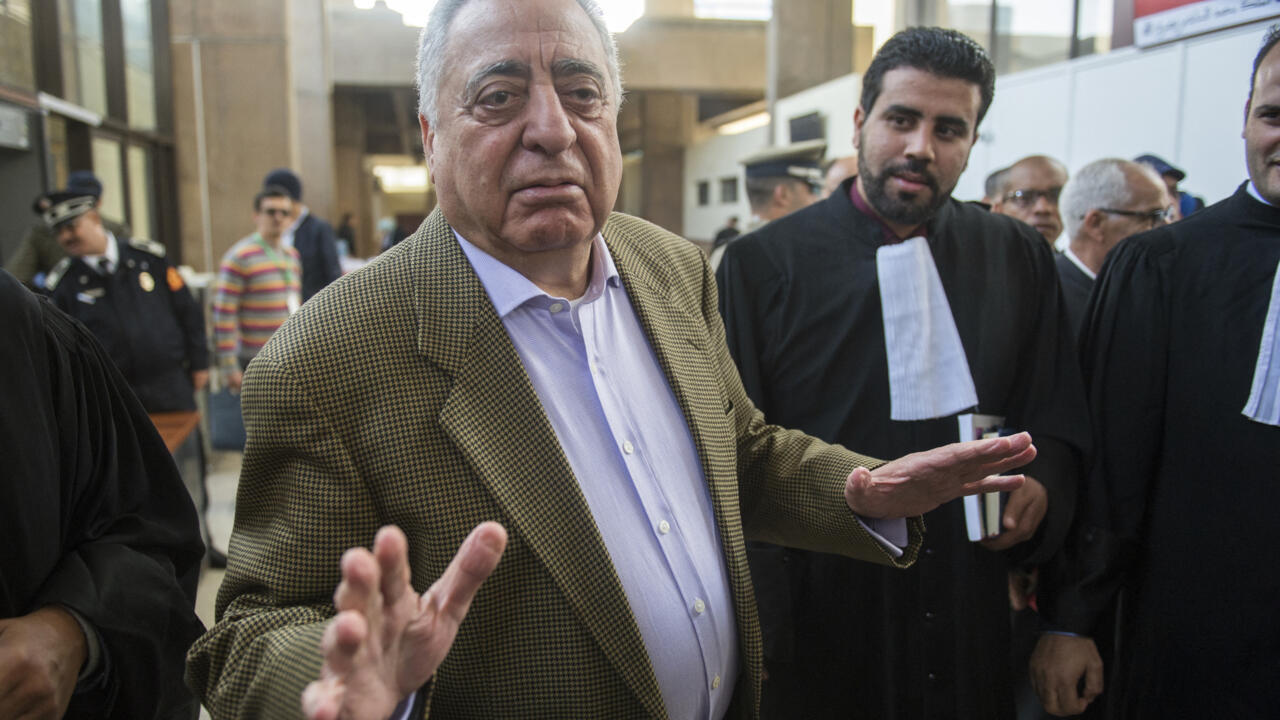
The Rabat Court of Appeal has issued a new ruling sentencing former minister Mohamed Zyan to five years in prison for the charges of "embezzlement and misappropriation of public funds." This ruling follows the annulment of a previous three-year sentence by the Court of Cassation, reflecting rapid developments in a case that has sparked widespread debate in Moroccan political and legal circles.
Zyan, who served as Minister of Human Rights from 1995 to 1996, has been in custody since 2022 after being convicted in a prior case. At the beginning of 2024, a new case was opened against him concerning the embezzlement of public funds obtained during the electoral campaign of the Moroccan Liberal Party, which he led in 2015.
Details of the Ruling
In the latest ruling, the Court of Appeal confirmed that the charges against Zyan pertain to the embezzlement of public funds, which Zyan and his defense vehemently deny. His son, Ali Reda Zyan, stated that the prosecution of his father is purely political, noting that the Court of Cassation had previously deemed the elements of the case unclear. Despite this, the Court of Appeal issued its decision to convict him.
Zyan, now 83 years old, had previously been convicted in a case involving the insult of public officials and other charges after he accused the Director General of National Security and Internal Intelligence, Abdelatif Hammouchi, of fabricating a video that portrayed him in an inappropriate situation. These accusations led the Ministry of Interior to file a complaint against him, resulting in his conviction in the earlier case.
Background & Context
The case of Mohamed Zyan is part of a complex political landscape in Morocco, where politics increasingly intertwines with the judiciary. Many human rights activists believe that Zyan's prosecution is aimed at targeting political opponents, while Moroccan authorities assert that the cases are purely criminal and unrelated to political activities.
The roots of the tensions between Zyan and Moroccan authorities stretch back years, as he played a prominent role in advocating for human rights. However, the cases currently pursued against him may reflect shifts in the Moroccan political landscape, where pressures on dissenters are mounting.
Impact & Consequences
The ruling against Zyan could have far-reaching implications for the Moroccan political scene, potentially exacerbating the divide between the government and the opposition. This ruling may also encourage more activists to voice their concerns regarding freedom of expression and human rights in the country.
Furthermore, the continuation of cases against prominent political figures may raise questions about the independence of the judiciary in Morocco, which could impact the country's reputation in the international community. These cases may lead to increased pressure on the Moroccan government from international human rights organizations.
Regional Significance
The case of Mohamed Zyan exemplifies the challenges faced by many Arab countries regarding freedom of expression and human rights. Amid the political and economic crises affecting the region, issues related to political opposition could exacerbate the situation.
This case highlights the importance of promoting human rights and fundamental freedoms in the Arab world, as many citizens seek justice and equality. The pursuit of these cases could influence the future of political movements in the region, underscoring the need for genuine reforms in judicial systems.
In conclusion, the case of Mohamed Zyan remains a focal point for observers, reflecting the political and human rights tensions in Morocco and emphasizing the importance of dialogue and reconciliation in achieving stability in the country.