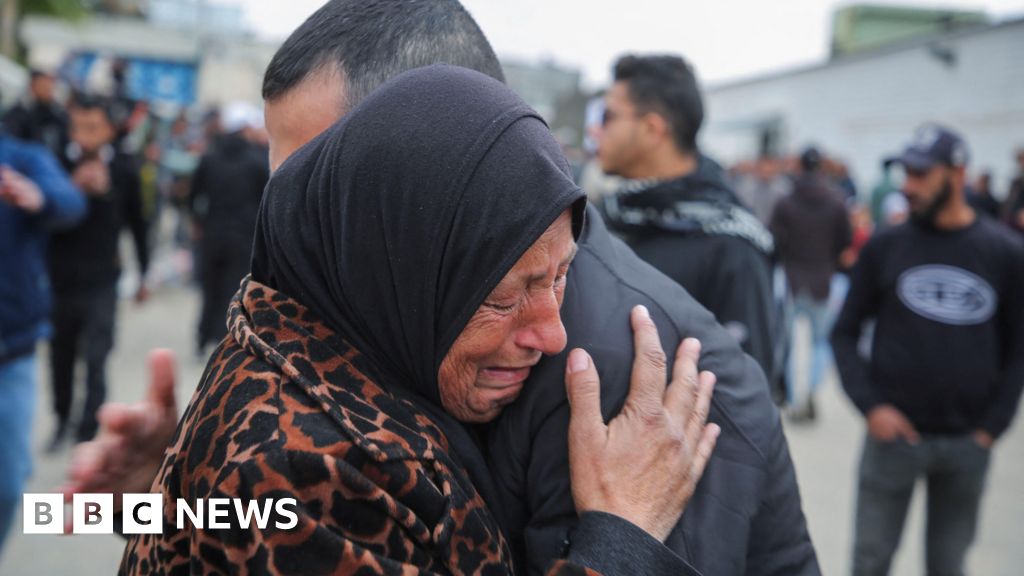
The death penalty law approved by Israeli authorities for Palestinian prisoners has generated limited responses among Palestinians. This reaction reflects the substantial changes that have occurred in Palestinian popular action in recent years, which has been systematically reshaped, affecting the ability of Palestinians to express their stance on this law.
This law comes at a time when the Palestinian cause faces multiple challenges, both politically and socially. With the increasing Israeli violations, it seems that Palestinian popular action has been constrained, resulting in a decline in public response to such harsh laws.
Details of the Law
The death penalty law for Palestinian prisoners, recently enacted, aims to intensify penalties for those accused of carrying out operations against Israelis. This law raises significant concerns among Palestinians, as many view it as part of Israel's repressive policies against them. The law was enacted amid escalating tensions in the occupied territories, further complicating the existing situation.
Although the law may aim to deter operations against Israelis, many Palestinians see it as a blatant violation of human rights. International human rights organizations have expressed their concerns regarding this law, indicating that it could exacerbate humanitarian conditions in Israeli prisons.
Background & Context
Historically, the Palestinian cause has witnessed numerous laws and policies aimed at suppressing popular action. Since the Israeli occupation of the West Bank and Gaza Strip, laws have been used as tools to control Palestinians and restrict their movement. These policies have contributed to creating an environment of fear and intimidation, impacting Palestinians' ability to express their opinions and resist the occupation.
In recent years, with the increase in Israeli violations, Palestinian popular action has begun to experience a decline. Repressive policies have eroded trust between Palestinians and their leadership, leading many to feel that their voices are not being heard. This dynamic reflects the significant challenges facing the Palestinian national movement at present.
Impact & Consequences
The enactment of the death penalty law for prisoners could exacerbate conditions in the occupied territories. It is expected to heighten tensions between Palestinians and Israelis, potentially provoking violent reactions from Palestinian factions. Additionally, this law may negatively impact peace efforts, as it will increase distrust between the two parties.
Furthermore, this law could contribute to deepening the Palestinian divide, as some factions may view it as an opportunity to escalate resistance, while others may prefer a more peaceful approach. This division could lead to the erosion of Palestinian national unity, complicating the political situation further.
Regional Significance
The Palestinian cause is a central issue in the Arab world, and any new developments directly affect relations between Arab countries and Israel. The enactment of the death penalty law for prisoners may lead to increased discontent in the Arab street, potentially contributing to the escalation of demonstrations and protests against the occupation.
This law may also influence the positions of Arab countries regarding the Palestinian cause, as some may be compelled to reassess their policies toward Israel. Under these circumstances, hope remains pinned on strengthening Arab unity to support the Palestinian cause and confront new challenges.
In conclusion, the death penalty law for Palestinian prisoners stands as a significant milestone in the history of the Palestinian-Israeli conflict. As violations increase, Palestinian popular action remains in a state of challenge, necessitating a reassessment of strategies and the struggle for Palestinian rights.