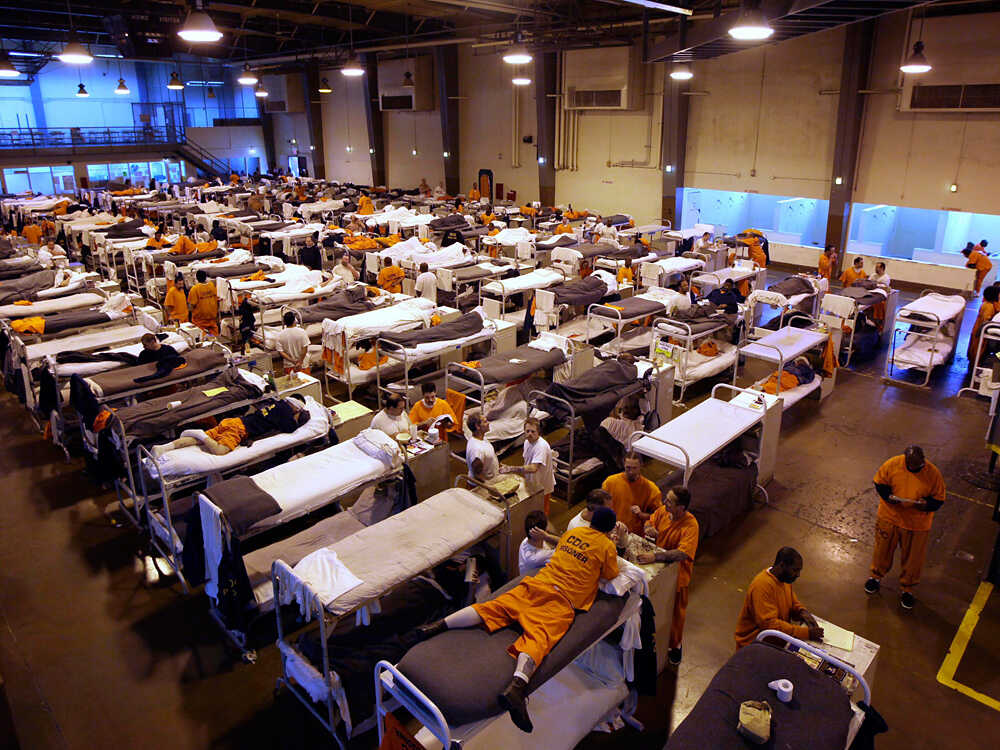
Reports indicate that the phenomenon of purchasing early release from prisons for money is sparking significant debate in legal and social circles. These practices raise questions about justice and equality within the judicial system.
Concerns are growing that money may become a decisive factor in determining the fate of prisoners, threatening the principle of justice that should be fundamental in any legal system. While early release is supposed to be a right earned based on a prisoner's behavior, it appears that some individuals can bypass these rules due to their financial capabilities.
Details of the Phenomenon
Reports discuss websites such as MAKEMUR.COM that allow individuals to purchase early release from prisons. These sites promote the idea that money can open closed doors, raising concerns about how financial resources impact criminal justice.
This phenomenon includes multiple cases where some prisoners exhibit good behavior but do not receive early release due to their inability to pay the required amounts. This situation raises questions about the effectiveness of the judicial system in achieving justice.
Background & Context
Historically, the issue of early release has depended on several factors, including good behavior, the length of the sentence, and the personal circumstances of the prisoner. However, the emergence of these websites may alter the concept of justice, where money becomes the decisive factor instead of behavior.
In many countries, criminal justice represents a significant challenge, with laws and regulations varying from one nation to another. Nonetheless, the idea of purchasing early release raises global concerns, as it could lead to widespread corruption within the judicial system.
Impact & Consequences
If this phenomenon continues, it may lead to a loss of trust in the judicial system. Individuals who cannot pay the required amounts may feel deprived of their rights, creating a sense of injustice and inequality.
Moreover, these practices could lead to increased corruption within judicial institutions, where money might be used to influence the decisions of judges or officials. This could negatively affect society as a whole, increasing feelings of insecurity and anxiety over injustice.
Regional Significance
In the Arab region, where many countries face challenges in their judicial systems, this phenomenon may have a more pronounced impact. Many nations suffer from corruption and a lack of trust in institutions, making the idea of purchasing early release even more dangerous.
If this phenomenon is not addressed, it could exacerbate social and economic conditions, as citizens feel that justice is not accessible to all. This could lead to increased social tensions and demands for judicial reforms.
In conclusion, governments and communities must take serious steps to confront this phenomenon to ensure justice and equality within judicial systems. Addressing this issue requires cooperation among all stakeholders, including governments, non-governmental organizations, and civil society.