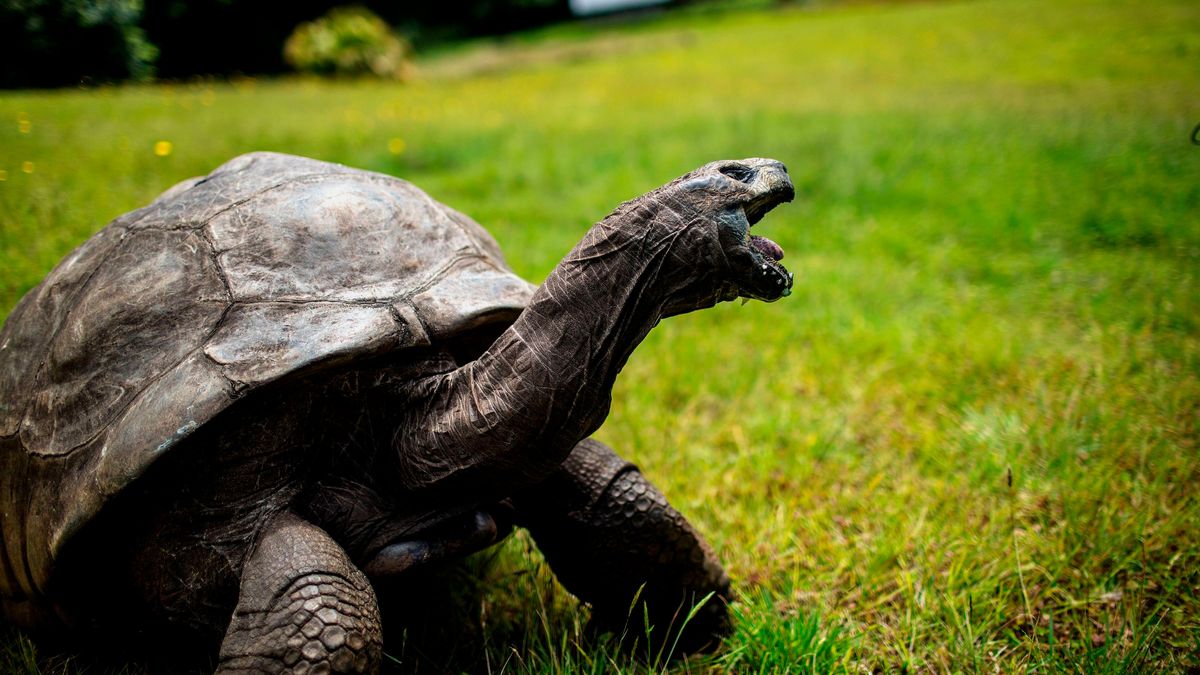
Jonathan the tortoise, considered to be around 193 years old, sparked widespread controversy after an announcement of his death was made via a post on platform X from an account attributed to his veterinarian. However, it soon became clear that this news was merely a false alarm, as reports confirmed that the tortoise is still alive, underscoring a case of confusion and deception surrounding this unique creature.
Jonathan, recognized as the oldest known living land animal, resides on the island of Saint Helena, a remote island located in the South Atlantic Ocean. His long lifespan has been documented through meticulous records, making him a symbol of survival and adaptability in various environments.
Details of the Incident
At the beginning of the week, news of Jonathan's death spread rapidly on social media, causing sorrow among many animal lovers and wildlife enthusiasts. However, shortly thereafter, this news was refuted, as reliable sources confirmed that the tortoise is still alive and in good health. This mix-up in information highlights the importance of verifying news before sharing it, especially in the age of rapid information dissemination.
It is worth noting that Jonathan has lived through numerous experiences over the years, including significant historical periods such as the two World Wars. He has become a symbol of hope and resilience, which has increased his popularity among visitors and tourists.
Background & Context
Historically, tortoises are among the oldest living creatures on Earth, with their existence dating back over 200 million years. However, sea turtles face numerous threats, including habitat loss and climate change. In this context, Jonathan's story reflects the importance of wildlife conservation and the necessity of protecting endangered species.
Saint Helena Island is a unique location, hosting a diverse array of plant and animal species. Conservation efforts have helped preserve these species, including Jonathan, who has become part of the island's cultural heritage.
Impact & Consequences
This incident highlights the importance of environmental awareness and the conservation of endangered species. It also underscores the need to enhance education about wildlife, particularly among younger generations. Such incidents can lead to increased interest in environmental conservation, contributing to improved ecological conditions in the future.
Moreover, false news about animals can negatively affect efforts to protect them. Therefore, media and communities must work together to ensure the accuracy of the information being circulated.
Regional Significance
Although this incident pertains to tortoises on a remote island, it resonates in the Arab region, where many species are facing extinction. Sea turtles in the Red Sea are examples of this, as they require greater protection from environmental threats.
Jonathan's story can serve as inspiration for conservation efforts in the Arab world, promoting biodiversity and raising environmental awareness among local communities.
In conclusion, the story of Jonathan the tortoise remains an example of the importance of wildlife and the necessity of preserving it. We must be cautious in handling the information shared and work together to protect our planet.