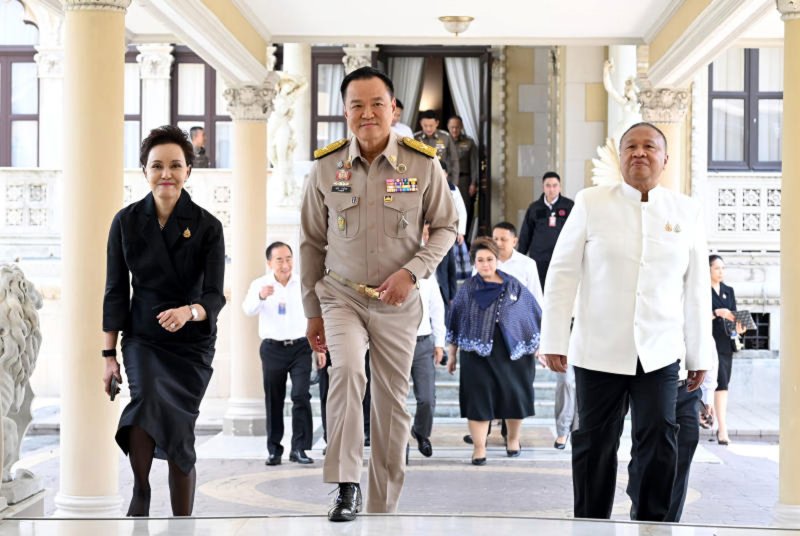
Thai Prime Minister Anutin Charnvirakul has announced that provincial governors have the authority to declare disaster zones in light of the increasing levels of air pollution. These statements come at a time when the country is suffering from dangerously high levels of PM2.5 particles, with 31 provinces recording pollution levels exceeding health limits.
In his remarks, Charnvirakul, who also serves as the Minister of Interior, confirmed that the permanent secretary of the ministry visited the affected areas on Wednesday, following a previous visit by the Minister of Natural Resources and Environment, Suchart Chomklin, and representatives from the Disaster Prevention and Mitigation Department. These officials will remain in the affected areas until conditions improve.
Event Details
According to the Pollution Control Department, the highest pollution levels were recorded in two areas. In the Wiang Tai area of Pai district, PM2.5 levels reached 293.1 micrograms per cubic meter, while the Muang Na area of Chiang Mai recorded 286 micrograms per cubic meter on Wednesday morning. In related news, Chiang Mai Governor Rattapong Narathisakorn announced that six areas have been declared disaster zones: Hot, Samoeung, Chiang Dao, Doi Saket, Mai Ting, and Mai Wang, due to the increasing forest fires reported over the past week.
Rattapong noted that the number of hotspots reached 1,020 on Sunday, before dropping to 355 on Monday, with most fires occurring in the morning and evening. He explained that hotspots tend to decrease in the afternoon when firefighters can access the affected areas.
Background & Context
The issue of air pollution in Thailand is a persistent problem affecting the health of citizens. Natural factors such as forest fires, along with human activities, contribute to exacerbating this issue. In recent years, the country has witnessed a significant increase in air pollution cases, prompting the government to take urgent action to address these challenges.
Historically, Thailand has faced challenges in managing forest fires, especially in the northern regions, where climatic conditions contribute to the spread of these fires. These fires have led to a deterioration in air quality, negatively impacting the health of the population and their environment.
Impact & Consequences
This step by the Thai government is seen as an urgent response to the increasing air pollution problem. Declaring disaster zones allows local governments to access additional resources to combat pollution and enhances the capacity of emergency teams to deal with crises resulting from forest fires.
Furthermore, these measures may impact economic activity in the affected areas, potentially leading to a decrease in tourism and business activity due to the deterioration of air quality. There are also concerns about the impact of these conditions on public health, which may lead to an increase in respiratory illness cases.
Regional Significance
Air pollution and disaster management issues are global concerns that affect many countries, including Arab nations. Some Arab countries also experience high levels of pollution, necessitating similar actions to protect citizens' health. Thailand's experience in dealing with these crises could serve as a model for Arab countries on how to manage environmental disasters.
In conclusion, these events highlight the importance of cooperation between local and central governments to address environmental challenges. They remind us of the need for effective measures to protect the health of citizens and the environment, which requires ongoing efforts and international collaboration.