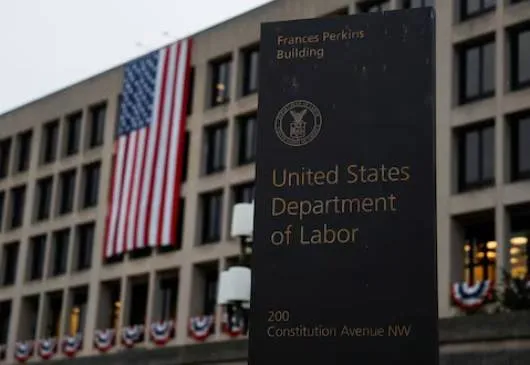
New weekly unemployment claims in the United States have decreased, recording 202,000 claims after seasonal adjustment for the week ending March 28, indicating a continued decline in layoff rates and relative stability in the labor market. This drop comes despite warnings of negative risks stemming from ongoing conflicts in the Middle East.
The U.S. Department of Labor announced on Thursday that initial claims fell by 9,000, surpassing economists' expectations, which had predicted 212,000 claims. Claims have ranged between 201,000 and 230,000 since the beginning of the year, a range that reflects a labor market characterized by low hiring and layoff rates.
Event Details
This stagnation in the labor market is partly attributed to ongoing uncertainty related to the high tariffs imposed by former President Donald Trump on imports. At the same time, the average job growth in the non-farm private sector was about 18,000 jobs per month during the three months ending in February, a rate considered relatively weak.
The contraction in labor supply, resulting from tightened immigration policies during Trump's administration, is a hindering factor for employment growth. Additionally, the ongoing war between the United States, Israel, and Iran, which has entered its first month, has added further uncertainty for businesses, as Trump has pledged to intensify strikes on Iran, raising concerns about the implications of the conflict.
Background & Context
Despite expectations for job growth of around 60,000 jobs in March, some economists have warned that this improvement may be temporary, given the repercussions of the war that have pushed global oil prices up by more than 50%. Furthermore, the average retail price of gasoline in the United States surpassed $4 per gallon this week for the first time in over three years.
Non-farm jobs decreased by 92,000 in February, partly affected by strikes in the healthcare sector and adverse weather conditions. The unemployment rate is expected to stabilize at 4.4%, reflecting a state of relative stability in the labor market.
Impact & Consequences
The report also showed an increase in the number of individuals receiving continuing unemployment benefits by 25,000 to reach 1.841 million during the week ending March 21, a metric used to gauge the pace of employment. Although these claims have declined compared to last year's high levels, the expiration of eligibility for some beneficiaries may be a factor behind this decrease.
In a related context, data from the Bureau of Labor Statistics revealed a larger-than-expected decline in job vacancies during February, alongside a drop in the hiring pace to its lowest level in nearly six years. The U.S. trade deficit also widened in February, but at a slower pace than analysts had anticipated.
Regional Significance
The Arab region is directly affected by economic developments in the United States, as stability in the U.S. labor market could influence investment flows and economic aid to Arab countries. Additionally, rising oil prices due to conflicts in the Middle East may impact the economies of oil-producing Arab nations.
In conclusion, recent data indicates that the U.S. labor market is experiencing relative stability, despite global economic challenges. It remains to be seen how ongoing events in the Middle East will affect this stability in the near future.