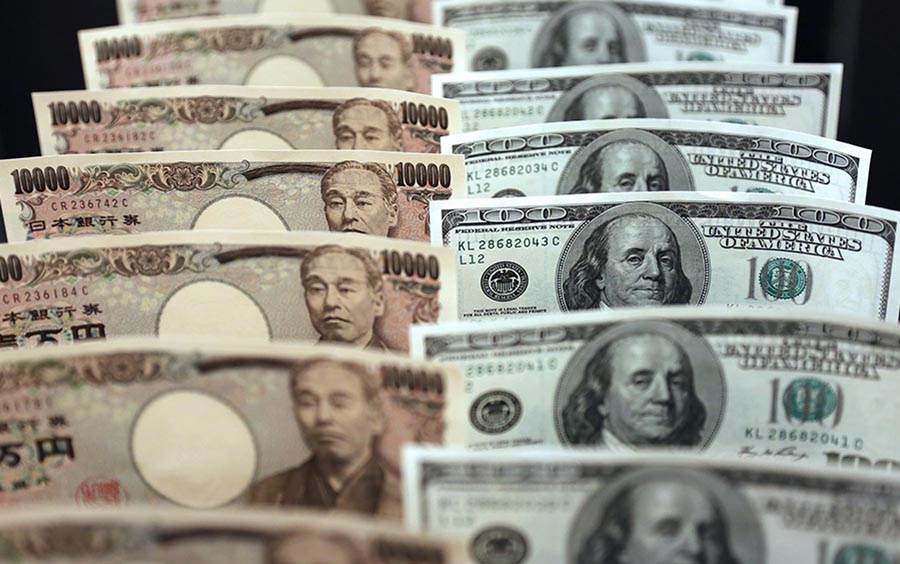
The Japanese yen's value is continuing to decline against the US dollar, approaching its lowest level since late last month. This ongoing decrease raises fears of renewed government intervention in the foreign exchange market, similar to previous instances when the yen exceeded 160 yen to the dollar.
Traders in financial markets view the 160 yen level as a critical point that may prompt the Japanese government to take action to protect the currency. A report from CNBC highlighted that this level is a minimum that should be closely monitored.
Details of the Situation
During trading on Wednesday, the yen fell to concerning levels, reflecting continued pressure on the Japanese currency. Currency analysts at Mitsubishi UFJ expressed surprise at the yen's ongoing weakness despite recent government intervention, as economic factors such as falling energy prices and US bond yields were expected to support the Japanese currency.
Despite prevailing optimism in the markets regarding the possibility of reaching an agreement to end the conflict in the Middle East, this has not positively reflected on the yen's value, complicating the economic situation in Japan.
Background & Context
Historically, the Japanese yen has experienced significant fluctuations in its value, influenced by various economic and political factors. In recent months, changes in US monetary policy have had a notable impact on global markets, including the foreign exchange market. Previous government interventions aimed to stabilize the currency, but ongoing pressures may require new strategies.
The Japanese government's intervention in the foreign exchange market is a historical precedent, as the government seeks to protect the national economy from sharp fluctuations that could affect exports and imports.
Impact & Consequences
If the yen's decline continues, it could lead to increased import costs, negatively impacting the Japanese economy. Additionally, the currency's weakness may affect Japanese companies' competitiveness in global markets, threatening economic growth.
Potential government intervention could help stabilize the yen's value, but this may come with other economic costs, such as increased public debt or impacts on monetary policy. Therefore, the Japanese government faces significant challenges in how to address this situation.
Regional Significance
The decline in the yen's value could affect trade relations between Japan and Arab countries, particularly in energy and commerce. Japan is one of the largest oil importers from Arab nations, and any fluctuations in the currency could impact prices and costs.
Moreover, the stability of the Japanese currency is important for many Arab companies dealing with Japan, making it essential to closely monitor developments in the foreign exchange market.
The decline of the Japanese yen represents a significant challenge for the Japanese government and raises questions about future interventions in the foreign exchange market. Given the current global economic conditions, the government must make strategic decisions to ensure currency stability and protect the national economy.