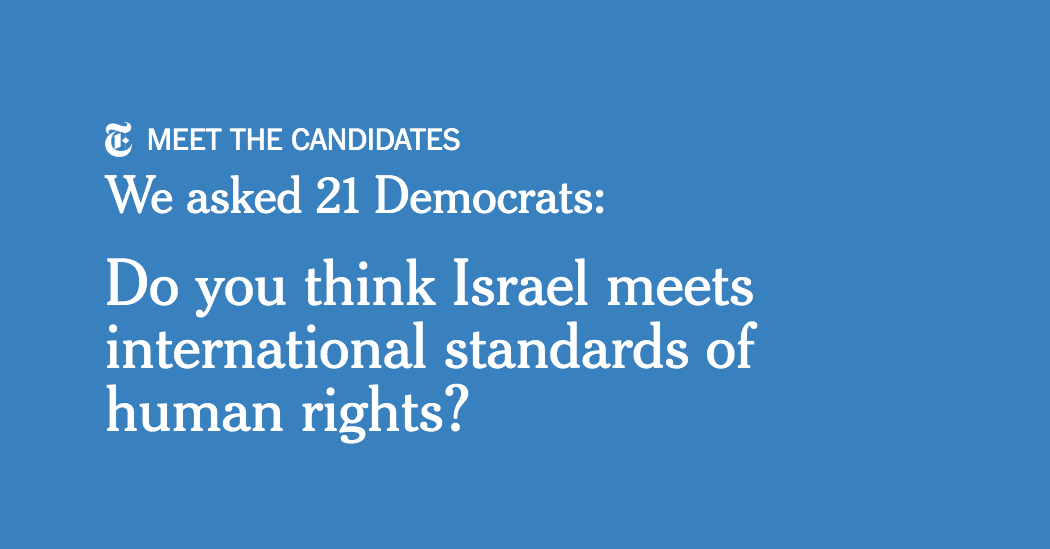
Recent analyses indicate a notable shift in the American Democratic Party's stance towards Israel, with several potential candidates adopting a more critical discourse towards the traditional U.S. ally, particularly amid current crises.
In an analytical piece in the Washington Post, writer Daniel Samet observed this shift, noting that it could be one of the most prominent features of the 2028 presidential race. As the primary elections approach, several Democratic figures have begun to express sharper positions towards Israel, in light of the increasing regional tensions associated with the conflict with Iran.
Key Figures and Their Statements
The article reviewed the positions of prominent figures within the party, such as Gavin Newsom, who sparked widespread controversy when he described Israel as an "apartheid state," before partially retracting this statement. Nevertheless, Newsom continued to criticize Israeli Prime Minister Benjamin Netanyahu, reflecting the difficulty of distinguishing between opposition to Israeli policies and opposition to the state itself.
The writer also highlighted Democratic activist Alexandria Ocasio-Cortez, who accused Israel of committing "genocide" in Gaza and announced her rejection of U.S. military aid to Israel, even that which is linked to self-defense. These statements reflect a radical shift in the political discourse within the party.
Background & Context
The writer bolstered his argument with polling numbers showing a sharp decline in Democratic support for Israel, contrasted with increasing sympathy for Palestinians, especially among the youth. According to a poll conducted by NBC News last March, it showed that 67% of Democrats support Palestinian rights, while Israel garnered support from only 17%, with only 13% viewing it positively compared to 34% in 2023.
This shift is not limited to political discourse but extends to grassroots movements, where pro-Palestinian demonstrations and associated symbols have become more prominent in progressive circles. The article also touched on the positions of other potential candidates, such as Rubén Gallego and Chris Murphy, who held Israel responsible for tensions with Iran.
Impact & Consequences
Senator Chris Murphy, who is believed to be preparing for a presidential run, reiterated the idea that Israel was behind escalating tensions, stating in a speech regarding the "Epic Rage" operation (the war on Iran): "Israel forced us into this." This rhetoric reflects a change in the party's priorities and indicates that adopting pro-Israel positions no longer aligns with the mainstream within the Democratic Party.
Even Jewish figures within the party, such as J.B. Pritzker and Rahm Emanuel, have begun to show more cautious positions towards Israel, including distancing themselves from pro-Israel lobbying groups like AIPAC. Despite this general trend, the writer noted Pennsylvania Governor Josh Shapiro as an exceptional case, as he still defends Israel within the party, although he appears relatively isolated.
Regional Significance
This shift in the Democratic Party's stance could have significant implications for U.S.-Israeli relations and may directly affect U.S. foreign policy towards the Middle East. With increasing sympathy for the Palestinian cause within the party, we may witness changes in American support for Israel, potentially opening the door for more dialogue regarding Palestinian rights.
In conclusion, it seems that the political discourse within the Democratic Party is leaning towards increased criticism and possibly a break from Israeli policies, especially as candidates seek to attract the youth and progressive bases that have become more influential in shaping the party's direction.