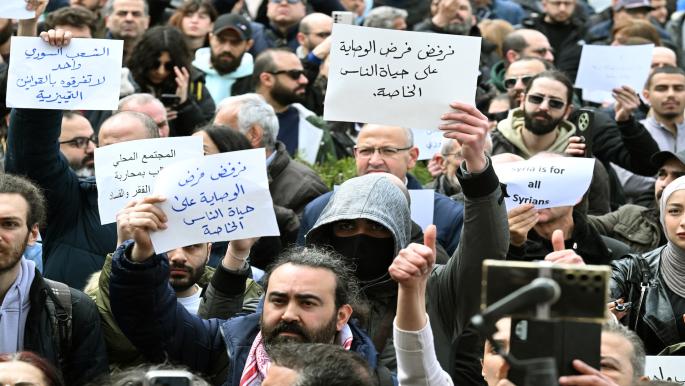
Recently, a large protest took place in Bab Touma, Damascus, where a number of citizens gathered to express their political and social demands. This protest embodies the language of politics that reflects the different, and sometimes contradictory, interests in any vibrant society. This event reflects a growing political awareness among citizens who seek to express their opinions amid the difficult circumstances the country is facing.
This event comes at a sensitive time for Syria, where economic and social pressures on citizens are increasing, making it essential for their voices to be heard. The protest in Bab Touma serves as a clear message to both the authority and the opposition that there is an urgent need to listen to the people's demands and work towards meeting them.
Event Details
Protesters gathered in Bab Touma, one of the historical neighborhoods in Damascus, where they raised slogans demanding improvements in living conditions and an end to corruption. The protest witnessed widespread participation from various social groups, indicating that the demands transcend political affiliations. This diversity among participants reflects the complex reality of Syrian society, where interests and opinions intertwine.
Reports also indicated that the protest was not without tension, as security forces attempted to disperse the demonstrators, leading to limited confrontations. Nevertheless, citizens continued to express their demands, demonstrating their determination to claim their rights.
Background & Context
Historically, Syria has witnessed numerous popular protests, especially since the outbreak of armed conflict in 2011. Over time, the intensity of protests has diminished due to security repression and difficult economic conditions. However, the current situation seems to have revived the spirit of protest among citizens, who face daily challenges related to unemployment and rising prices.
The Bab Touma protest is part of a series of events that have occurred in various regions of the country, where citizens seek to express their dissatisfaction with the current conditions. This context reflects a general sense of frustration, as many feel that their voices have not been heard in the absence of serious dialogue between the government and the citizens.
Impact & Consequences
The protest in Bab Touma could have wide-ranging effects on the political landscape in Syria. On one hand, it may increase pressure on the government to respond to citizens' demands, potentially contributing to improvements in living conditions. On the other hand, it could lead to heightened repression by the authorities, increasing tensions within society.
If protests continue, they may pave the way for the formation of new political movements seeking to change the existing reality. This could lead to a reshaping of the political landscape in the country, making it essential for the government to respond effectively.
Regional Significance
The events in Bab Touma, Damascus, reflect a growing political awareness in the Arab region, where citizens in many countries are striving to express their demands. This could encourage protest movements in other nations, reflecting the people's desire for change and achieving social justice.
In the current circumstances, it becomes important for other Arab countries to monitor what is happening in Syria, as these events could serve as lessons on how to address popular demands. Responding to these demands may be key to achieving stability in the region.
In conclusion, the Bab Touma protest represents a real test for both the authority and the opposition in Syria. There must be an effective response to citizens' demands; otherwise, protests may escalate, complicating the situation in the country further.