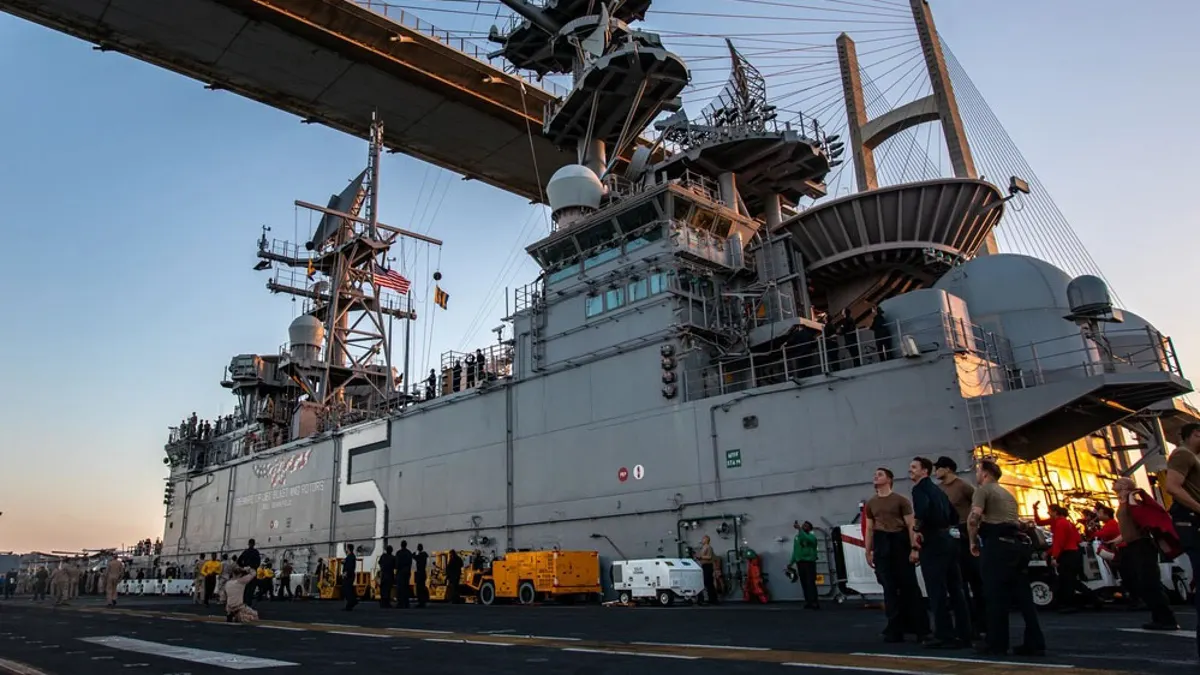
The U.S. Department of Defense (Pentagon) has announced the arrival of 3,500 Marines to the Middle East as part of the United States' efforts to enhance security and stability in the region. This move comes at a time when the area is witnessing escalating political and military tensions, raising concerns about the implications for regional security.
These reinforcements are considered part of a broader strategy aimed at addressing increasing security challenges, particularly in light of ongoing crises in countries such as Iraq, Syria, and Lebanon. The troops have been deployed to U.S. military bases in the region, where they will provide logistical and advisory support to local forces.
Details of the Deployment
According to reports, these forces will strengthen their presence at key U.S. bases, such as Al Udeid Air Base in Qatar and the base in Bahrain. This deployment occurs during a sensitive period, as tensions between the United States and Iran are on the rise, alongside escalating armed conflicts in Iraq and Syria.
This step follows a series of military exercises conducted by the United States with its allies in the region, reflecting Washington's commitment to the security of its Gulf allies. U.S. officials have stated that these reinforcements aim to deter any potential threats from Iran-backed armed groups.
Background & Context
Historically, the Middle East has witnessed multiple U.S. military interventions, as the United States has always sought to maintain its strategic interests in the region. Since 2001, there has been a notable increase in the U.S. military presence in the Middle East, especially following the events of September 11.
In recent years, concerns have escalated regarding Iran's military activities in the region, prompting the United States to bolster its military presence. U.S.-Iranian relations have been severely strained since Washington's withdrawal from the nuclear agreement in 2018, intensifying the conflict in the region.
Impact & Consequences
This military reinforcement is seen as a move that could escalate tensions in the region, as some parties may interpret it as a direct threat. This step is likely to provoke reactions from Iran-backed armed groups, increasing the likelihood of new conflicts erupting.
Additionally, these reinforcements may affect relations between the United States and its allies in the region, as some countries may feel concerned about rising tensions. Conversely, this move could strengthen the United States' position as a leading military power in the region.
Regional Significance
These developments have a direct impact on Arab countries, as some may witness an escalation of internal conflicts as a result of these reinforcements. The presence of additional U.S. forces may provoke reactions from armed groups, complicating the security landscape in the region.
Ultimately, these military reinforcements signify the ongoing tensions in the Middle East, necessitating proactive measures from Arab countries to ensure their stability and security amid these changing circumstances.