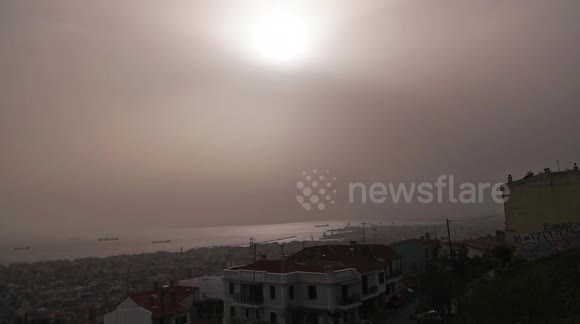
A powerful desert dust storm caused the sky over Greece to turn red, alarming residents and leading to one death due to the harsh weather conditions. The storm, which swept across the country, was accompanied by strong winds and heavy rainfall, affecting traffic and daily life in several areas.
Reports indicated the storm's impact on major cities such as Athens, where a layer of desert dust covered streets and buildings, making visibility difficult. Instances of flooding were also recorded in some regions, leading to road closures and disruption of public services.
Details of the Event
The storm began early on Tuesday morning, with winds carrying dust from the Sahara Desert to European regions. As the storm progressed, Greece experienced a rise in temperatures, exacerbating the situation. Local authorities issued warnings for residents to stay indoors and avoid going out unless absolutely necessary.
In some areas, heavy rainfall was recorded, resulting in flooding that caused property damage. One fatality was reported due to the weather conditions, highlighting the severity of these natural phenomena.
Background & Context
Dust storms are a natural phenomenon that occurs in certain parts of the world, particularly in desert regions. With climate change, these phenomena have become more common, impacting public health and the environment. In recent years, Mediterranean countries have seen an increase in the frequency and intensity of such storms.
Historically, Greece has been prone to such phenomena, but current climate changes have worsened the situation. Dust storms are not only a local issue but also affect neighboring countries, necessitating regional cooperation to address these challenges.
Impact & Consequences
The storm's impact on Greece could have long-term consequences, especially in the areas of public health and the economy. Desert dust can lead to health issues such as asthma and allergies, increasing pressure on the healthcare system.
Moreover, flooding can affect infrastructure, requiring significant investments in repairs. These events may also raise awareness about the importance of adapting to climate change and preparing for natural disasters.
Regional Significance
Dust storms are part of the desert climate and are a common phenomenon in many Arab countries. Such events can affect air quality and public health in neighboring countries, necessitating preventive measures.
Additionally, cooperation among Arab countries in sharing information and experiences on how to deal with these phenomena can have a positive impact on local communities. It is crucial for countries to adopt strategies to adapt to climate changes and mitigate their negative effects.