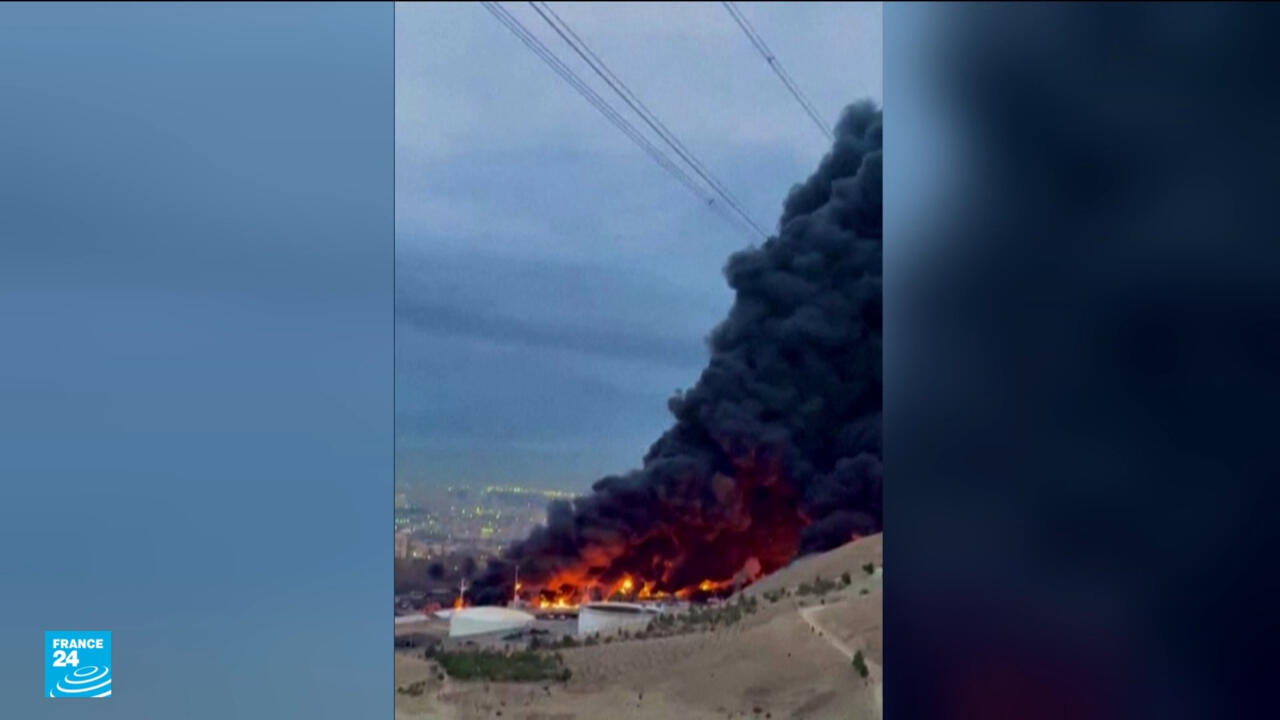
In a serious escalation of events, Iranian President Masoud Pezeshkian has deemed the attacks launched by the United States and Israel on vital infrastructure in Iran as a 'war crime.' These statements come at a sensitive time as the country experiences consecutive explosions, the latest occurring in the capital Tehran and the city of Isfahan, heightening tensions in the region.
Local media reported that former Iranian Foreign Minister Kamal Kharrazi was seriously injured due to an airstrike that resulted in the death of his wife. This incident highlights the increasing risks faced by political figures in Iran and reflects the rising violence in the country.
Details of the Incident
The recent attacks on Iran occur within the context of escalating tensions between Tehran and Washington, with Iran accusing the U.S. and Israel of working to destabilize the country. In recent days, a series of attacks targeting vital facilities has led to the destruction of a crucial bridge in Iran, marking a significant blow to its infrastructure.
The Iranian government is seeking to respond to these attacks, with Pezeshkian confirming that the country will take strict measures against the aggressors. In this context, he called for national unity to confront external challenges, emphasizing that Iran will not stand idly by in the face of these aggressions.
Background & Context
Historically, Iranian-American relations have been severely strained since the Islamic Revolution in 1979. These tensions have intensified in recent years, particularly following the U.S. withdrawal from the nuclear agreement in 2018. This withdrawal led to the imposition of harsh economic sanctions on Iran, significantly impacting its economy and exacerbating internal crises.
At the same time, Israel seeks to prevent Iran from developing its nuclear capabilities, adopting an aggressive policy towards Tehran. This dynamic has resulted in an increase in attacks and military operations in the region, raising the risks of an all-out conflict.
Impact & Consequences
The recent attacks could lead to greater military escalation in the region, with Iran likely to respond with counterattacks targeting American and Israeli interests in the Middle East. Such escalation could drag the region into a full-scale war, threatening regional stability and affecting global security.
Moreover, these events may impact relations between Iran and European countries, which are striving to maintain the nuclear agreement. If the attacks continue, these countries may find themselves in a difficult position, needing to take a clear stance regarding the military escalation.
Regional Significance
The developments in Iran have a direct impact on Arab countries, especially those experiencing tensions with Iran, such as Saudi Arabia and the United Arab Emirates. The escalation of violence in Iran could lead to increased sectarian tensions in the region, threatening stability in countries like Iraq and Lebanon.
Additionally, these events could affect oil prices and financial markets, as any military escalation may lead to disruptions in oil supplies, negatively impacting the global economy.
In conclusion, the situation in Iran remains under close observation, as any new developments could lead to radical changes in the regional and international landscape. It is crucial for Arab countries to closely monitor these events and be prepared to address any repercussions that may arise.