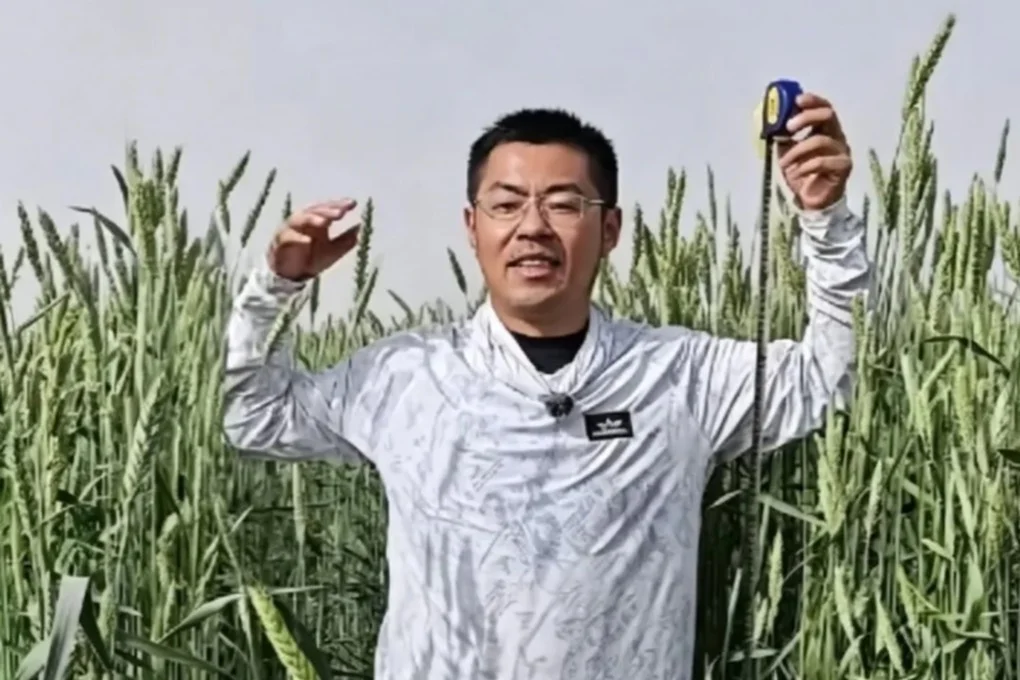
In a pioneering move, scientists in China are cultivating giant hybrids of wheat and barley in the western Xinjiang Desert, where the height of these plants exceeds that of some humans. These hybrids are known as Triticale, a blend of wheat and barley, and are distinguished by their remarkable ability to adapt to harsh environmental conditions.
These hybrids are ideal for cultivation in areas suffering from water scarcity and poor soil, as they can withstand poor soil, cold, drought, salinity, and sandstorms. According to Kwang Feiteng, the executive director of Maishengdao Biotechnology in Xinjiang, these plants provide food not only for humans but can also have their stems and leaves used as animal fodder.
Event Details
Through this cultivation, China aims to achieve self-sufficiency in food production, especially in light of increasing climatic challenges. Xinjiang is a strategic region in this regard, boasting vast areas of arid land that can be transformed into agricultural land using modern technologies.
The Chinese government is supporting these projects by providing necessary funding and technology, reflecting its commitment to achieving food security in the country. Initial experiments have shown significant success in cultivating these hybrids, opening new horizons for agriculture in arid regions.
Background & Context
Historically, China has relied heavily on traditional agriculture, but with a growing population and climate change, it has become essential to seek new ways to increase food production. Xinjiang is one of the regions most affected by climate change, making it an ideal area to experiment with the cultivation of wheat and barley hybrids.
Hybrid cultivation experiments are not new, having been developed in several countries worldwide, but what distinguishes the Chinese experience is the focus on adapting to local conditions. This type of agriculture could have a significant impact on food security in the country.
Impact & Consequences
This step represents a major shift in how China addresses agricultural challenges. If these hybrids achieve positive results, these techniques may be applied in other regions of the country, contributing to an overall improvement in agricultural production.
Moreover, these experiments could enhance international cooperation in agriculture, as other countries may benefit from Chinese expertise in cultivating hybrids capable of adapting to harsh conditions.
Regional Significance
Considering the agricultural challenges faced by many Arab countries, China's experience in cultivating wheat and barley hybrids could serve as an inspiration. Countries like Egypt and Sudan face significant challenges in food security, making the search for innovative solutions essential.
Arab nations could benefit from the modern agricultural technologies developed by China, which would help them improve their agricultural production and achieve self-sufficiency.