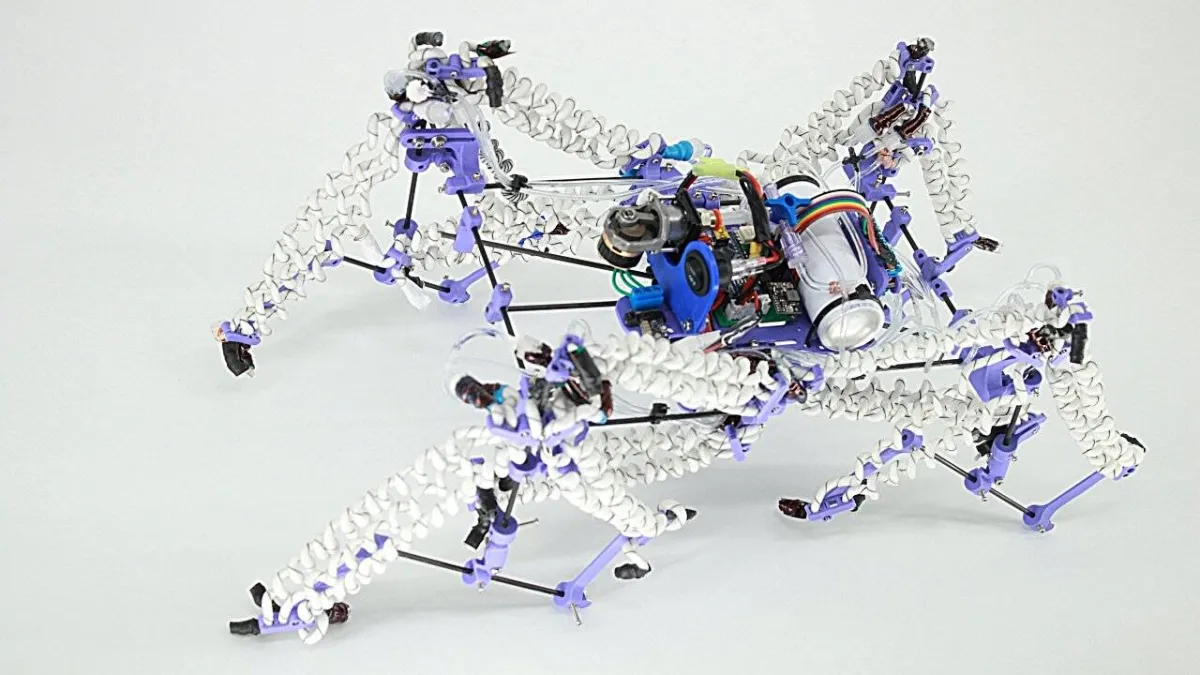
Researchers at Arizona State University have developed a new type of artificial muscles powered by air, marking a revolutionary step in robot design. This technology is inspired by biological muscles, utilizing pneumatic systems instead of rigid motors, granting robots greater flexibility and the ability to move in unusual conditions.
These new muscles can lift weights up to 100 times their own weight while maintaining a small size and lightweight design. This ratio reflects a significant shift in robotics, as traditional systems have long struggled to balance strength and flexibility. Robots relying on electric motors or rigid mechanical systems tend to be strong but are less adaptable to complex environments.
Details of the Innovation
The new pneumatic muscles allow for a combination of strength and flexibility, opening the door to broader applications. Among the notable features of this technology is its ability to operate in challenging conditions, such as extremely hot water or rough surfaces, environments that often hinder traditional robots or cause them to malfunction. Researchers indicate that this type of muscle can help robots "overcome obstacles that keep their traditional counterparts out of service," enhancing their use in tasks such as exploration or complex industrial operations.
Another important advantage is that these systems can operate without relying entirely on heavy traditional power sources, reducing the need for batteries or complex electrical systems. This development could contribute to the design of more autonomous robots capable of working for longer periods, especially in areas where recharging or maintenance is difficult.
Background & Context
This technology reflects a broader shift in robotics towards what is known as soft robotics, systems that rely on flexible materials that mimic nature rather than rigid metal structures. Artificial muscles, in general, are designed to replicate how human muscles work, allowing them to contract and expand in response to various stimuli such as pressure, heat, or electricity. In the case of pneumatic muscles, air pressure is used to stimulate movement, enabling smoother and more adaptable motions in the environment.
The significance of this development extends beyond theoretical aspects, encompassing multiple practical applications. These muscles can be used in rescue operations in hazardous environments, inspecting industrial infrastructure, and medical applications, such as assistive devices, as well as in agriculture and working on uneven terrains.
Impact & Consequences
The importance of these applications lies in the fact that robots capable of adapting to unpredictable environments may reduce the risks faced by humans in such tasks. Despite these advantages, there are still technical challenges associated with precise control of these systems, especially since pneumatic muscles rely on nonlinear dynamics, making their movement control more complex compared to traditional systems.
Moreover, integrating these muscles into comprehensive robotic systems requires the development of software and controls capable of managing this type of flexible movement. This innovation represents a part of a broader trajectory towards developing robots that resemble living organisms in terms of movement and interaction with their environment.
Regional Significance
These advancements could enhance technological innovation in Arab countries, where these robots can be utilized in various fields such as agriculture, industry, and medicine. The ability to operate in harsh conditions may also open new avenues for exploration in remote or disaster-affected areas.
In conclusion, this innovation represents an important step towards the future of robotics, combining strength and flexibility, thereby redefining how robots are designed to meet the needs of more complex environments.