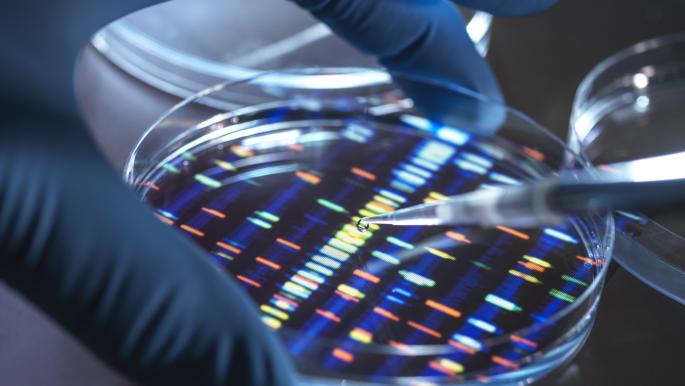
A French-Japanese research team has announced a groundbreaking new data transmission technology based on artificial DNA encryption during French President Emmanuel Macron's visit to the Japanese capital, Tokyo. This technology represents an advanced step in the field of information security, aiming to provide a high level of protection for data against the increasing threats in the digital age.
The new technology utilizes artificial DNA as a means of encrypting data, making it nearly unbreakable. Thanks to this method, vast amounts of information can be stored in very small spaces, opening new horizons in various fields such as cybersecurity and biomedicine.
Details of the Event
During President Macron's official visit to Japan, this innovative technology was unveiled at a joint press conference with Japanese Prime Minister Fumio Kishida. Macron emphasized that this collaboration between France and Japan serves as a model in the field of scientific and technological research, highlighting the importance of strengthening international partnerships to tackle global challenges.
The technology relies on using artificial DNA as a means to encrypt data, where information is converted into a genetic sequence that can be stored in tiny molecules. This approach allows for the storage of massive amounts of data in an extremely small size, making it an ideal choice for many applications, including the storage of sensitive data.
Background & Context
In recent years, the world has witnessed a significant increase in cyberattacks, necessitating the development of new technologies to protect data. This new technology is part of global efforts to enhance information security, as countries and companies seek innovative solutions to address the growing threats.
This innovation comes at a critical time, as concerns about information and personal data leaks are on the rise. Studies have shown that many institutions still use outdated and ineffective techniques to protect their data, making them vulnerable to breaches.
Impact & Consequences
This new technology is considered an important step towards enhancing information security, as it could lead to a reduction in the risks associated with data leaks. It is expected to have a significant impact on various industries, including finance and healthcare, where high levels of security are required to protect sensitive information.
Moreover, this technology could contribute to fostering innovation in new fields, such as artificial intelligence and data analysis, opening new avenues for technological development. This move could also encourage further international collaboration in research and development.
Regional Significance
Given the challenges faced by Arab countries in the field of cybersecurity, this new technology could serve as an inspiration for researchers and developers in the region. As reliance on digital technology increases, it becomes essential to develop innovative solutions to protect data and information.
This technology could enhance cooperation between Arab countries and developed nations in the field of technology, helping to build local capabilities in cybersecurity. It could also open doors to new investments in this vital area.
In conclusion, innovation in encryption using artificial DNA represents an important step towards a safer future in a world where cyber threats are increasing. As research and development continue, we may see more innovative solutions that enhance data protection and contribute to building a more secure digital environment.