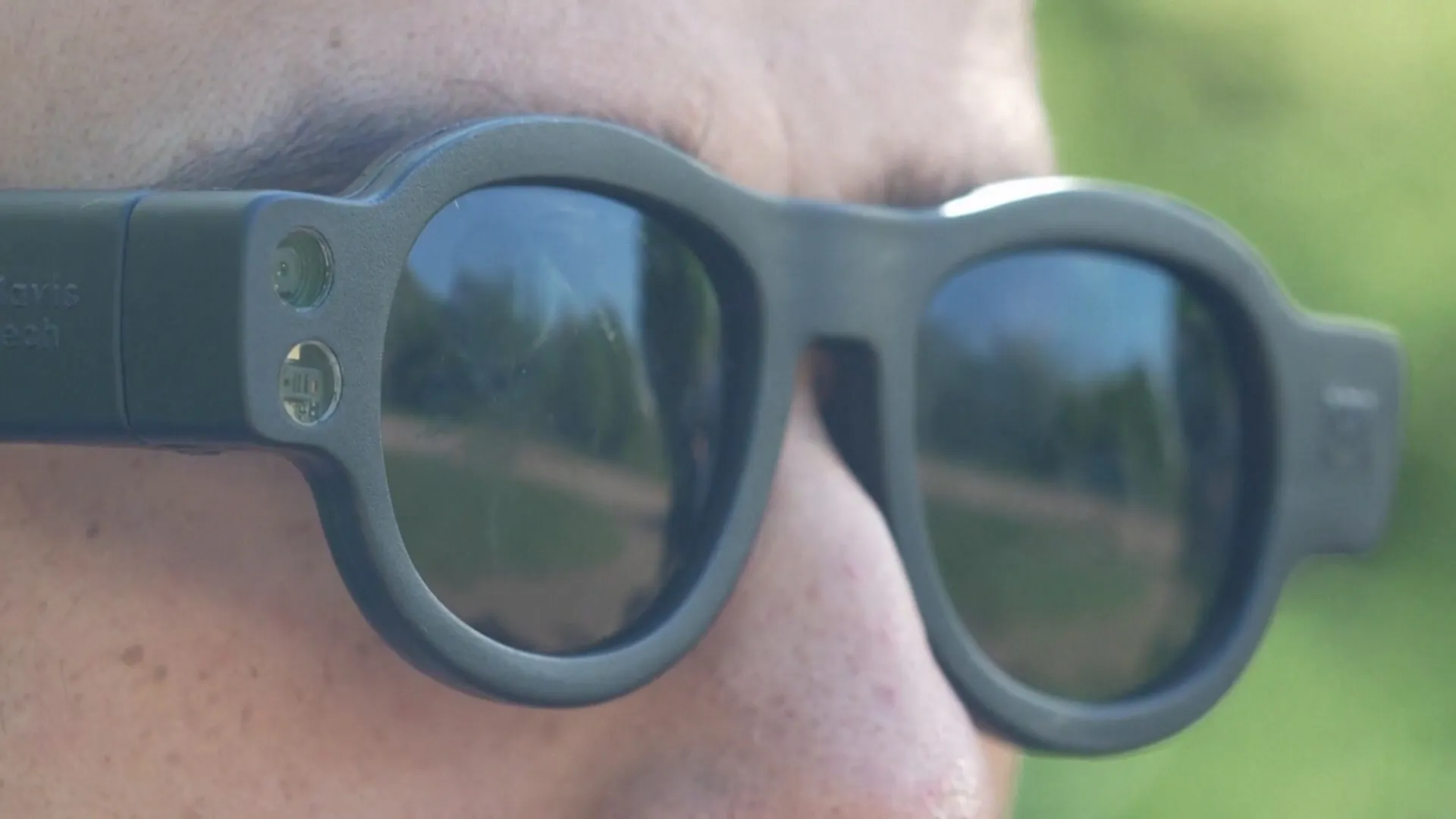
In an innovative step that could change the lives of millions suffering from vision impairment or loss, a British company has unveiled the development of smart glasses that utilize artificial intelligence. These glasses aim to enhance user independence by providing direct support in navigation.
The glasses combine advanced cameras, precise sensors, and an interactive voice control system, allowing users to receive real-time information about their surroundings. Once worn, the system responds immediately to voice commands, with the integrated front camera capturing live images of the environment.
Event Details
The glasses rely on advanced technologies to analyze images captured by artificial intelligence, enabling the identification of obstacles and providing accurate information about distances and dimensions. This data is converted into auditory signals or vibrations, alerting the user to the nature of their surroundings, whether obstacles or directions.
The innovation aims to reduce reliance on human assistance for navigation, offering immediate information about the environment, thus facilitating movement in public and private spaces. These glasses represent a significant step towards empowering the blind and visually impaired to interact with their surroundings with greater confidence.
Background & Context
These innovations come amidst the growing use of assistive technology to improve the quality of life for individuals with disabilities. In recent years, we have witnessed notable advancements in technologies aimed at supporting this demographic, reflecting the international community's interest in enhancing their rights and providing more inclusive environments.
There is an increasing need for such technological solutions given the challenges faced by the blind and visually impaired in navigation, as reliance on human assistance may sometimes be insufficient or unavailable. Therefore, these glasses represent an effective alternative.
Impact & Consequences
This innovation could significantly impact users' lives, enhancing their independence and reducing reliance on others. It may also contribute to changing societal perceptions of the blind and visually impaired by enabling them to interact more effectively with their environment.
Moreover, this technology could open new avenues for research and development in the field of artificial intelligence, leading to continuous improvements in the quality of life for individuals with disabilities.
Regional Significance
In the Arab region, these glasses could positively impact the lives of the blind and visually impaired, as many countries suffer from a lack of services dedicated to this group. This technology could help improve living standards and promote the rights of individuals with disabilities.
Additionally, introducing such innovations in the Arab world may encourage further investments in assistive technology, contributing to the development of more inclusive environments and providing better opportunities for the blind.
In conclusion, these smart glasses represent an important step towards achieving greater independence for the blind and visually impaired, reflecting technological progress in the service of humanity.