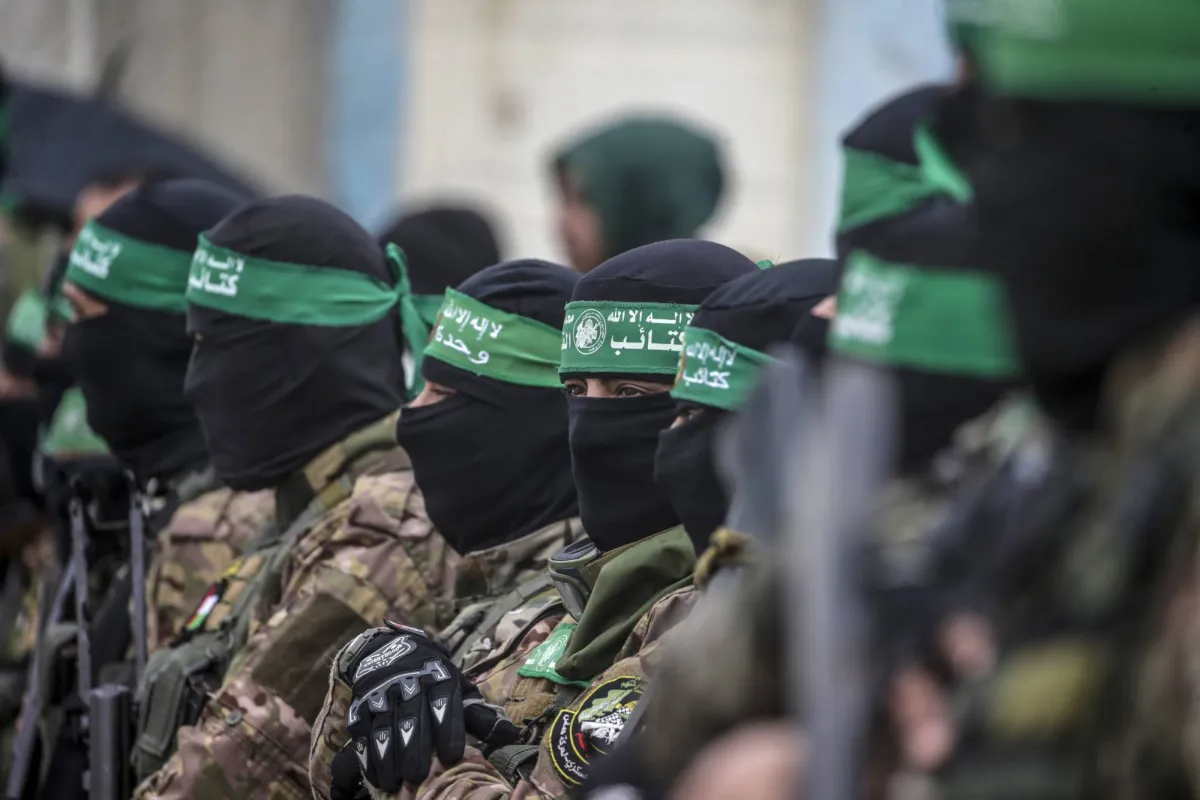
The Hamas movement recently received a proposal from the executive body of the Peace Council, established by former U.S. President Donald Trump, regarding disarmament in the Gaza Strip. A senior source within the movement considered this proposal a "threatening message," as it stipulates the surrender of "all weapons within the Gaza Strip without exception."
Sources within the movement confirmed that the proposal requires the disarmament of all Palestinian factions and clans, including the personal weapons of leaders, even those used for security purposes. In this context, reports indicated that the Peace Council had submitted a written proposal during a meeting in Cairo, attended by Nikolai Mladenov, the Council's special representative, and Arieh Lightstone, the special assistant to the U.S. envoy.
Details of the Meeting
During the meeting, Hamas reaffirmed its commitment to previous agreements, indicating its readiness to implement the agreed-upon phases, but linked the disarmament issue to progress in negotiations on other matters. This proposal comes as part of a plan reached to cease hostilities between Israel and Hamas last October, which includes 20 clauses, one of which addresses disarmament.
Sources from Hamas viewed the plan as an attempt to tie the reconstruction of Gaza to the surrender of weapons, raising concerns within the movement and other factions, as they see this as unacceptable imposition. Furthermore, the proposal did not specify any deadlines for response, increasing the uncertainty surrounding the future of negotiations.
Background & Context
Historically, the Gaza Strip has witnessed numerous attempts at disarmament, often met with resistance from armed factions. Hamas, regarded as the largest armed movement in the region, views weapons as a means of defending Palestinian rights. The political and economic conditions in Gaza have influenced the movement's stance, making it more cautious in dealing with external proposals.
In recent years, there have been multiple attempts by the international community to find peaceful solutions to the Israeli-Palestinian conflict, but these efforts have frequently encountered significant obstacles, including a lack of trust among the involved parties. Additionally, the humanitarian situation in Gaza is deteriorating, complicating any efforts to reach an agreement.
Impact & Consequences
If the proposal is accepted, it could lead to radical changes in the security and political situation in Gaza. Hamas and other factions may face substantial pressure, potentially escalating tensions. On the other hand, acceptance of the proposal could be seen as a step toward achieving peace, but this would require strong guarantees to protect Palestinian rights.
Moreover, this proposal could affect internal Palestinian relations, potentially leading to divisions among factions regarding how to handle external pressures. Reactions from Arab countries and the international community will be crucial in determining the future of this proposal.
Regional Significance
This development indicates potential shifts in regional politics, as the outcomes of negotiations may impact relations between Arab countries and Israel. The success or failure of these talks could reflect on the stability of the entire region, especially in light of the current tensions in the Middle East.
In conclusion, the future of the proposal remains unclear, as it requires a delicate balance between security and political demands, along with addressing humanitarian issues in Gaza. Any steps toward disarmament must be accompanied by strong guarantees to protect Palestinian rights and achieve a just peace.