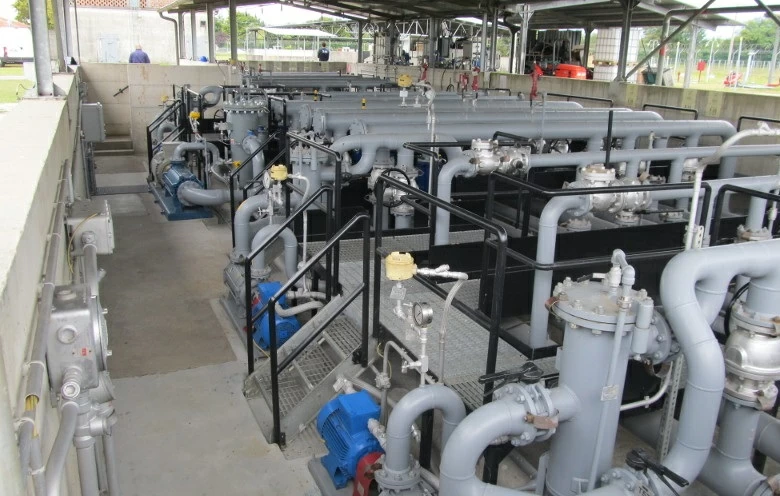
Serbian authorities announced today, Sunday, the discovery of explosives near a major gas pipeline that supplies most of the country and neighboring Hungary. Serbian President Aleksandar Vučić confirmed that he contacted Hungarian Prime Minister Viktor Orbán to inform him of the threat facing the vital gas infrastructure.
Vučić described the explosives as having "immense destructive power," noting that there have been no reports of damage so far. He explained that explosive valves were found along with a type of explosive that has not yet been disclosed, adding that "the investigation is still ongoing and there are some intelligence leads."
Details of the Incident
The area where the explosives were found is near the town of Kanjiza, about 10 kilometers from the Hungarian border. This discovery has raised significant concern in both Serbia and Hungary, as this pipeline is considered a lifeline for energy in the region.
In a related context, the Hungarian opposition accused Prime Minister Orbán and his ruling party Fidesz of orchestrating this incident, especially with elections scheduled for April 12. Former leader of the Fidesz party, Péter Magyari, indicated that they received signals suggesting that Orbán may cross another "red line" with Serbian and Russian assistance.
Background & Context
The historical relations between Serbia and Hungary are intertwined, with both countries cooperating in several fields, including energy. However, political tensions could affect these relations, particularly given the current situation in Europe. The upcoming elections in Hungary may also play a role in escalating these tensions.
This incident comes at a sensitive time, as Orbán seeks to bolster his position before the elections, increasing the accusations directed at him by the opposition. The region has witnessed several similar events in recent years, raising concerns about the security of vital infrastructure.
Impact & Consequences
This incident could lead to increased tensions between Serbia and Hungary, especially if external interference is proven. Additionally, this discovery may impact energy investments in the region, as both countries heavily rely on natural gas.
These developments are likely to enhance security cooperation between Serbia and Hungary, as both governments may seek to take additional measures to protect vital infrastructure. Ongoing investigations may reveal new information that could affect the political situation in both countries.
Regional Significance
This incident exemplifies the geopolitical tensions that could affect global energy markets, including the Arab region. Any disruption in gas supplies could impact prices and increase economic pressures on importing countries.
Moreover, events in Europe may influence Arab policies regarding energy, necessitating a reevaluation of cooperation strategies in this field. Given the global challenges, it becomes essential for Arab countries to enhance energy security and develop local resources.
The discovery of explosives near the gas pipeline reflects the security challenges facing the region and indicates the need to strengthen cooperation among countries to maintain energy stability and regional security.