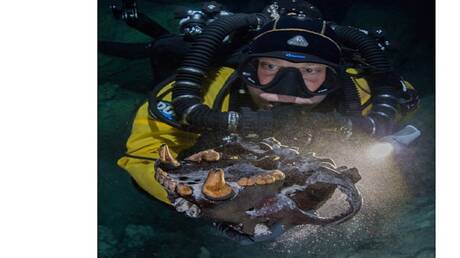
Paleontologist John Moretti from the University of Texas at Austin has discovered fossils of giant Ice Age animals within an underwater cave in Central Texas. This discovery marks the first of its kind in the region, as such fossils had not been found previously, sparking interest among scientists and natural history enthusiasts.
Initial studies suggest that these bones belong to a variety of animals that lived during the Ice Age, such as mammoths and giant sloths, reflecting the biological diversity that existed during that era. This discovery presents a unique opportunity to understand how these animals adapted to the harsh climatic conditions that prevailed at the time.
Details of the Discovery
The fossils were found in an underwater cave located in a remote area of Texas, where Moretti and his team conducted research after receiving reports of unusual bones. Following meticulous excavation efforts, they managed to extract several bones that were later identified as part of the skeletal remains of giant animals. This discovery contributes to expanding our knowledge about the species that lived during that period.
These fossils serve as a window into the past, revealing how the environment changed and how life evolved on Earth. Additionally, these bones will assist scientists in studying climate changes and their impact on various species.
Background & Context
The Ice Age period dates back approximately 2.4 million years, during which the Earth experienced significant climatic changes that led to the emergence and extinction of many species. This period was characterized by large portions of the Earth being covered in ice, which greatly affected both wildlife and vegetation. Texas is known for its rich geological history, but until now, there had been no major discoveries related to Ice Age animals.
This discovery is part of a larger effort to understand the history of the Earth and life upon it. In recent years, scientific interest has increased regarding how climatic changes affect living species, and this discovery underscores the importance of research in this field.
Impact & Consequences
This discovery could have significant implications for future research in paleontology and ecology. It will help scientists understand how animals adapted to climate changes, which could have applications in addressing current environmental challenges. Furthermore, it may contribute to enhancing scientific tourism in the area, as interested visitors can explore the site and learn about these discoveries.
Moreover, this discovery could lead to increased investments in scientific research in Texas, reinforcing its status as a center for scientific inquiry in the fields of Earth and life sciences.
Regional Significance
Although this discovery is located in Texas, it holds important implications on a global scale. Scientists in the Arab region could benefit from this research to understand the history of life in their own environments. Additionally, climate changes and their impact on living species is a topic of concern for all nations, including Arab countries facing similar environmental challenges.
This discovery could encourage scientific collaboration among countries, allowing for the exchange of knowledge and expertise in the fields of paleontology and ecology. It may also raise awareness of the importance of preserving biodiversity in the Arab region.
In conclusion, this discovery represents a significant step toward a deeper understanding of the history of life on Earth and reflects the importance of scientific research in uncovering the secrets of the past.