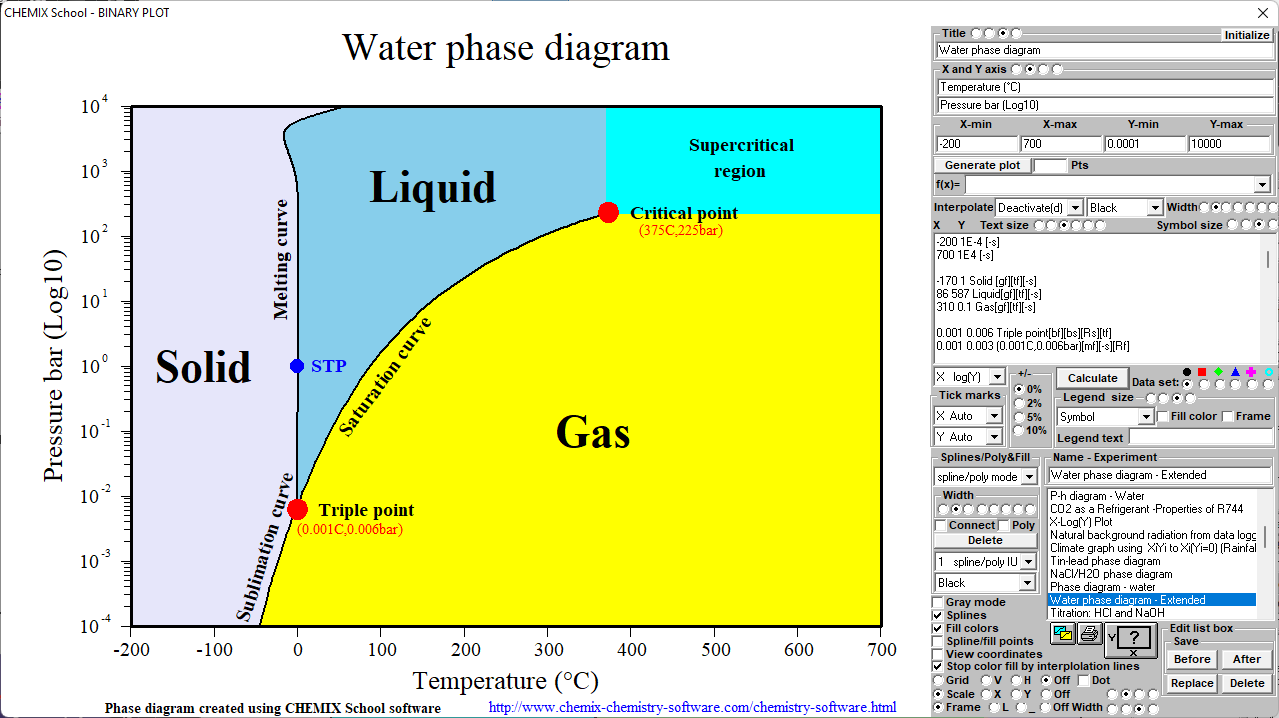
A team of researchers at Stockholm University has revealed the existence of a hidden critical point that affects the behavior of water molecules, providing an explanation for the unique properties of this vital liquid. This critical point, related to temperature and pressure, causes water to behave differently from most other liquids, allowing it to exist in two distinct liquid states simultaneously.
Typically, the density of liquids increases as they cool, but water exhibits exceptional behavior. At a temperature of 4 degrees Celsius, water becomes denser, yet it begins to expand upon freezing, leading to the phenomenon of ice floating on the surface rather than sinking. This strange behavior has puzzled scientists for decades, until this new discovery offers a scientific explanation.
Event Details
The researchers employed ultra-fast X-ray laser technology to observe water molecules before they freeze. The results indicated that the hidden critical point appears at very low temperatures reaching -63 degrees Celsius and at high pressures approaching 1000 atmospheres. In this state, water molecules oscillate between two different liquid states, elucidating the unique behavior of water.
The study, published in the journal Science, confirms that these oscillations grant water its unique properties, such as its unexpectedly changing density, expansion upon freezing, and its ability to efficiently store and transfer heat. These properties are not only peculiar but essential for life on Earth, ensuring that rivers and lakes do not freeze completely in winter, thus preserving the aquatic environment for living organisms.
Background & Context
Historically, scientists have sought to understand the strange behavior of water for centuries. This unique behavior makes water a fundamental substance for life, playing a pivotal role in environmental and biological processes. By understanding this critical point, scientists can explore the impact of water in various fields such as physics, chemistry, and geology.
These discoveries are also significantly important for understanding natural phenomena such as weather and climate changes. Water, with its unique properties, directly influences climate and the environment, making it a vital subject for scientific research.
Impact & Consequences
These discoveries open new avenues for understanding numerous natural phenomena. They could aid in developing more accurate models for climate change, as well as improving the understanding of complex chemical and biological processes that depend on water. Additionally, understanding water behavior could contribute to advancements in water treatment and energy technologies.
Furthermore, these findings may lead to new applications in fields such as renewable energy, where the unique properties of water can be harnessed to develop new energy storage technologies.
Regional Significance
In the Arab region, where many countries face water scarcity, this discovery could have a significant impact. Understanding the behavior and properties of water can help develop better strategies for managing water resources. It may also contribute to improving irrigation and agricultural techniques, thereby enhancing food security in the region.
In conclusion, the discovery of the hidden critical point represents a major step towards understanding the strange and fascinating behavior of water. This research could pave the way for new discoveries in the life and natural sciences, enhancing scientists' ability to tackle future environmental challenges.