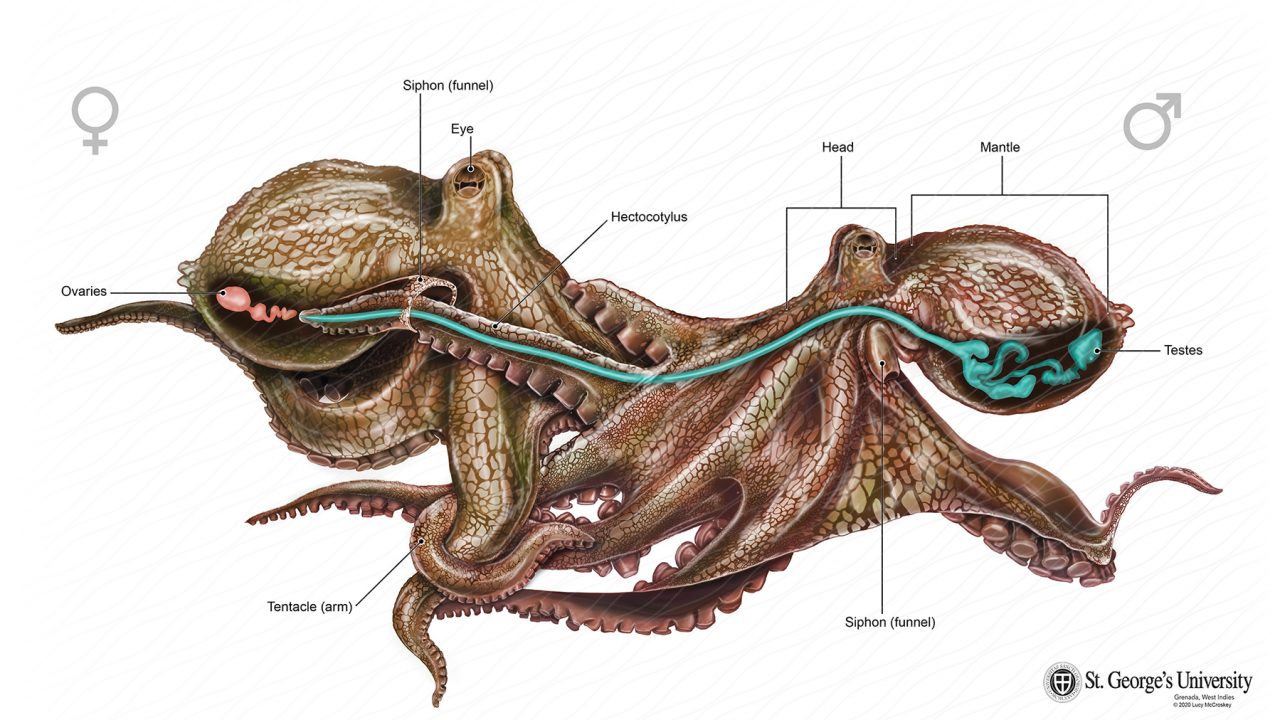
In a new study, researchers have uncovered the role of the hormone progesterone in directing male octopus behavior during the mating process. This discovery is a significant step in understanding how hormones affect animal behavior, as research has shown that hormone receptors used in prey location are also activated by progesterone.
Octopuses are considered intelligent marine creatures, and previous studies have demonstrated that they exhibit complex mating behaviors. However, there has not been a clear understanding of the role hormones play in these behaviors. Now, the new research shows that progesterone can significantly influence how male octopuses interact with females, opening new avenues for studying mating behaviors in the animal kingdom.
Details of the Discovery
Receptors for progesterone are located in specific cells within the octopus's body and play a role in guiding its behaviors. When these receptors are activated, they can affect how males respond to females, leading to improved mating opportunities. This discovery reflects the complexity of interactions between hormones and animal behaviors and enhances our understanding of the biological world.
These findings are intriguing as they demonstrate how certain hormones can influence specific behaviors in particular contexts. Additionally, this research contributes to expanding the knowledge base on how environmental and hormonal factors affect animal behavior.
Background & Context
Historically, studies on octopus behaviors have focused on aspects such as intelligence and social interaction. However, understanding the role of hormones in these behaviors has been limited. Interest in studying the effects of hormones on animal behavior dates back several decades, with previous research showing that hormones play a significant role in mating behaviors across various species.
Octopuses are marine creatures with advanced cognitive abilities, making them a fascinating subject for research. However, there has been a lack of studies linking hormones to mating behaviors. This new discovery fills that gap and contributes to a deeper understanding of these creatures.
Impact & Consequences
This discovery could have wide-ranging implications across multiple fields, including marine biology and animal behavior science. Understanding how hormones influence mating behaviors can help improve conservation and breeding strategies in captivity. This understanding could also be used to develop new methods for studying the behaviors of other animals.
Furthermore, this research may contribute to enhancing public understanding of how environmental factors affect animal behavior, which could have implications for managing and protecting marine environments.
Regional Significance
In the Arab region, seas and oceans are home to many marine species, including octopuses. Understanding the behaviors of these creatures can help develop sustainable fishing strategies, thereby boosting the marine economy in Arab countries. Additionally, enhancing knowledge about marine creature behaviors can contribute to conservation efforts and protect biodiversity.
In conclusion, this discovery underscores the importance of scientific research in understanding the complex relationships between hormones and animal behaviors. It also highlights the need for more studies to understand how these factors affect marine creatures, which could contribute to improving conservation strategies and managing marine resources.