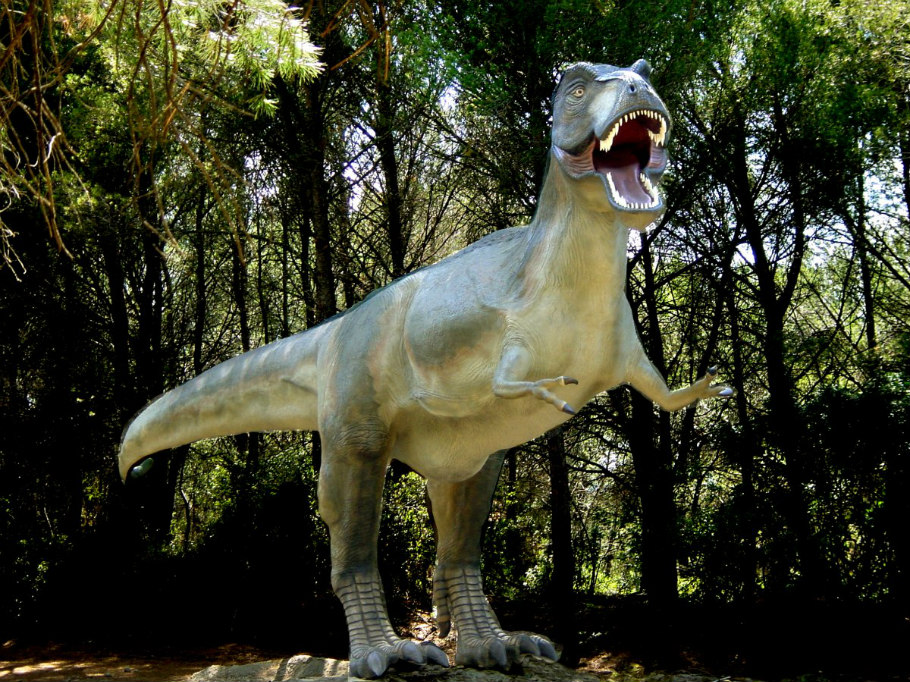
The Dinosaur Museum in Mèze, France, has unveiled the discovery of hundreds of dinosaur eggs dating back approximately 72 million years. This finding is among the most significant globally, highlighting an important period in Earth's history and enhancing the region's importance as a destination for scientific research and archaeological studies.
These eggs are located at a recently discovered archaeological site, believed to belong to a type of dinosaur that lived during that era. This discovery is not only scientifically intriguing but also reflects ongoing efforts in the field of paleontology and the search for traces of ancient life.
Details of the Discovery
The museum announced that this discovery resulted from meticulous excavation operations that lasted for an extended period, with around one hundred eggs found in good condition. This large number of eggs indicates that the area was home to a significant number of dinosaurs, opening the door for new studies on their behaviors and reproduction.
These eggs serve as evidence of the biodiversity that existed during that time and provide a glimpse into the environmental conditions that prevailed. Scientists hope that these discoveries will aid in a better understanding of Earth’s history and the evolution of life on it.
Background & Context
The history of dinosaurs spans thousands of years, during which the Earth has witnessed numerous climatic and geographical changes. Dinosaurs were among the most dominant creatures on the planet and went extinct about 65 million years ago, making the study of their remains and fossils crucial for understanding the history of life on Earth.
The Dinosaur Museum in Mèze is one of the leading museums in this field, offering a wide range of exhibits that contribute to enhancing knowledge about dinosaurs and their history. New discoveries like this attract more visitors and researchers to the area, reinforcing its status as a scientific and tourist destination.
Impact & Consequences
This discovery has multiple implications, not only at the scientific level but also economically. Increased interest in dinosaur research could lead to a rise in scientific tourism, benefiting the local economy.
Moreover, archaeological discoveries enhance the importance of education in the fields of natural sciences and archaeology, encouraging new generations to engage in these areas and support scientific research.
Regional Significance
Although the discovery occurred in France, it also has implications for the Arab region. Many Arab countries possess rich archaeological sites and could benefit from French experiences in excavation and preservation of artifacts.
Furthermore, enhancing scientific cooperation between countries can contribute to the development of research and studies related to natural history, benefiting all parties involved.
In conclusion, this discovery represents an important step in the field of paleontology and reflects ongoing efforts to understand Earth’s history and the evolution of life on it. These discoveries are expected to contribute to enhancing scientific tourism and research in the region.