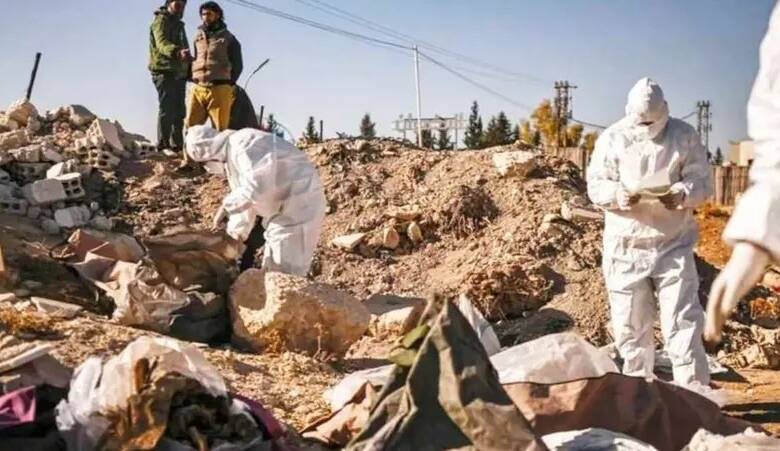
As residents of rural Deir Ezzor in eastern Syria recall the painful anniversary of the Baghouz massacre, locals have recently discovered mass graves in the Al-Shaddadi area. These findings reopen old wounds and bring to mind the atrocities that the region witnessed during the ongoing conflict.
The Baghouz massacre is considered one of the bloodiest events in the Syrian conflict, where many civilians lost their lives due to bombardments and violent battles that took place in the town. With the anniversary of the massacre approaching, anxiety among residents grows regarding the possibility of such events recurring, especially with ongoing tensions in the area.
Details of the Discovery
Local residents in Al-Shaddadi found several mass graves containing human remains, raising questions about the number of victims who may have been buried there. These graves serve as additional evidence of the atrocities committed during the conflict, with estimates suggesting that thousands of civilians have perished in various Syrian regions.
It is noteworthy that Al-Shaddadi has been the scene of numerous military operations, making it likely that these graves contain victims from various factions involved in the conflict. Human rights organizations have shown significant interest in investigating these graves, as they seek to document the violations that occurred during the war.
Background & Context
Since the outbreak of the conflict in Syria in 2011, the country has witnessed numerous massacres and human rights violations. The Baghouz massacre, which occurred in 2019, was one of the most prominent of these events, where civilians were subjected to indiscriminate shelling by warring forces. These events leave deep scars on local communities, with many suffering from psychological trauma due to the atrocities they witnessed.
The new discoveries in Al-Shaddadi serve as a painful reminder that the conflict is not over, and many families are still searching for answers regarding the fate of their loved ones. Additionally, these events highlight the urgent need for justice and accountability for the crimes committed during the conflict.
Impact & Consequences
The mass graves in Al-Shaddadi raise new concerns about stability in the region. With the conflict ongoing, worries about the potential recurrence of such atrocities increase. Furthermore, these discoveries may impact reconciliation efforts in the area, as they could reopen old wounds and deepen divisions among communities.
These events also serve as a call to the international community to take action, as there must be greater efforts to achieve justice for the victims and hold those responsible for these crimes accountable. Failing to take effective measures could exacerbate the humanitarian situation in Syria and increase the suffering of civilians.
Regional Significance
The events in Syria exemplify the challenges faced by many Arab countries amid armed conflicts. The psychological and social impact of these events extends to neighboring countries, where refugees suffer from the effects of the conflict in their daily lives. Additionally, these events affect relations between Arab states, as political and economic pressures increase due to humanitarian crises.
The ongoing conflict in Syria and the recurrence of atrocities underscore the need for effective strategies to resolve conflicts in the region. There must be joint efforts from Arab states and the international community to achieve peace and stability in Syria.
In conclusion, the painful memory of the Baghouz massacre and the mass graves in Al-Shaddadi serve as a reminder that the conflict in Syria is not yet over, and there is an urgent need for justice and reconciliation in the region.