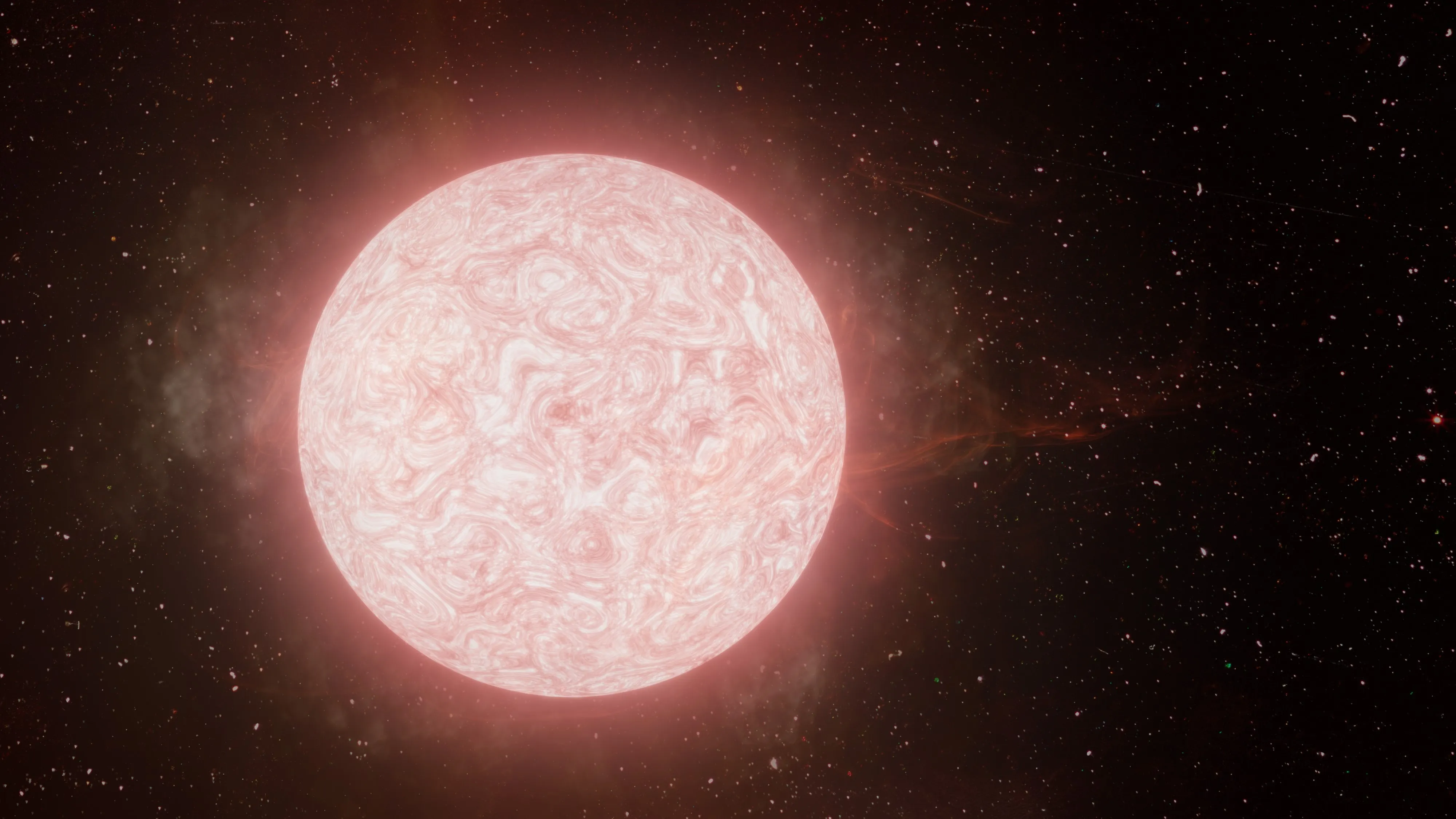
Astronomers have revealed new evidence indicating the complete demise of giant stars, reshaping our understanding of stellar death processes. These findings may open new avenues in the study of cosmic evolution.
Giant stars are among the most prominent cosmic phenomena, characterized by their massive size and great mass. However, their ultimate fate has been a topic of debate among scientists for decades. Recent research suggests that some of these stars may end completely, meaning they leave no remnants such as black holes or neutron stars.
Details of the Discovery
Researchers employed advanced astronomical techniques to study the behavior of giant stars in their final stages. By analyzing data from sophisticated telescopes, scientists were able to detect signals indicating the complete collapse of stars. These results contrast with the traditional understanding that giant stars always leave remnants after their explosions.
The evidence shows that some giant stars may gradually lose their mass before reaching the explosion stage, resulting in no remnants. This phenomenon may be rare, but it suggests that complex processes occur at the core of stars.
Background & Context
Historically, giant stars have been considered crucial elements in understanding the evolution of the universe. Since ancient times, astronomers have sought to understand how stars form and their ultimate fate. With technological advancements, it has become possible to study these phenomena with greater precision.
Giant stars are a fundamental part of the stellar lifecycle, playing a role in forming the heavy elements that constitute planets and life. The new understanding of the fate of these stars may impact how we comprehend the overall evolution of the universe.
Impact & Consequences
These discoveries open new horizons in astronomy, potentially affecting current theories about stellar evolution. This could lead to a reevaluation of the models used in studying giant stars, altering our understanding of the universe.
Furthermore, the new understanding of the fate of giant stars may influence research related to black holes and neutron stars, as these discoveries could provide new insights into how these cosmic phenomena form.
Regional Significance
For the Arab region, these discoveries enhance the importance of scientific research in astronomy and natural sciences. These results could inspire a new generation of scientists and researchers in the Arab world, contributing to the development of scientific research and technology.
Additionally, these discoveries may foster scientific cooperation between Arab countries and developed nations in the field of astronomy, promoting knowledge and experience exchange.