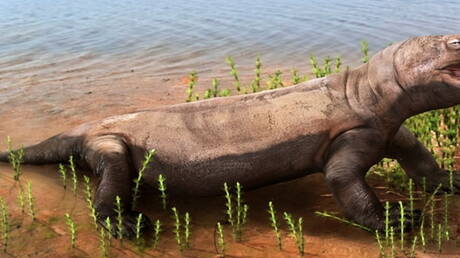
Scientists at the Kirov Museum of Paleontology in Russia have discovered remains of a meal belonging to the last giant creature that lived 260 million years ago. These remains, found inside the creature's stomach, provide a rare glimpse into the diet of animals that existed during that time.
These discoveries are part of scientists' efforts to understand the biological diversity that existed on Earth millions of years ago. Fossils play a vital role in reconstructing the history of life and help in understanding how species have evolved over time.
Details of the Discovery
The remains date back to prehistoric times when the Earth was teeming with massive creatures. Studies have shown that this giant creature fed on specific types of living organisms, reflecting the biodiversity of that era. This discovery is among the most exciting in the field of paleontology, highlighting how living beings interacted with their environment.
The remains found include bones and pieces of tissue, providing valuable information about the dietary composition of this giant. Scientists have indicated that this information may assist in understanding how ancient ecosystems evolved.
Background & Context
The history of paleontology in Russia spans several decades, as the country is considered one of the richest regions in the world for fossil discoveries. These findings have contributed to shaping our understanding of the history of life on Earth. Kirov is known to contain a variety of archaeological sites from different eras, making it an important center for scientific research.
Studying fossils requires advanced techniques, as scientists use modern methods to analyze samples and extract information from them. This recent discovery reflects the progress made in this field and reinforces the importance of scientific research in understanding our planet's history.
Impact & Consequences
This discovery has a significant impact on our understanding of biological evolution. It can help clarify how species have evolved over time and how they interacted with their environments. It may also shed light on how climate and environments have changed over the ages.
Furthermore, these discoveries enhance the importance of preserving natural heritage. Each new finding contributes to enriching scientific knowledge and raises awareness of the importance of fossils in understanding the history of life on Earth.
Regional Significance
Although this discovery occurred in Russia, it has far-reaching implications for the scientific community in the Arab world. It opens avenues for Arab researchers to benefit from these discoveries in their own studies. Additionally, it may encourage further collaboration between Arab scientists and their international counterparts.
Enhancing scientific research in paleontology can contribute to developing educational programs in Arab countries, helping to spread awareness of the importance of paleontology and its role in understanding Earth's history.