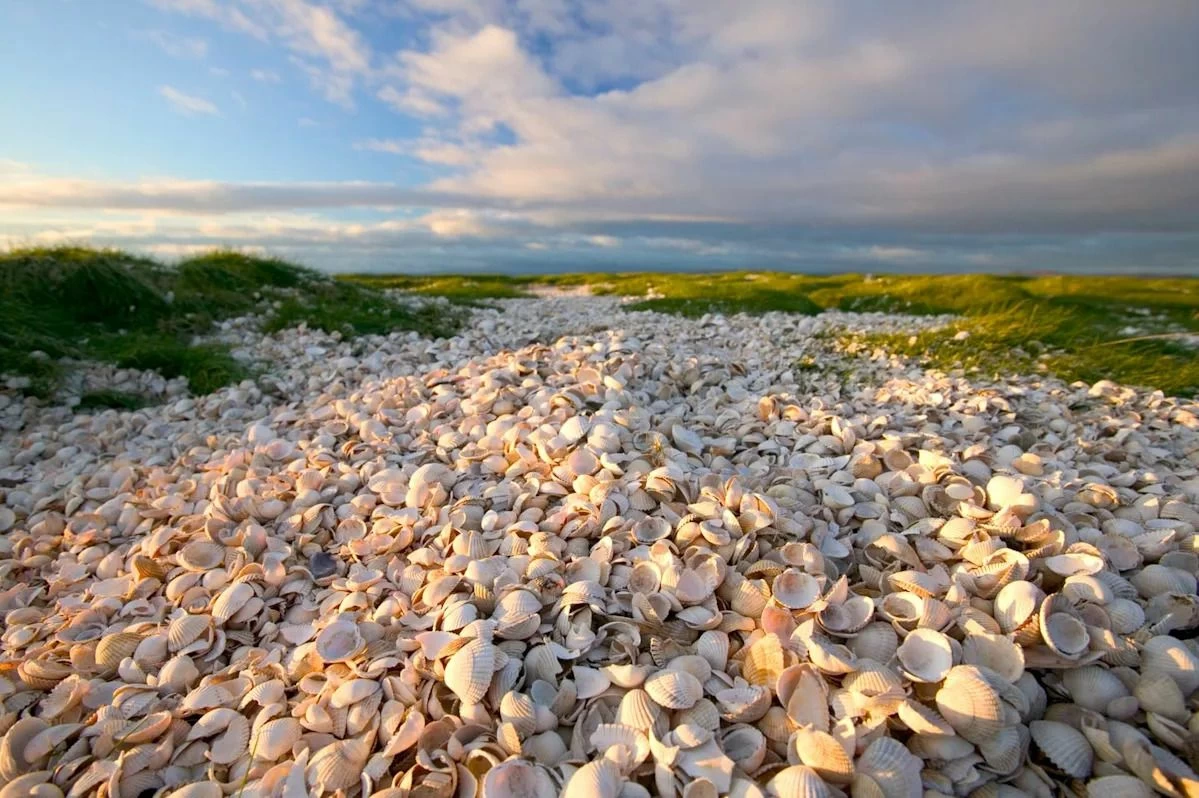
A team of scientists has uncovered an unprecedented geological and archaeological phenomenon in the South Pacific, having found a small island off the coast of Fiji that is almost entirely composed of oyster shell remnants left by human settlers over 1200 years ago. The island, located near the Kolasawani area north of Vanua Levu Island in Fiji, covers an area of 3000 square meters and rises from 20 to 60 centimeters above high tide. The shells make up between 70% to 90% of its composition, mixed with a thin layer of sandy clay, making it a rare natural historical site.
The study was led by Professor Patrick Nunn from the Sunshine Coast University in Queensland, Australia, and the results were published in the journal Geoarchaeology. The team concluded that the site is a "middens island," meaning a landmass formed from the accumulation of shellfish waste by ancient settlers. Radiocarbon dating of ten shell samples indicated that the island's formation dates back to around 760 AD, which is 1190 years ago, with a time range between 420 and 1040 AD.
Event Details
The team suggests that the early settlers built their homes on stilts above the shallow coastal waters. Over generations, discarded oyster shells accumulated beneath these homes on the seabed. As sea levels gradually fell, this accumulated waste rose above the water's surface, slowly forming an island. The researchers also examined the possibility that the site was exclusively for processing oysters by extracting the meat and transporting it for consumption elsewhere, as indicated by the absence of fish bones and stone tools, alongside the presence of scattered pottery shards, suggesting repeated human activity.
The team ruled out the hypothesis that the island was formed by a tsunami, as the rich shell deposits are entirely confined within the island without any thinning towards the edges. The island is situated within a ring of mangrove forests, and researchers believe that the mangrove trees only grew after the site was abandoned, coinciding with a drop in sea level and the accumulation of additional sediments from inland areas.
Background & Context
This discovery marks the first documented "middens island" in the South Pacific east of Papua New Guinea. It provides valuable insights into how ancient communities in Fiji exploited marine resources and how human activity contributed to shaping the island landscapes. Understanding how human activities impact the marine environment can aid in better managing natural resources today.
Historically, Pacific communities have heavily relied on marine resources, leading to complex interactions with their environment. This discovery highlights the importance of studying these interactions to understand the history of the peoples in the region.
Impact & Consequences
This discovery could have significant implications for archaeological and geographical studies, opening new avenues for understanding how human activities influence the formation of natural environments. It may also contribute to enhancing scientific tourism in the region, attracting researchers and those interested in the history of the Pacific.
Furthermore, this discovery can help raise awareness about the importance of preserving marine environments and their resources, especially in light of current environmental challenges such as climate change and pollution.
Regional Significance
Although this discovery is far from the Arab world, it reflects the importance of scientific research in understanding the history of peoples and their interaction with their environment. Such discoveries can inspire Arab communities to explore their environmental history and engage with their natural resources.
Moreover, understanding how marine resources are exploited can positively impact environmental policies in Arab countries, particularly those that rely on marine resources for their economies.