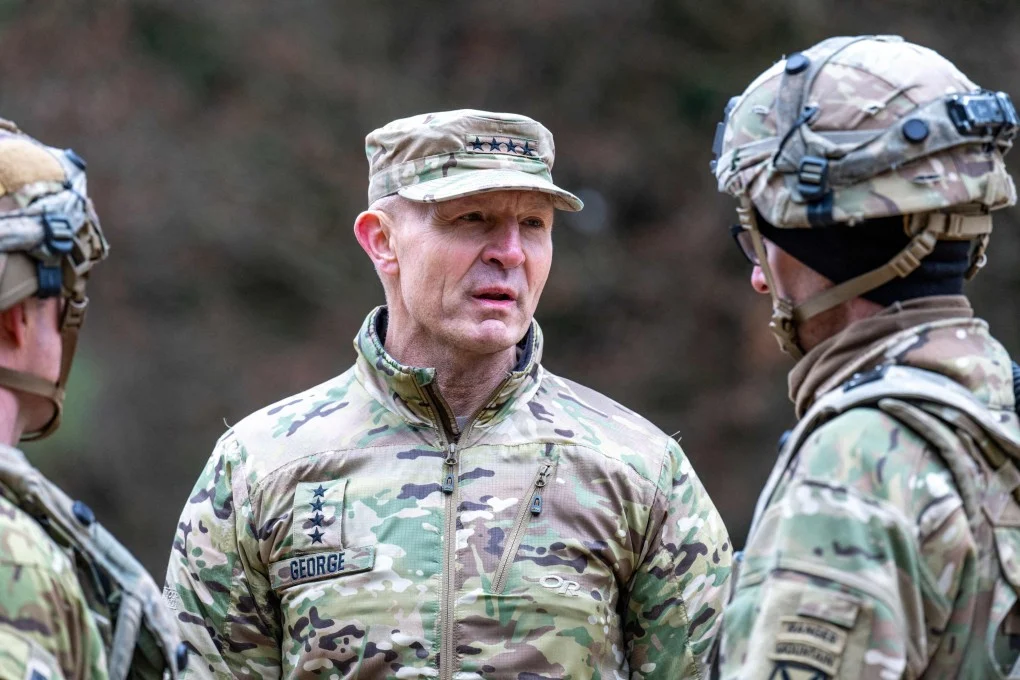
U.S. Secretary of Defense, Pete Hegseth, announced the dismissal of General Randy George, the U.S. Army Chief, during a sensitive time as tensions escalate between the United States and Iran. Hegseth requested George's early retirement shortly after he assumed the position, which he held since August 2023.
An anonymous official from the U.S. Department of Defense confirmed that the dismissal is part of a series of leadership changes within the U.S. military recently, where more than ten senior officers have been dismissed. This move raises questions about the leadership stability in the U.S. Army under the current circumstances.
Details of the Event
The dismissal of General George comes amid escalating military tensions between the United States and Iran, as the U.S. continues to bolster its military presence in the region. This decision is part of a broader strategy aimed at restructuring military leadership in light of the increasing challenges facing the country.
General George, who took office as the U.S. Army Chief in August 2023, was considered a pivotal figure in managing U.S. military operations. However, his dismissal reflects dissatisfaction with leadership performance amid the changing conditions in the Middle East.
Background & Context
Historically, the United States has seen changes in military leadership during times of crisis. For instance, in 2003, General Tommy Franks, the commander of military operations in Iraq, was dismissed following widespread criticism regarding the management of the war. Such changes often reflect the political and military pressures faced by the U.S. administration.
In recent years, tensions between the United States and Iran have increased, especially after the U.S. withdrawal from the Iranian nuclear deal in 2018. Since then, the region has witnessed a rise in military actions, leading to increased pressure on U.S. military leadership.
Impact & Consequences
The dismissal of General George could have significant implications for U.S. military operations in the region. Leadership instability may confuse military plans and heighten tensions with Iran. Additionally, this move could affect the morale of U.S. troops in the field, as soldiers may feel uncertain about future leadership.
Moreover, this dismissal may reflect internal conflicts within the U.S. administration regarding how to address Iranian threats. Under these circumstances, the United States may lean towards a more aggressive strategy, increasing the likelihood of military escalation.
Regional Significance
Tensions between the United States and Iran directly impact security and stability in the Arab region. Iran is considered a key player in many conflicts in the Middle East, including in Iraq, Syria, and Lebanon. Therefore, any military escalation could lead to serious repercussions for neighboring countries.
The dismissal of General George may also affect relations between the United States and its allies in the region, as some allies may feel uncertain about the U.S. commitment to their security. In this context, some Arab countries may seek to strengthen their ties with other powers in the region as a form of balance.
In conclusion, the dismissal of General Randy George reflects the significant challenges faced by the United States in the Middle East and highlights the importance of military leadership in crisis management. As tensions escalate, the question of how these changes will affect regional and international security remains open.