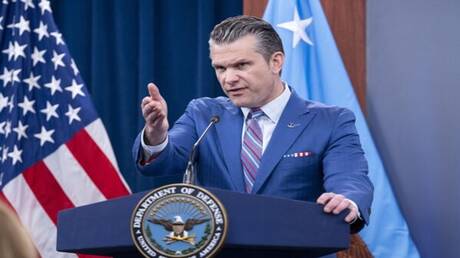
The dismissal of U.S. Army Chief of Staff General Randy George and General David Hodin has sparked widespread concern among military leaders and Pentagon officials. This unexpected move raises questions about its impact on U.S. strategy in the ongoing conflict with Iran.
This decision comes at a sensitive time as the United States continues to face complex challenges in the Middle East, particularly with escalating tensions with Iran. Observers of military policy view this move as a shock, seeing it as a change that could affect the course of current military operations.
Details of the Dismissal
The Pentagon announced the dismissal of General Randy George, who held the position of Army Chief of Staff, along with General David Hodin, in an unexpected move by many military leaders. This decision has elicited mixed reactions, with some considering it a reflection of instability within the U.S. military leadership.
General George had assumed his role at a time when the United States was facing multiple military challenges, including ongoing conflicts in Iraq and Afghanistan, in addition to increasing tensions with Iran. Meanwhile, General Hodin was responsible for military operations in the Middle East, making their dismissal at this time a controversial issue.
Background & Context
Historically, the U.S. military leadership has undergone sudden changes during crises, with leaders being replaced in an attempt to alter military dynamics or respond to new challenges. However, dismissing senior generals during an active war period is considered an unconventional step and may raise questions about U.S. military strategy.
These dismissals come amid rising tensions between the United States and Iran, with growing fears of potential military escalation. These tensions have affected relations between the United States and its allies in the region, further complicating the military landscape.
Impact & Consequences
These dismissals are expected to impact U.S. strategy in the region, potentially leading to a reassessment of military plans and changes in leadership. New military leaders may bring fresh perspectives, which could influence how the United States addresses Iranian threats.
This move may also raise concerns among regional allies who rely on the United States to confront shared threats. Some may feel uncertain about the U.S. commitment to their security, which could lead to shifts in regional alliances.
Regional Significance
These dismissals serve as an indicator of potential changes in U.S. policy toward the Middle East. Arab countries directly affected by tensions between the United States and Iran may find themselves in a difficult position, as any changes in U.S. military leadership could prompt a reassessment of their security strategies.
Moreover, these developments may impact peace and stability efforts in the region, as tensions among various factions could increase in the absence of clear leadership. Consequently, these dismissals could have far-reaching implications for regional security.
In conclusion, all eyes remain on the Pentagon as developments unfold, with future decisions likely to shape the course of U.S. military operations in the region and their impact on relations with Arab countries and Iran.