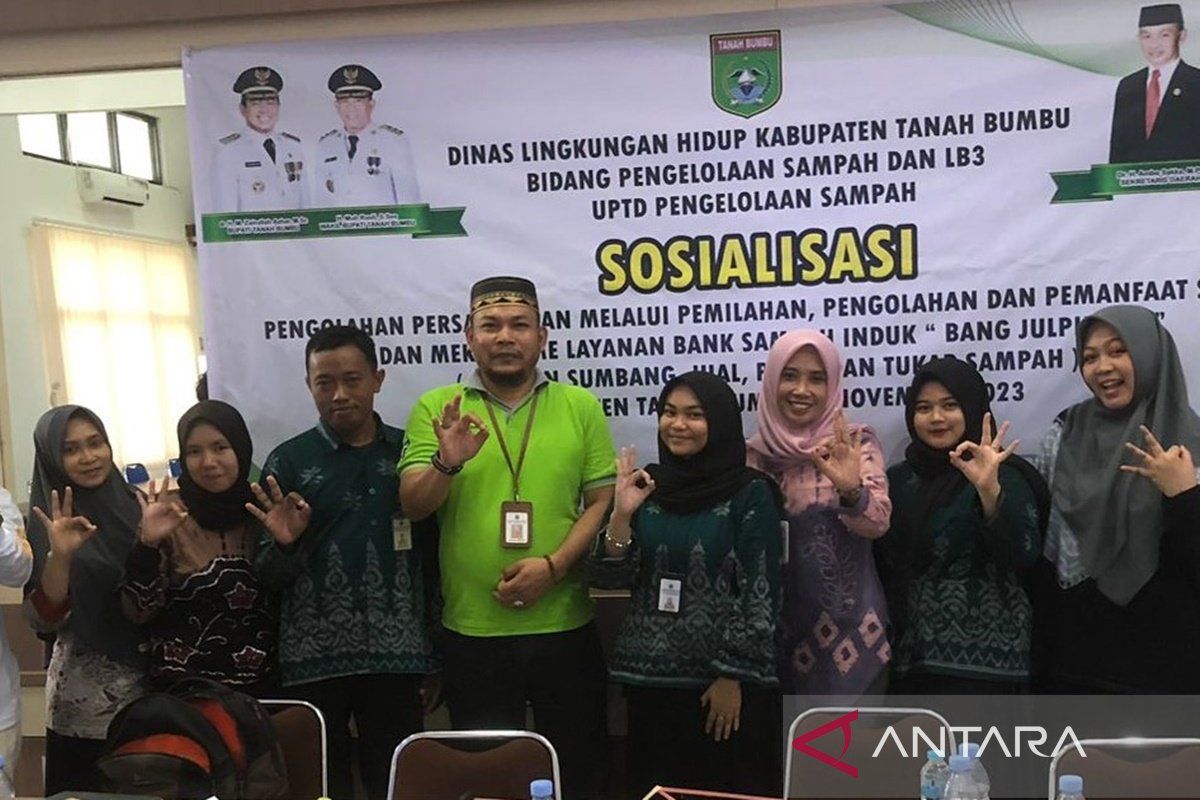
In an effort to improve waste management and promote environmental awareness, the Indonesian Ministry of Environment, in collaboration with the South Kalimantan Environmental Agency, has distributed over 2000 bins for waste collection in the cities of Banjarmasin and Banjarmasin. This initiative aims to encourage residents to sort waste at home, contributing to the enhancement of the local environment.
Rahmat Bripto Audio, head of the South Kalimantan Environmental Agency, confirmed that this step represents a new beginning in the government's efforts to improve community behavior towards waste management. He explained that sorting waste at the source facilitates subsequent management processes, whether in terms of reducing the amount of waste or enhancing recycling operations.
Event Details
The bins were distributed as part of a comprehensive program aimed at promoting environmental awareness among residents. Rahmat noted that this initiative is not merely about distributing tools but is a call for the community to take responsibility for waste management. He added that the bins will help reinforce the concept of waste management as a collective responsibility, not just the government's.
Awareness campaigns have also been organized to educate citizens on how to sort waste, encouraging them to separate organic waste from inorganic waste. Rahmat emphasized that these efforts will contribute to improving public cleanliness and reducing pressure on final waste processing sites.
Background & Context
Waste management is one of the major challenges facing many countries, including Indonesia. The country suffers from significant waste management issues, leading to environmental degradation and public health concerns. Studies have shown that improving waste management can significantly enhance quality of life.
This initiative comes at a time when South Kalimantan is facing a waste crisis, with an emergency declared due to the increasing amounts of waste. Therefore, this step represents an urgent response to the environmental challenges facing the region.
Impact & Consequences
This initiative is expected to improve cleanliness levels in the targeted cities and reduce pollution resulting from waste. Additionally, sorting waste at the source will help enhance recycling operations, contributing to a reduction in the need for natural resources.
Moreover, improving waste management can contribute to boosting the local economy by creating new job opportunities in recycling and waste management sectors. These efforts may also inspire other regions in Indonesia to adopt similar practices.
Regional Significance
Waste management is also a critical issue facing many Arab countries. Many Arab cities struggle with waste management problems, negatively impacting the environment and public health. Consequently, Indonesia's experiences in this field could serve as a model for Arab countries.
Arab nations can benefit from the successful experiences in South Kalimantan by enhancing environmental awareness and encouraging citizens to participate in waste management efforts. Adopting similar policies could contribute to improving the overall environment in the region.