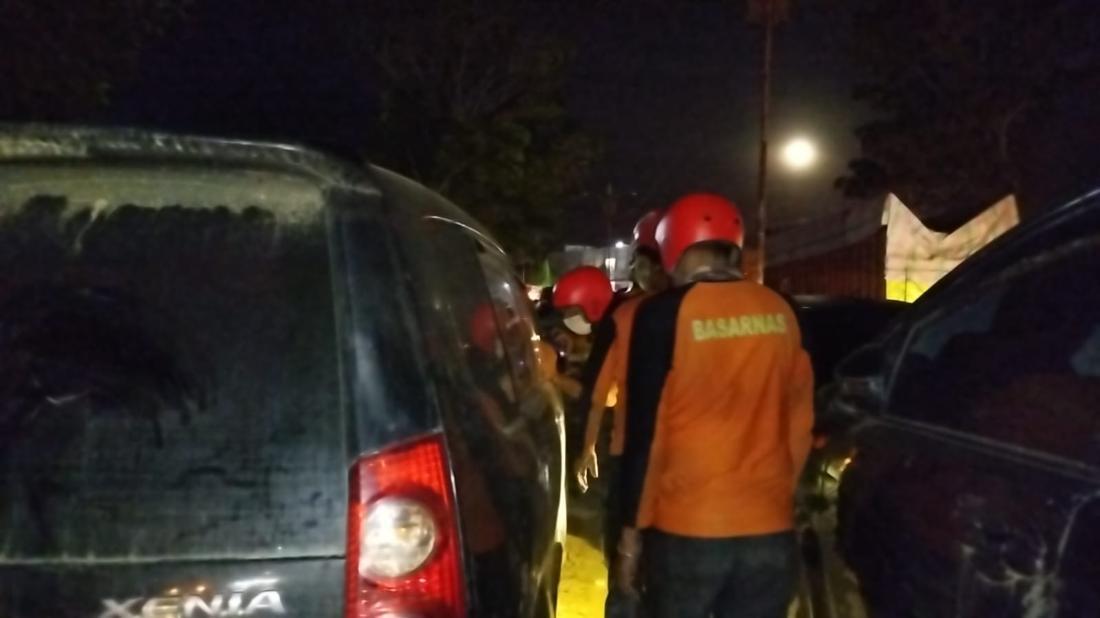
In a move that reflects the Indonesian government's commitment to supporting victims of natural disasters, the Satgas PRR announced the distribution of new humanitarian aid in the Aceh Tamiang region. This operation was carried out at the end of November 2025, delivering 1,000 packages of kitchen tools and 400 packages of essential food items, along with 100 units of water tanks and 200 packages of worship supplies.
The Indonesian Minister of Home Affairs, Tito Karnavian, led this campaign, emphasizing that the goal of this aid is to meet the basic needs of the affected population and accelerate the rehabilitation of infrastructure in the area. He noted that the government is keen to ensure its presence in the local community to address their needs.
Details of the Event
The Minister of Home Affairs arrived in Aceh Tamiang by helicopter, where he inspected operational sites and symbolically distributed aid to 185 families in the village of Lubok Sidob and 276 families in the village of Sikomor. Safrizal Z. A., the head of the regional office, explained that the kitchen tool packages are part of the essential life package, contributing to enhancing the food independence of the residents.
Plans were also announced to build water wells as a permanent solution to the problem of clean water and sanitation shortages in the affected areas. The minister confirmed that the government will remain present to follow up on rehabilitation and reconstruction efforts, especially regarding the provision of clean water.
Background & Context
The Aceh Tamiang region has been one of the areas affected by floods and landslides due to heavy rainfall, resulting in many families being impacted. Historically, Indonesia has witnessed numerous natural disasters, prompting the government to adopt effective strategies to handle crises and provide support to those affected. This campaign is part of the government's ongoing efforts to enhance rapid disaster response.
It is worth noting that the Indonesian government has launched several initiatives in recent years to strengthen local community capacities in facing disasters, including training and awareness programs.
Impact & Consequences
This aid is seen as a positive step towards improving the living conditions of the affected individuals, as it helps rebuild trust between the government and citizens. Additionally, providing clean water is a fundamental priority, as it contributes to improving public health and reducing the spread of diseases.
These efforts are expected to stimulate economic activity in the region, aiding in the recovery of business and agricultural activities that were affected by natural disasters. Furthermore, the provision of worship supplies reflects the government's concern for the spiritual and social aspects of the community.
Regional Significance
Indonesia's experience in dealing with natural disasters serves as a model for many Arab countries facing similar challenges. Natural disasters do not recognize borders, necessitating international cooperation and the exchange of experiences between nations.
Arab countries can benefit from Indonesia's strategies in enhancing local communities' capacities to face disasters, developing early warning systems, and providing necessary support to those affected. Strengthening cooperation among countries in this field can contribute to improving disaster response and mitigating its negative impacts.