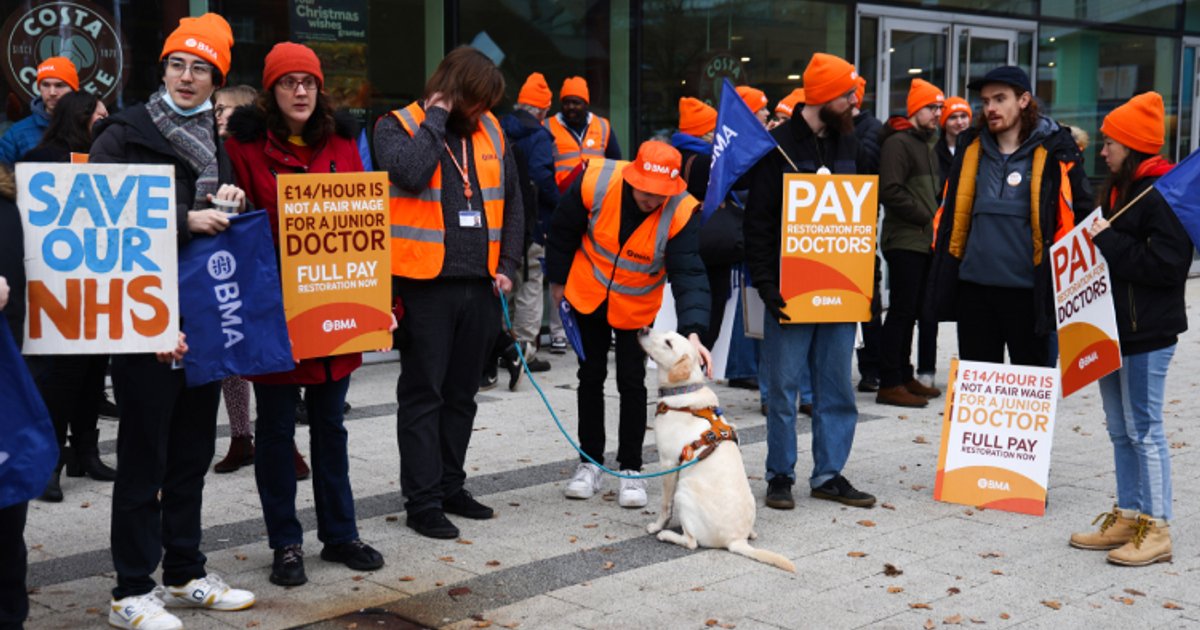
Resident doctors in England have begun a six-day strike starting at 7 AM UK time, which threatens to cause significant disruptions to National Health Service (NHS) services. This strike marks the fifteenth in a long series of disputes over pay, with resident doctors constituting nearly half of the workforce in the NHS.
The NHS has urged patients to utilize emergency services only when necessary, emphasizing the importance of attending confirmed appointments. However, some treatments and scheduled appointments have been canceled due to a shortage of available doctors.
Details of the Strike
This action comes after negotiations between the government and the British Medical Association (BMA) collapsed last month. These strikes are expected to lead to the cancellation of numerous medical appointments, raising concerns among patients who require urgent medical care. For instance, one patient, Adrian Emery, who suffers from serious health issues, expressed his worry about the postponement of his medical appointments.
The union asserts that doctors have received pay increases of up to 33% over the past four years, yet they are still earning 20% less compared to 2008 when adjusted for inflation. Dr. Jack Fletcher, chair of the resident doctors' committee, notes that demands for pay increases are not unreasonable given the current economic conditions.
Background & Context
Historically, the NHS in the UK has experienced numerous disputes over pay and working conditions, with salaries being affected by inflation and rising living costs. In recent years, pressures on doctors have increased due to resource shortages and heightened demand for health services, leading to a rise in strikes.
The government is seeking to provide incentives for doctors, including covering educational expenses and speeding up salary progression, but the union believes these offers are insufficient. Some of these proposals were withdrawn after the union announced the strike, exacerbating tensions.
Impact & Consequences
This strike is expected to have a significant impact on patients, as their medical appointments and emergency services will be affected. Polls indicate that 53% of the public opposes the strikes, while 38% support them, reflecting a division in public opinion on this issue.
The government maintains that doctors have received generous pay increases, having recently received a 3.5% raise. However, the union continues to assert that these increases do not reflect the real inflation that doctors are experiencing.
Regional Significance
These events highlight the challenges facing health systems in various countries, including Arab nations. Many Arab countries suffer from a shortage of medical personnel and challenges in funding health services, making it essential to improve working conditions for doctors and healthcare practitioners.
In light of these circumstances, Arab countries must learn from international experiences and work to enhance the working environment for doctors to ensure the provision of effective and continuous health services.