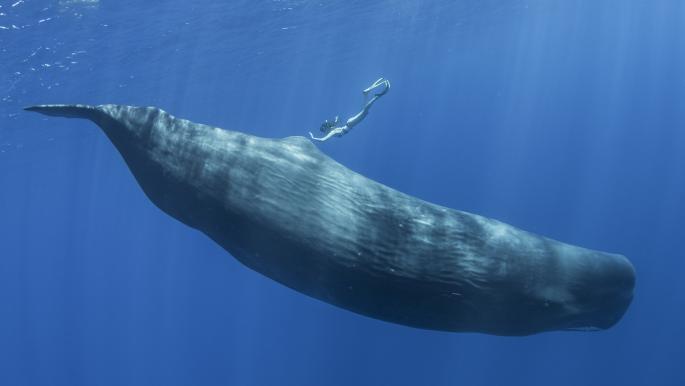
Scientists have documented a rare event in the marine life world, where they observed a female sperm whale during the birthing process, a sight not often seen in nature. The footage showed how other females of the same species surrounded the mother and her newborn, reflecting the strong social bonds among these marine creatures.
Sperm whales are among the largest whales in the world, known for their intelligence and communication abilities. In this event, the other females provided support to the mother, showcasing complex and interconnected behaviors within the marine community.
Details of the Event
This event was filmed in a marine-rich area, where several female sperm whales gathered around the mother during the birthing process. The footage revealed how the other females assisted the mother, highlighting the importance of cooperation in the animal kingdom. Such behavior is not unusual for sperm whales, as previous cases have shown how these creatures collaborate under various circumstances.
Sperm whales are considered an endangered species, making these rare sightings crucial for understanding their social behavior. Scientists hope that this footage will aid in enhancing efforts to protect these species and preserve their natural habitat.
Background & Context
Sperm whales live in social groups known as pods, typically consisting of females and their young. Scientists believe that these social bonds play a vital role in the species' survival, as females help care for the young and provide protection from threats. Historically, similar behaviors have been observed in other whale species, reflecting the importance of cooperation in the animal kingdom.
Sperm whales inhabit deep oceans, feeding on squid and fish. With environmental changes affecting their habitats, understanding their social behavior becomes increasingly important. These rare sightings provide scientists with valuable information on how these species adapt to environmental challenges.
Impact & Consequences
These rare sightings are a significant step towards a deeper understanding of sperm whale behaviors. Cooperation among females can have positive effects on the species' survival, enhancing the chances of successful births and nurturing of young. Additionally, this footage may contribute to raising public awareness about the importance of protecting these endangered species.
By highlighting these behaviors, such studies can contribute to global efforts to protect the marine environment. Understanding the social bonds among sperm whales can help develop effective strategies for conserving these species.
Regional Significance
In the Arab region, seas and oceans are home to many marine species, including whales. Understanding the behaviors of sperm whales can have a direct impact on conservation efforts in these areas. With increasing environmental threats, it is essential to raise awareness about the importance of preserving biodiversity in Arab seas.
Many Arab countries are striving to develop strategies for marine environmental conservation, and studying sperm whale behaviors can provide valuable lessons to enhance these efforts. Protecting these species not only contributes to preserving biodiversity but also boosts eco-tourism in the region.
Documenting this rare event reflects the importance of scientific research in understanding marine creature behaviors. The cooperation among female sperm whales is not just a social behavior; it is evidence of the strong bonds that connect these creatures, highlighting the importance of protecting their environment.