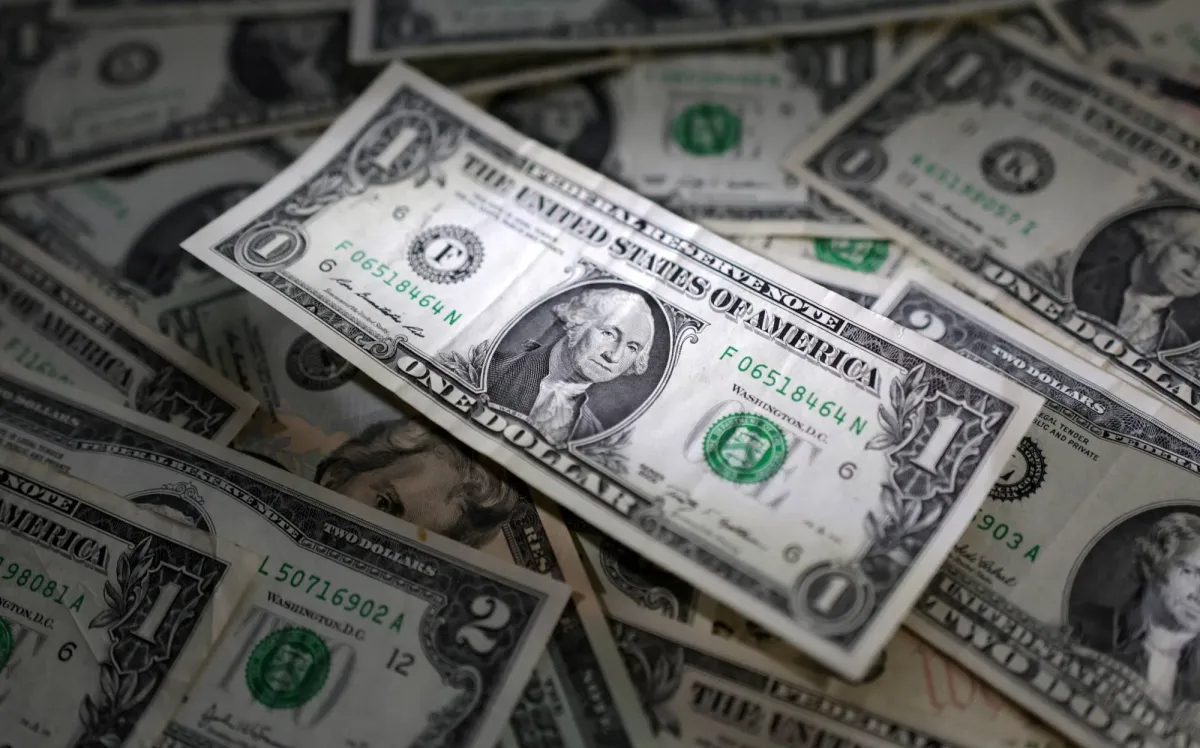
The dollar remained steady against major currencies on Friday, but it is heading towards a weekly loss amid reports of a potential agreement between the United States and Iran to extend the ceasefire in the Middle East and lift restrictions on navigation through the Strait of Hormuz.
Four sources told Reuters that the agreement, which is still pending approval from US President Donald Trump, stipulates a 60-day extension of the truce while allowing the passage of shipping through the strategic waterway, as negotiators continue to discuss contentious issues, including Iran's nuclear program.
Details of the Event
Oil futures fell by more than 1% on Friday, heading for their largest weekly loss since early April. The dollar is also set to end the week down by approximately 0.3%, breaking a two-week streak of gains.
Lloyd Chan, senior currency analyst at MUFG's Global Markets Research, stated, "Geopolitical risk premiums may continue to decline in the near term." He added that markets will remain sensitive to any new escalation, but the most likely scenario remains a reduction in tensions, given the incentives for both the US and Iran to push for a diplomatic solution.
Background & Context
The euro and the British pound stabilized at 1.1642 and 1.3435 dollars, respectively, while the Australian dollar slightly increased to 0.7165 dollars. The New Zealand dollar rose by 0.4% to 0.5960 dollars, approaching its highest levels in over two weeks, continuing its recent gains after the Reserve Bank of New Zealand hinted at the possibility of further interest rate hikes.
The dollar index, which measures the performance of the US currency against a basket of major currencies, remained within a limited range, recording 99.045 points after a 0.2% drop on Thursday.
Impact & Consequences
Massimiliano Castelli, head of strategy at UBS Global Asset Management's sovereign currency markets team, indicated that the US dollar is likely to remain under pressure once the crisis in Iran and the Middle East subsides.
He added that the conflict temporarily contributed to halting the dollar's weakness due to demand for safe-haven assets, but many investors are still looking to diversify their portfolios away from dollar-denominated assets.
Regional Significance
In the United States, inflation in April recorded its fastest increase in three years, driven by rising energy prices due to the Iranian war, which bolstered economists' expectations that the Federal Reserve would keep interest rates unchanged until next year.
In Japan, the dollar reached 159.30 yen, moving away from the 160 yen per dollar level, which is seen as a sensitive psychological threshold that has previously prompted Japanese authorities to intervene in the currency market.
Gold is heading towards its third consecutive monthly loss, amid ongoing repercussions from the US-Israeli war on Iran, which has kept inflation concerns and the likelihood of US interest rates remaining high for an extended period.
Despite this increase, gold is set to record a monthly loss of about 2.4%, while its losses over the past three months have reached approximately 15%.