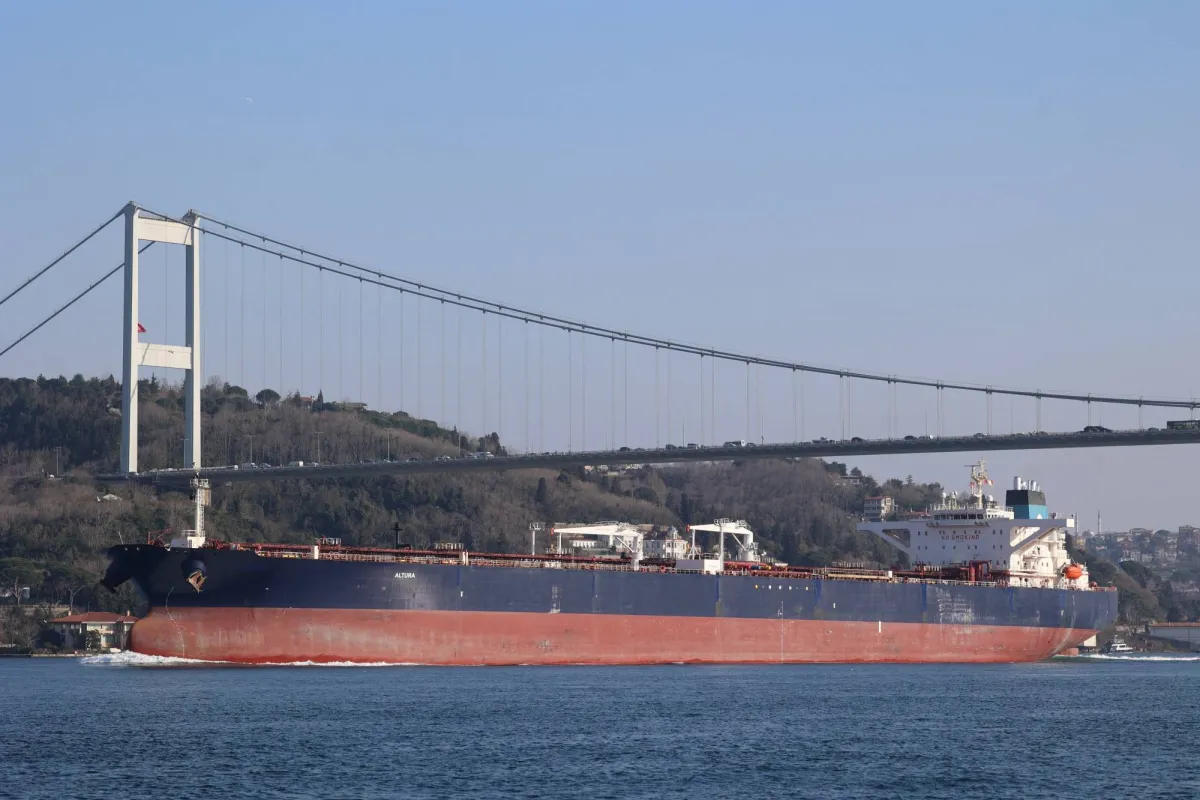
A Turkish oil tanker named 'Altura' was attacked by a drone near the Bosporus Strait, approximately 28 kilometers from Istanbul, raising widespread concerns about maritime safety in the area. Despite the attack, reports indicate that the crew of 27 members is safe and has not sustained any injuries.
The tanker, flying the flag of Sierra Leone, had departed from the Russian port of Novorossiysk carrying around one million barrels of crude oil and is currently under sanctions from the European Union and Britain. The attack, which targeted the tanker’s control tower, resulted in an explosion in the area, leading to flooding in the engine room, according to Turkish channel NTV.
Details of the Incident
The attack on the 'Altura' tanker comes at a sensitive time as the region experiences increasing tensions, with fears of escalating hostilities in the Black Sea. The tanker, owned by Turkish company Beşiktaş, was en route to deliver a significant oil shipment, making this attack highly impactful on the global oil market.
Vessel tracking data indicates that the tanker was on a routine commercial voyage, raising questions about the motives behind the attack. No group has claimed responsibility for the attack so far, but the political tensions in the region may be a driving factor behind this hostile act.
Background & Context
Historically, the region has witnessed numerous incidents related to maritime navigation, especially amid tensions between major world powers. The Bosporus Strait is considered a crucial strategic point, linking the Black Sea to the Mediterranean Sea, and experiences significant traffic from commercial vessels.
In recent years, military activities in the Black Sea have increased, leading to heightened tensions among the countries bordering this sea. Attacks on commercial vessels are not new, but they raise concerns about maritime safety and their impact on the global economy.
Impact & Consequences
The attack on the Turkish oil tanker could have significant repercussions on global oil prices, potentially leading to price increases if tensions persist. Additionally, this incident may affect maritime traffic in the region, causing delays in commercial shipments.
Moreover, this attack could escalate tensions between Turkey and other concerned nations, complicating the security situation in the area. Turkey may take retaliatory measures, which could lead to a series of reciprocal responses.
Regional Significance
Considering the potential impact on the Arab region, the escalating tensions in the Black Sea may affect the stability of oil markets, which many Arab countries rely on. Any increase in oil prices could adversely impact Arab economies, especially those heavily dependent on oil exports.
Furthermore, maritime incidents could heighten fears of escalating regional conflicts, potentially affecting overall regional security. Under these circumstances, Arab countries should closely monitor the situation and take necessary measures to protect their interests.
The attack on the Turkish oil tanker serves as a wake-up call regarding maritime safety in the Black Sea, highlighting the urgent need for resolving regional disputes and enhancing cooperation among nations to maintain security and stability in the area.