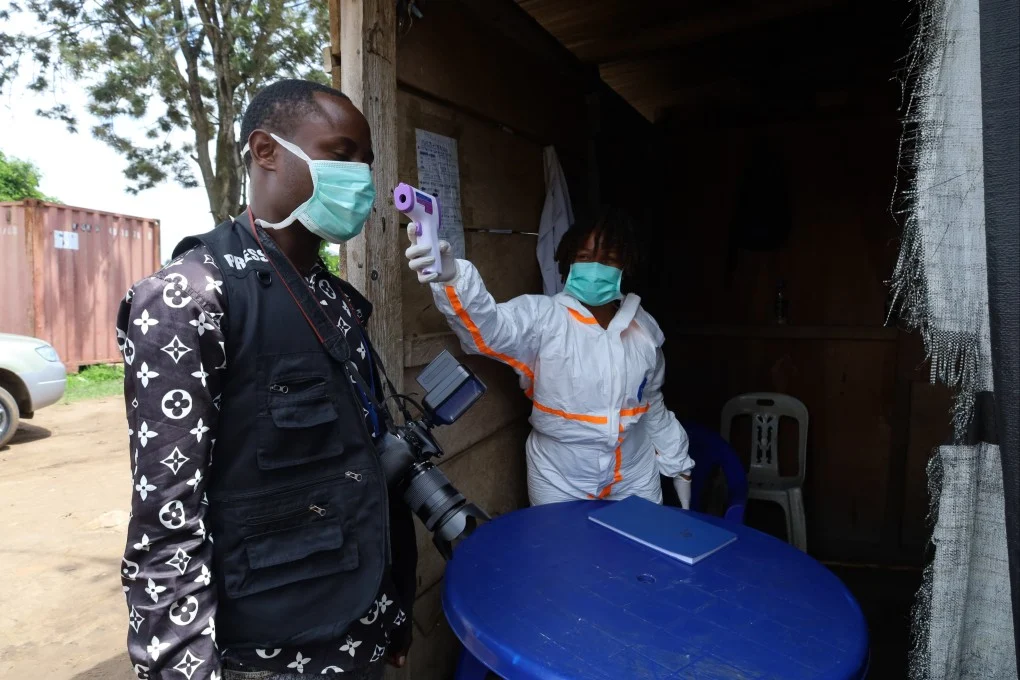
The World Health Organization (WHO) announced on Friday that the outbreak of the Ebola virus in the Democratic Republic of the Congo is accelerating significantly, prompting the organization to raise the national risk assessment to 'very high.' This announcement was made by the Director-General of the WHO, Tedros Adhanom Ghebreyesus, who noted that the risk remains high at the regional level while remaining low globally.
In statements to reporters, Ghebreyesus explained that the organization had previously classified the risk as 'high,' but the current situation necessitates a reassessment of this evaluation. A total of 82 confirmed cases have been recorded so far, raising concerns about the potential spread of the virus to other areas.
Details of the Outbreak
The Congo is experiencing a rising outbreak of the Ebola virus, with new cases reported daily. The virus, which causes severe hemorrhagic fever, can be fatal in many cases. Urgent measures have been taken by local health authorities in collaboration with the WHO to address this challenge.
Efforts include enhancing health awareness campaigns, providing vaccines, and expanding testing to detect new cases. Specialized medical teams have also been deployed to affected areas to provide support and treatment for those infected.
Background & Context
Historically, the Democratic Republic of the Congo has witnessed several outbreaks of the Ebola virus, with its first appearance recorded in 1976. Since then, numerous outbreaks have been documented, leading the country to frequently deal with this virus. Contributing factors such as weak health infrastructure have accelerated the spread of the virus.
The WHO is a leading entity in combating this virus, providing technical and financial support to affected countries. In recent years, effective vaccines against Ebola have been developed, helping to reduce the number of infections and deaths in some previous outbreaks.
Impact & Consequences
The increased risk of an Ebola outbreak in the Congo is concerning not only for the country but for the entire region. With shared borders with several countries, the virus could easily spread to other areas, threatening public health throughout the region. This could lead to restrictions on movement and trade, negatively impacting the local economy.
Moreover, an Ebola outbreak could place additional pressure on the already resource-strapped health system in the Congo. This may result in the spread of other diseases if the situation is not effectively managed.
Regional Significance
Although the Ebola outbreak is occurring in the Congo, its impact could extend to the Arab region. With increasing travel and trade between countries, it may become necessary to implement preventive measures to ensure the virus does not spread to Arab nations. This could require enhanced health screenings at airports and ports.
Additionally, regional and international cooperation will be essential to tackle this challenge, as Arab countries could play a significant role in supporting health efforts in the Congo through medical and financial assistance.