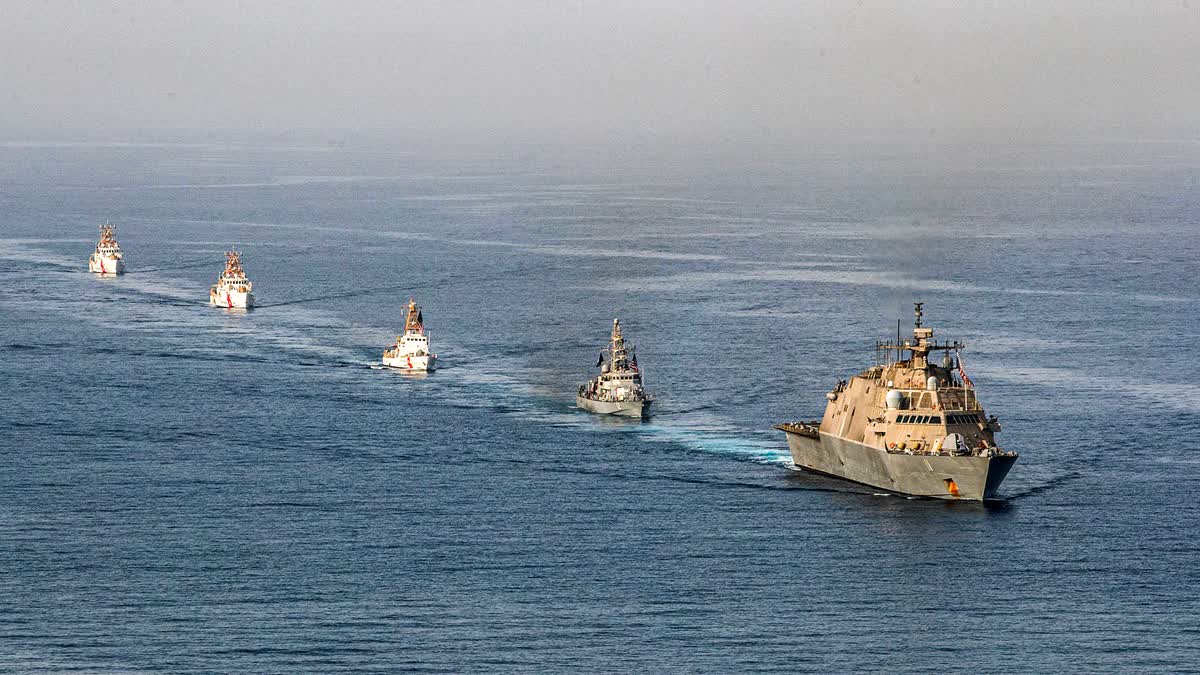
Recent maritime data from MarineTraffic indicates that only eight ships have crossed the Hormuz Strait in the last 24 hours, demonstrating a continued limited movement in this critical maritime route. This trend reflects an increasing state of caution, particularly given the tense political circumstances in the region.
According to data analyzed by Al Jazeera's open-source unit, only four ships were recorded passing since midnight Doha time, indicating a clear decline in maritime traffic. Among the vessels that crossed, four are linked to Iran, further enhancing the picture of irregular movement in the strait.
Details of the Event
The ships that traversed the strait were distributed among several ports, with three ships departing from Iran, two from the UAE, one from Iraq, one from China, and another from Argentina. As for the announced destinations, three ships were headed to Oman, one to India, and one to the UAE, while the destinations of three ships, including one that left Iran, were not disclosed.
Among the monitored vessels, four ships have direct links to Iran: Bavand, Gulf King, Midas 7, and Bari 25422. The ship Bavand, flying the Iranian flag, departed Iran heading for India, while Gulf King left Iran towards Oman, flying the Comoros flag.
Background & Context
Maritime traffic in the Hormuz Strait is of strategic importance, as approximately 20% of the world's total oil passes through it. The strait has experienced increasing tensions in recent years due to regional conflicts and sanctions imposed on Iran. Data indicates that five out of the eight recorded ships are under sanctions, reflecting the impact of these sanctions on trade movement.
Furthermore, four of the ships that crossed the strait previously since the onset of the war are linked to Iran, highlighting the ongoing influence of the conflict on maritime navigation. These conditions reflect a state of uncertainty in the region, where many actors are seeking to reassess their strategies.
Impact & Consequences
Reports suggest that Iran has proposed through Pakistani intermediaries a plan aimed at reopening the Hormuz Strait and ending the war, while postponing negotiations related to the nuclear program. This proposal, discussed during Iranian Foreign Minister Abbas Araghchi's visit to Pakistan, focuses on addressing the strait crisis and the U.S. maritime blockade.
If an agreement is reached, it could lead to a de-escalation of tensions in the region, positively impacting maritime traffic and trade. However, the situation remains complex, as sanctions continue to affect many ships, hindering the restoration of normal navigation.
Regional Significance
The maritime traffic in the Hormuz Strait significantly impacts Arab countries, as many of these nations rely on imported oil and gas. Any changes in maritime movement could affect energy prices and lead to shifts in economic policies.
In conclusion, the movement of ships through the Hormuz Strait remains an important indicator of the geopolitical situation in the region. As tensions persist, hope remains for the possibility of diplomatic solutions contributing to regional stability.