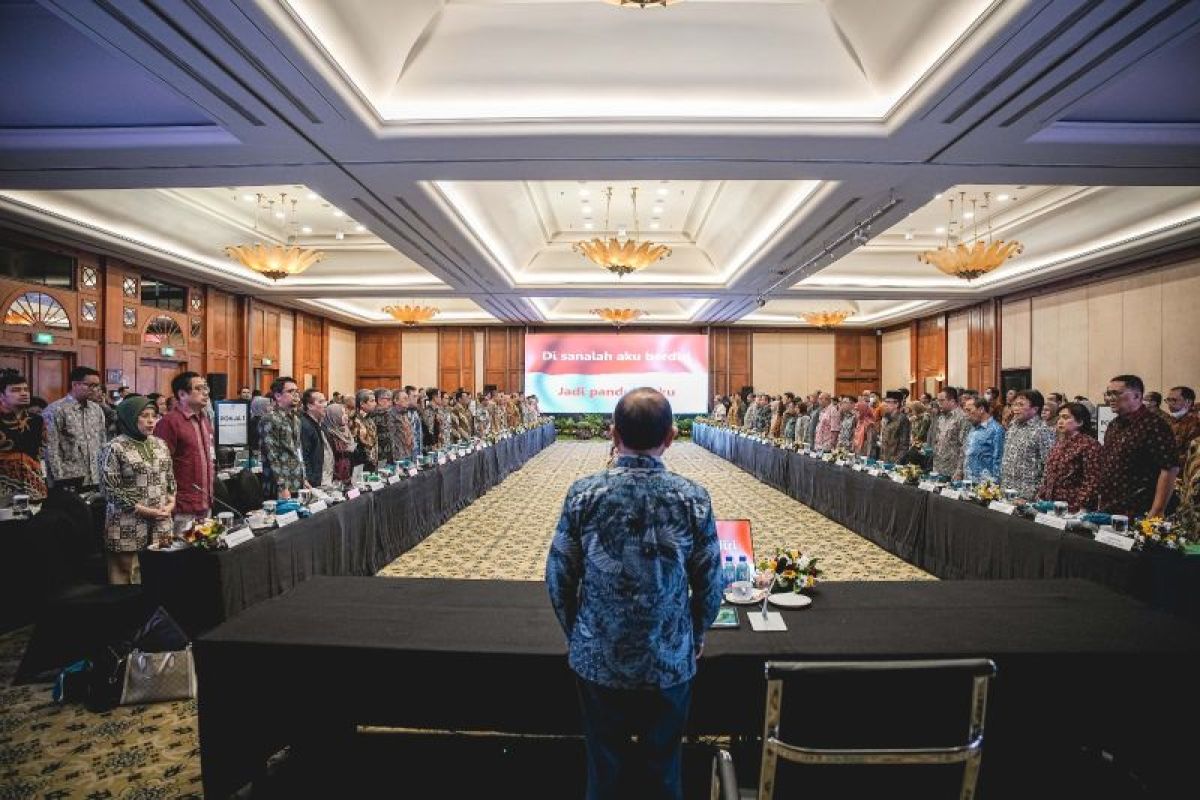
Indonesian Deputy Minister of Home Affairs, Rebeka Haluk, emphasized the importance of coordination between central and local government development plans during a development planning conference held in Jakarta. She pointed out that this coordination is essential to ensure that local development plans remain aligned with the national vision.
Haluk's statements came during the development planning conference (Musrenbang) for the local government work plans (RKPD) of the Mountain Papua Province for 2027. The conference focused on the theme of "Accelerating Human Development and Comprehensive Basic Services to Enhance Competitiveness and Welfare of the Mountain Papua Community."
Event Details
In her speech, Rebeka Haluk conveyed the greetings of the Minister of Home Affairs, Muhammad Tito Karnavian, who confirmed that the development planning conference serves as a strategic forum to ensure that local development aligns with national priorities. She explained that 2027 will be the third year of implementing the Medium-Term Development Plan (RPJMD) 2025-2029, making the local government work plan for 2027 critically important in achieving the vision of local leaders and supporting the goals of the National Medium-Term Development Plan (RPJMN) 2025-2029.
Haluk also affirmed that 2027 represents a critical moment, as the local government work plan must be a tool to ensure the realization of the region's vision and support national priorities. She urged the local government in Mountain Papua to accelerate the implementation of the vision of Indonesian President Prabowo and Vice President Gibran Rakabuming in planning documents and local development programs.
Background & Context
Indonesia is one of the countries striving for sustainable development through coordination between various levels of government. In recent years, there have been increasing efforts to enhance cooperation between the central and local governments, especially in remote areas like Mountain Papua. This conference is part of these efforts, aiming to improve the quality of life for local residents by providing better basic services.
Despite the progress made in the past five years, Haluk noted that there are indicators still below the national average, such as the Human Development Index (HDI), which reached 54.91 in 2025, making it the lowest in the country. Economic growth also remains below the national average, and poverty rates, while declining, are still high.
Impact & Consequences
Security stability is considered one of the main factors for successful development in Mountain Papua. Haluk emphasized the importance of strong coordination among various government entities to maintain security stability. Without a stable environment, development projects will not be able to achieve their objectives effectively.
The outcomes of the development planning conference will form the basis for developing the final version of the local government work plan for 2027, enhancing data-driven planning and local government management. This approach reflects the government's commitment to improving public services and enhancing transparency in resource management.
Regional Significance
This event exemplifies how to enhance coordination between local and central governments, serving as a lesson for Arab countries facing similar development challenges. Cooperation among different government levels is a fundamental factor in achieving sustainable development.
Given the economic and social challenges many Arab countries face, exchanging experiences and lessons with countries like Indonesia could be beneficial in improving local development strategies.