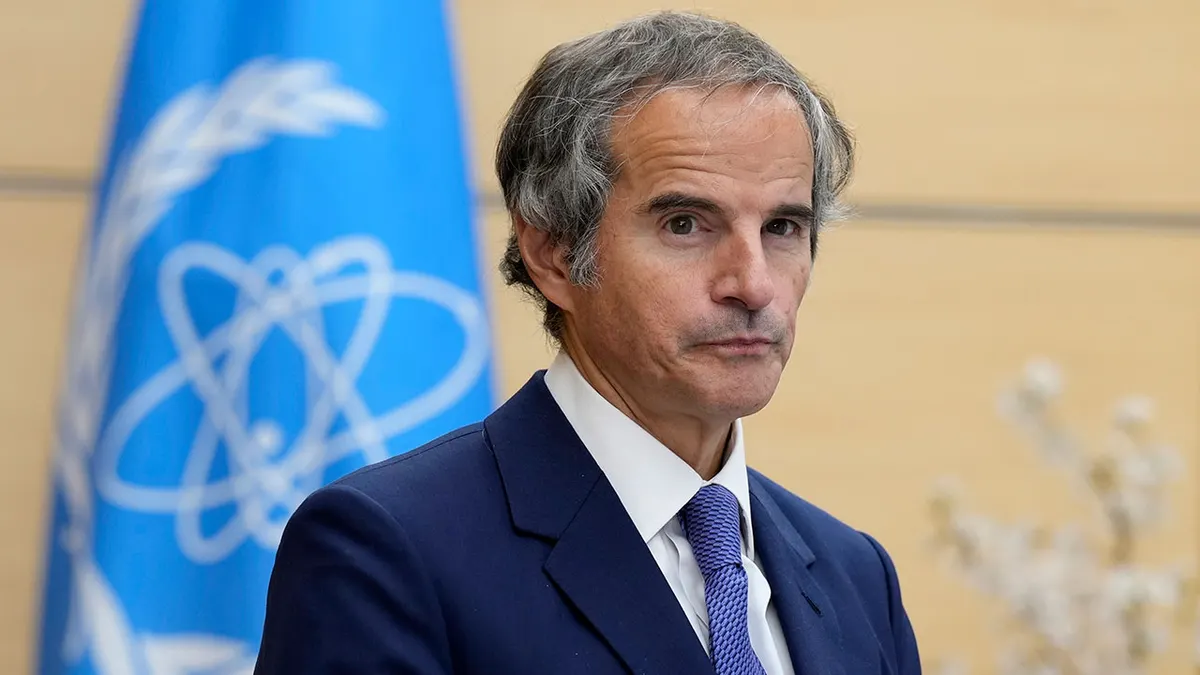
Rafael Grossi, the Director of the International Atomic Energy Agency (IAEA), stated that the only solution to the ongoing crisis regarding Iran's nuclear program, which has lasted for over twenty years, is through diplomacy. He explained that military strikes, even if they lead to the destruction of some nuclear sites, will not eliminate Iran's nuclear capabilities.
In an interview with China Global Television Network, Grossi pointed out that diplomacy represents the most effective option for resolving this crisis, warning that military escalation could lead to dire consequences. He called on both the United States and Iran to resume negotiations following the failure of the Geneva talks, stressing the need to reach a lasting agreement.
Details of the Event
Grossi's statements came at a sensitive time, as the region has witnessed a notable military escalation, including Israeli strikes targeting Iranian nuclear facilities. These strikes targeted two nuclear sites, one of which was involved in uranium processing, in addition to other civilian sites and infrastructure in Iran.
In this context, Grossi confirmed that the IAEA has always been engaged in these negotiations and is seeking to support reaching an agreement among the concerned parties. He also expressed his belief in the peaceful use of nuclear energy, urging the involved countries to return to the negotiating table.
Background & Context
The roots of the Iranian nuclear crisis date back to the beginning of the millennium when Iran initiated its nuclear program, raising concerns within the international community. These fears led to the imposition of strict economic sanctions on Iran, significantly impacting its economy. Despite this, Iran continued to develop its nuclear program, complicating negotiations further.
In recent years, negotiations between Iran and major powers, including the United States, have seen several rounds of dialogue; however, political and economic tensions have prevented a final agreement. As military tensions escalate, the need for effective diplomatic solutions becomes increasingly urgent.
Impact & Consequences
Grossi's statements serve as an urgent call to avoid military escalation, which could exacerbate conditions in the Middle East. Military tensions could lead to wider conflicts, affecting both regional and international security. Furthermore, the continuation of Iran's nuclear program may spark an arms race in the region, intensifying tensions.
The failure of the international community to reach a diplomatic solution could have negative repercussions on regional stability, potentially affecting relations between Arab states and Iran. Therefore, returning to negotiations is an urgent necessity to avoid further escalation.
Regional Significance
The situation in Iran directly impacts security and stability in the Arab region. Military and nuclear tensions may increase concerns among Arab countries, prompting them to bolster their military capabilities. Additionally, any escalation in the Iranian conflict could affect oil prices and financial markets, reflecting on the Arab economy as a whole.
In conclusion, Grossi urged all parties to exercise restraint, emphasizing the importance of avoiding any escalation that could lead to nuclear incidents in the region. Diplomacy remains the safest option for achieving peace and stability in the Middle East.