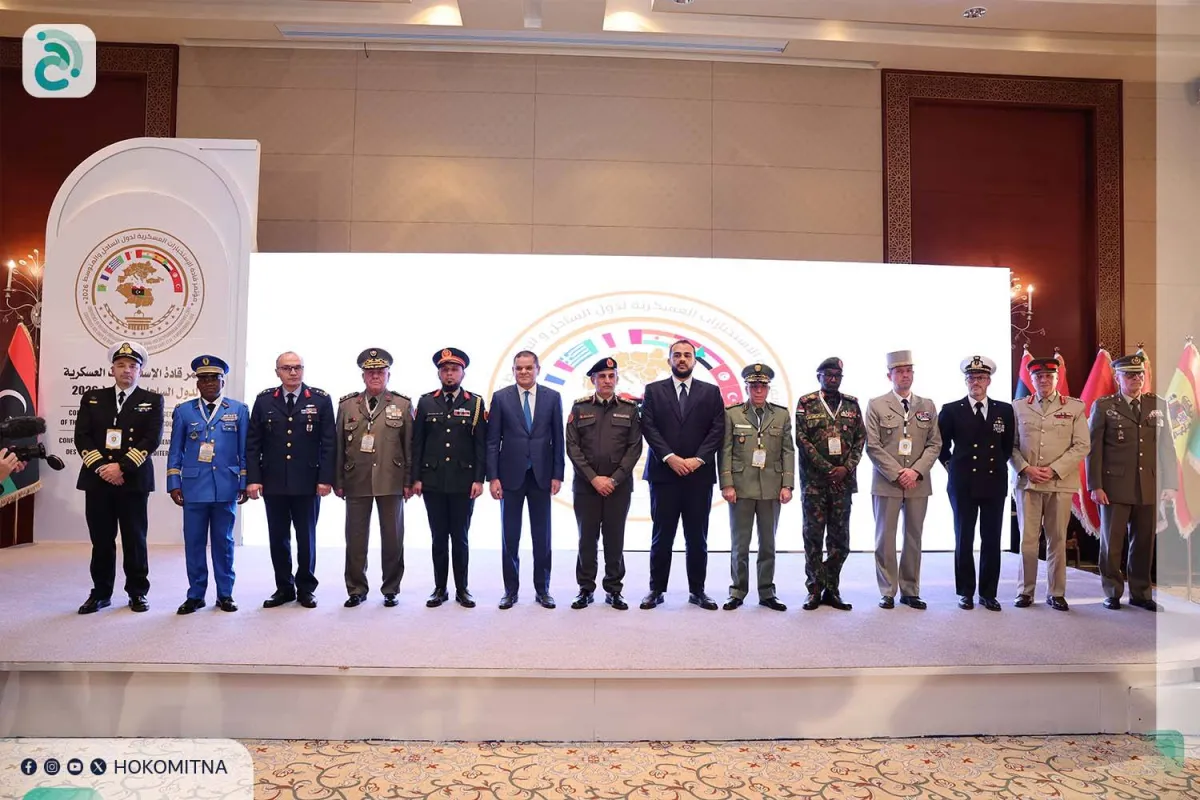
Libyan Prime Minister Abdul Hamid Dbeibah emphasized during the opening of the Military Intelligence Leaders Conference for the Sahel and Mediterranean 2026 in the capital Tripoli that regional security is a collective responsibility that cannot be achieved individually. He noted that Libya is steadily progressing towards building its institutions, enhancing its stability, and positively engaging with its surroundings.
Dbeibah explained that the success of combating cross-border threats depends on strengthening intelligence coordination and timely information sharing, as well as building trust among the security agencies of the countries involved. He affirmed that the Sahel and Mediterranean region is one of the most affected areas by global changes, where networks of terrorism and transnational crime operate, in addition to being routes for illegal migration.
Event Details
In his speech, Dbeibah described terrorism in the Sahel as a growing threat that exploits security gaps, feeds on conflicts, and relies on complex financing networks. He also pointed out that transnational crime includes technologically advanced networks for smuggling drugs, weapons, and humans.
He stressed the importance of high-level coordination to combat terrorism financing and enhance monitoring and follow-up mechanisms to dry up the sources of support for these groups. Dbeibah confirmed that timely information exchange is the cornerstone of any intelligence success.
Background & Context
In a related context, Mahmoud Hamza, commander of the 444 Combat Brigade and director of military intelligence, warned that the security landscape in the Sahel and Mediterranean region could be deceptive, as the current calm may precede new security storms. He affirmed that terrorist groups do not die but rather reposition themselves and adapt to changes, necessitating an increase in intelligence readiness.
Hamza described Libya's southern borders as having become an open corridor for composite threats, including terrorism and arms smuggling, calling for a transition from traditional coordination to genuine intelligence integration to confront these groups.
Impact & Consequences
These statements come at a sensitive time when Libya is suffering from political and security divisions, as the government seeks to enhance the country's stability through cooperation with neighboring countries. Intelligence coordination is considered a crucial step in addressing the security challenges facing the region.
Moreover, cooperation with Turkey in intelligence and security aspects, as discussed in a meeting between the chief of staff of the government-aligned forces and the head of Turkish military intelligence, reflects Libya's desire to enhance its security capabilities and develop mechanisms for joint action.
Regional Significance
These efforts are part of a broader strategy to confront security threats in the Sahel and Mediterranean region, which directly impacts regional security. This cooperation among Arab countries underscores the importance of collective action to tackle common challenges.
In conclusion, intelligence coordination and information sharing among Arab countries remain an urgent necessity to confront cross-border threats, thereby enhancing regional stability and limiting the influence of terrorist groups.