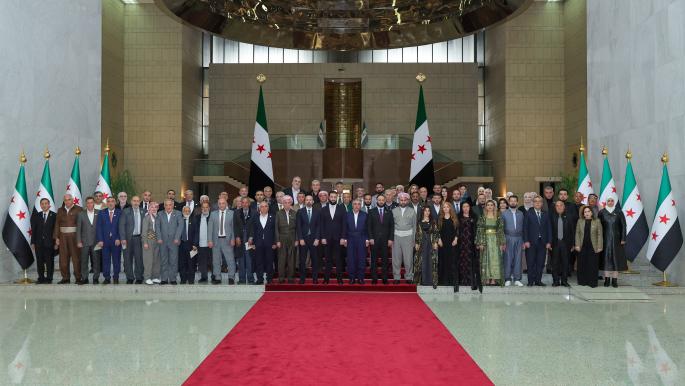
Syrian President Ahmad al-Shara, during a meeting with a Kurdish delegation at the People's Palace in Damascus, reiterated the importance of consolidating arms under the state's authority. This assertion arose in the context of celebrating Eid al-Fitr and Nowruz, emphasizing the need for strengthening stability and unifying efforts towards building a secure future.
This visit is considered a significant step in the dialogue attempts between the Syrian government and Kurdish parties, especially given the current circumstances in the country. The importance of this meeting is underscored amid regional and international tensions that are impacting the internal situation in Syria.
Details of the Meeting
President al-Shara welcomed the Kurdish delegation at the People's Palace, where several issues concerning the Syrian situation were discussed, including the political and security conditions in Kurdish areas. The statement released following the meeting highlighted the necessity for cooperation among all components of Syrian society to ensure the achievement of stability.
This meeting comes at a time when foreign interventions in the Syrian conflict have become a daily occurrence, as Kurdish parties have been seeking to achieve greater autonomy over the past years.
Background & Context
Over the past decade, Syria has endured a prolonged conflict and complex political strife, leading to the emergence of local powers, including Kurdish forces that have established their presence in the Syrian arena. These forces today strive to enhance the cultural and political rights of Syria's Kurds, amid the absence of a comprehensive resolution to the conflict.
In recent years, the Kurdish forces have established autonomous regions in northeast Syria, leading to disagreements with the central government in Damascus over issues related to sovereignty and security.
Impact & Consequences
Al-Shara's call for tightening arms control under state authority sends strong signals regarding the need for maintaining security and stability in Kurdish regions. These measures could contribute to reducing tensions and directing efforts towards shared interests among all parties.
These statements may also lead to changes in the dynamics of negotiations between the Kurds and the Syrian government, as limiting arms to the state could be seen as a positive step towards preserving Syria's sovereignty.
Regional Significance
These developments are part of a more complex regional landscape where stability in Syria has a direct impact on neighboring countries. Addressing Kurdish issues is an integral part of a broader effort to achieve stability in the entire region.
Additionally, such developments may influence other countries like Iraq and Turkey, where Kurds exist and affect the internal balances of these nations. These actions could also lead to increased cooperation among regional governments to ensure security and stability in the area.
In conclusion, al-Shara's statements regarding restricting arms under state control emerge as significant indicators of political trends in a new phase of the Syrian conflict, potentially opening the door for a dialogue that could achieve greater stability and security for all concerned parties.