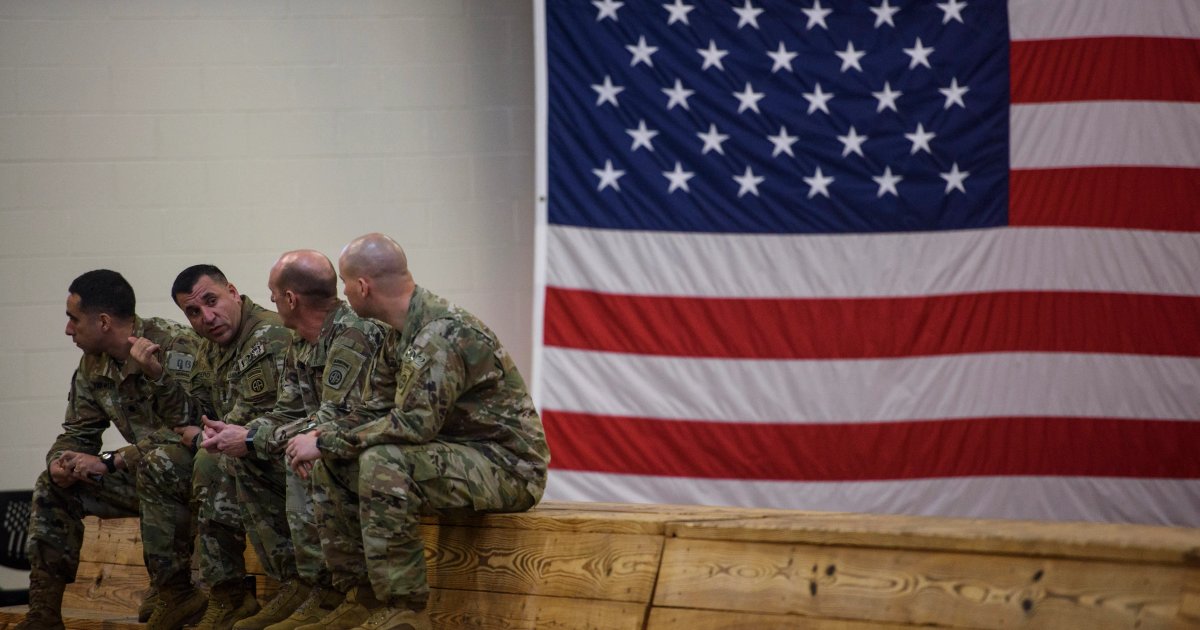
On Saturday, March 28, 2026, the US Central Command (CENTCOM) announced the arrival of a military group comprising 3,500 Marines and sailors to the Middle East. These forces were deployed aboard the USS Tripoli, which is part of the naval rapid response group, as part of efforts to enhance the US military presence in the region.
This move comes at a time when the Middle East is witnessing escalating tensions between the United States and Iran, as Washington seeks to strengthen its military capabilities in response to increasing challenges. Reports indicate that these forces will provide the US with additional military options should the situation deteriorate.
Details of the Deployment
The naval rapid response group consists of approximately 3,500 Marines and sailors, along with transport aircraft, fighter jets, and amphibious assault assets. These forces were deployed on March 27, with CENTCOM confirming that these reinforcements are part of a broader strategy to enhance military strength in the region.
The US Navy possesses the capability to conduct offensive operations from the sea, as well as execute rapid ground operations, making it an effective tool in any potential escalation. Experts have noted that these forces could be used to secure strategic sites, conduct evacuations, or even carry out potential strikes against coastal targets.
Background & Context
Historically, relations between the United States and Iran have been tense, especially following Washington's withdrawal from the Iranian nuclear deal in 2018. Since then, the region has seen an escalation in military activities, including attacks on oil facilities in Saudi Arabia and repeated threats from Iran against US interests in the area.
Under these circumstances, the United States is striving to bolster its military presence in the Middle East, with previous reports indicating that the Pentagon is considering sending up to 10,000 additional troops to the region. This move is part of the US administration's efforts to provide President Donald Trump with a more diverse set of military options should diplomatic efforts fail.
Impact & Consequences
This military reinforcement is a significant step that could lead to heightened tensions in the region. The presence of additional US forces may provoke negative reactions from Iran, which could view this as a threat to its national security. Furthermore, this move may affect US relations with its allies in the region, who might feel uneasy about the escalating tensions.
Moreover, the presence of US forces in the area could pave the way for further military operations, increasing the likelihood of direct confrontations between US and Iranian forces. This could have serious implications for regional security, including effects on oil prices and global markets.
Regional Significance
Given the current situation, the enhancement of the US military presence in the Middle East could significantly impact Arab countries. Many of these nations rely on stability in the region, and any military escalation could destabilize countries like Iraq, Syria, and Lebanon.
These developments may also affect relations between Arab states and Iran, as some countries may feel concerned about the rising Iranian influence in the region. At the same time, other nations may seek to strengthen their ties with the United States as a means to confront security challenges.
In conclusion, the enhancement of the US military presence in the Middle East appears to be part of a broader strategy to address increasing challenges from Iran. However, this step carries significant risks that could lead to heightened tensions in the region, necessitating close monitoring by Arab nations and the international community.