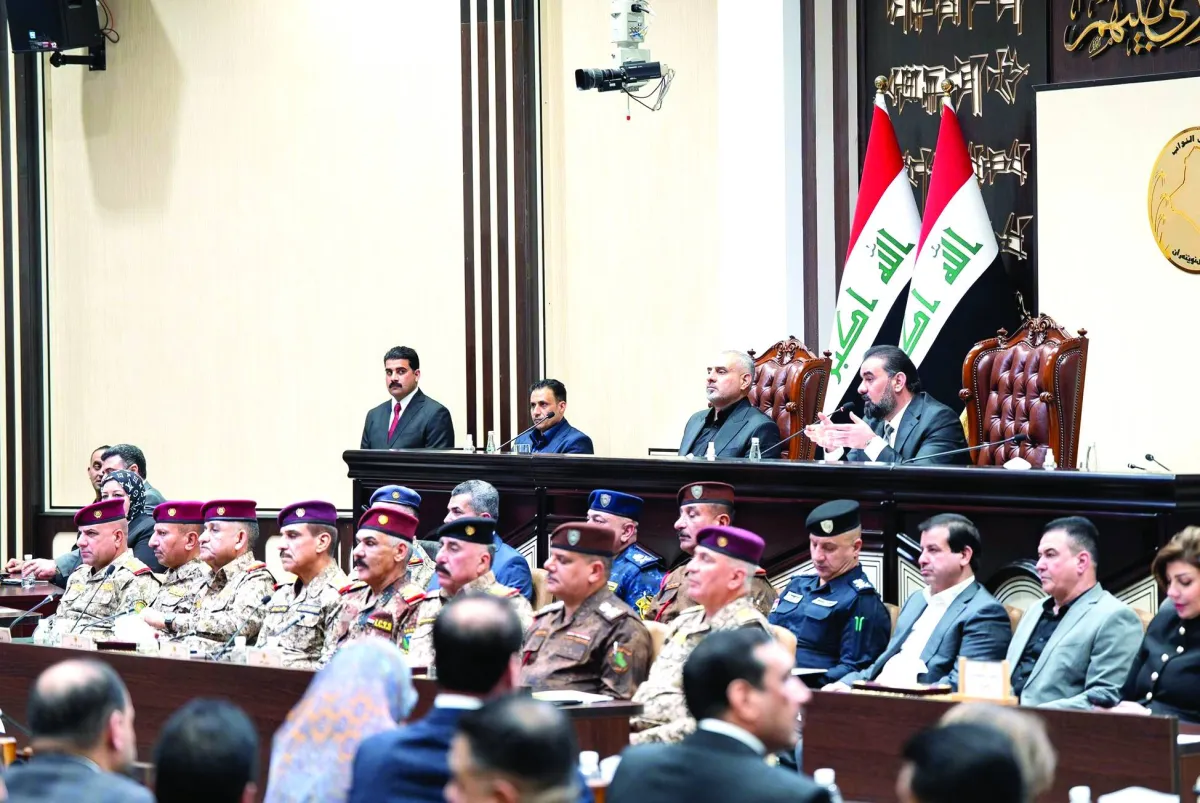
On Sunday, Erbil sent a high-level political delegation to Baghdad, headed by Foreign Minister Fuad Hussein, with the aim of resolving the financial disputes lingering between the two parties. This initiative comes at a critical time, as only five days remain until the deadline set by parliament for the final session to elect a president and appoint a prime minister to form the government.
The disagreements persist between the two main Kurdish parties in the Kurdistan Region, namely the Kurdistan Democratic Party and the Patriotic Union of Kurdistan, regarding the consensus on a single Kurdish candidate for the presidency. The discussions held by the Kurdish delegation in Baghdad are expected to address the disputes between the Kurdistan Democratic Party, led by Masoud Barzani, and some factions of the Coordination Framework, which seeks to operate on the principle of parliamentary majority.
Details of the Event
Erbil aims to achieve internal consensus between the two Kurdish parties before heading to Baghdad, where Barzani has requested the Coordination Framework to grant the Kurds an additional ten-day period to reach a consensus on a single candidate for the presidency. A session to elect the president was originally scheduled for last Tuesday; however, the Coordination Framework agreed to Barzani's proposal in an effort to arrive at a consensus candidate for the position.
According to informed political sources, gathering the necessary signatures to pass the election of the president with a two-thirds majority (226 signatures) has confused the agreeing parties within both the Shiite and Kurdish blocs. Additionally, a tweet from former U.S. President Donald Trump, which rejected the nomination of Nouri al-Maliki by the Coordination Framework, has impacted the political scene, complicating matters further.
Background & Context
Historically, Iraq's political process has witnessed ongoing conflicts among various political forces, with presidential elections representing a significant turning point in government formation. Since 2005, the political process has relied on consensus among different blocs, but there seems to be a new will to break this traditional pattern.
It is noteworthy that the Kurdistan Democratic Party is seeking to strengthen its position in Baghdad by supporting its candidate, Foreign Minister Fuad Hussein, while the Coordination Framework faces internal challenges regarding the selection of a Shiite candidate for the prime minister position.
Impact & Consequences
These developments significantly affect political stability in Iraq, as failure to reach an agreement could lead to the postponement of elections, increasing uncertainty in the country. Moreover, the disputes among political forces may impact the security and economic situation in Iraq amid the challenges facing the nation.
If the parties cannot reach an agreement, the situation may escalate politically, negatively affecting the overall situation in Iraq and exacerbating societal divisions.
Regional Significance
The political developments in Iraq are of great importance to the Arab region, as Iraq's stability impacts regional security. Any political or security escalation in Iraq could reflect on neighboring countries and heighten tensions in the region.
In light of the current circumstances, political forces in Iraq must work towards achieving political agreements that ensure the country's stability and avoid any escalation that could affect regional security.